Israeli strikes on Lebanon kill 11 civilians; Yemen coalition offensive expands as regional tensions escalate
Key developments
- Israeli airstrikes on Kfar Raman, Lebanon killed 11 civilians; cumulative Lebanese casualties since March 2024 reached 4,381 dead and 12,402 wounded.
- Saudi-led coalition expanded ground offensive in Yemen's Al Jawf region while Houthis sustained ballistic and drone strikes on Saudi military assets and Jizan refinery.
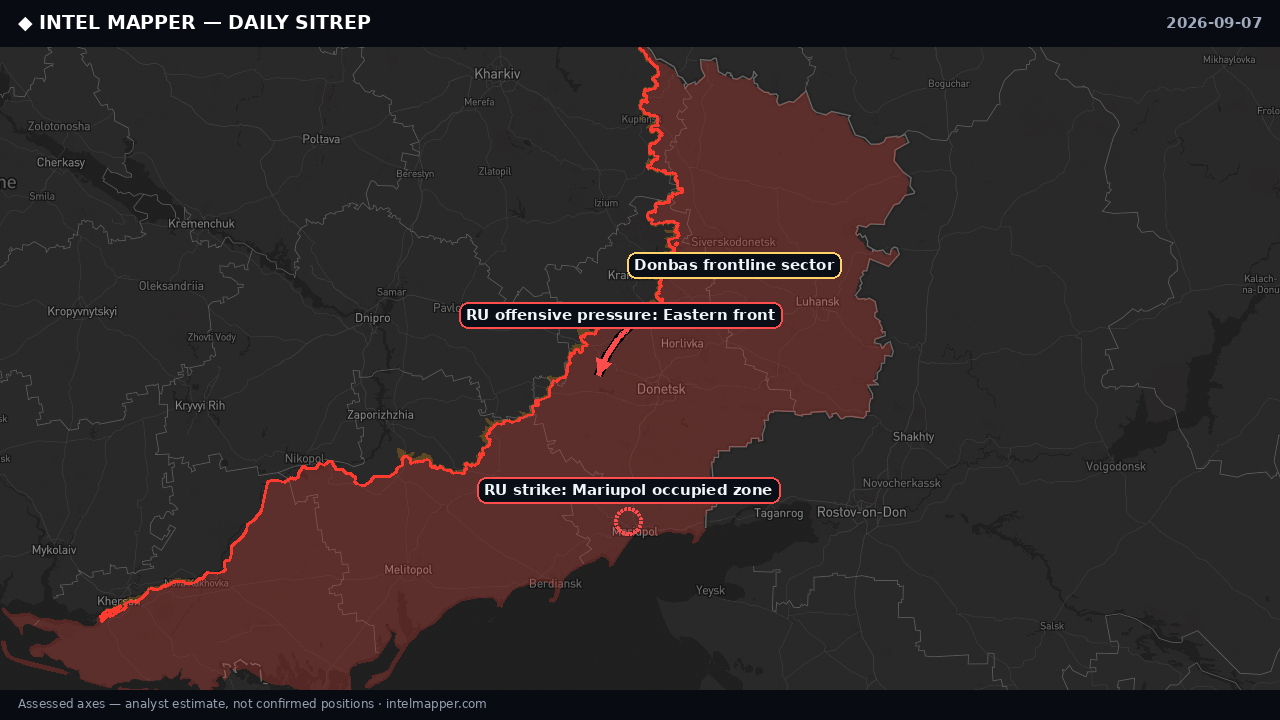
- Ukraine struck targets 1,600+ kilometers inside Russia (Perm) and damaged North Crimean Canal railway bridge; Russian strategic aviation repositioned for massed missile operations.
- Two Russian Su-35S fighters collided in Kursk region; cause unknown, highlighting potential operational strain.
- Syrian government integrated SDF female fighters into state forces and advanced As-Suwayda peace roadmap while managing internal security arrests.
- Russian military warning of high ballistic missile threat with Tu-95MS and Tu-160 bombers repositioned for combined strikes.
- Ukrainian air defenses intercepted 71 of 92 Russian drones overnight; Zelensky reported U.S. exploration of winter de-escalation negotiations.
Middle East 30 tracked events
Israeli military operations in Lebanon intensified on 7 September with airstrikes on Kfar Raman in Nabatieh Governorate, killing 11 civilians including two infants and two paramedics, with five additional wounded. Lebanese Ministry of Health reported cumulative casualties of 4,381 killed and 12,402 injured since 2 March 2024. These strikes occur amid Turkish President Erdogan's statement condemning Israeli provocations as having derailed the Islamabad Accord and destabilized the region. Concurrent Israeli artillery fire struck agricultural lands in Quneitra Governorate, Syria, and Israeli occupation forces established a temporary checkpoint on the Ofaniya–Khan Arnabah road, maintaining pressure across multiple fronts.
Yemen's Saudi Arabia-led coalition launched a broad ground offensive against Houthi positions in Al Jawf Governorate, involving Sixth Military Zone, Emergency Forces, and Shield of the Nation units advancing toward Al-Hazm through Al-Labbat encampment. Coalition warplanes conducted supporting airstrikes while Houthis responded with ballistic missile strikes on Al-Wadiah camp, reportedly destroying trucks carrying Saudi military equipment. Separately, Houthis struck Saudi Aramco's Jizan refinery with dozens of ballistic missiles and drones on 6 September; the 400,000 bpd facility has remained largely offline since late July due to repeated strikes, representing sustained pressure on Gulf energy infrastructure.
Syria's new government navigated diplomatic engagement while consolidating internal security. Syrian Foreign Minister Asaad Al-Shaibani addressed the Arab League's 166th session in Cairo, discussing Syria's recovery path and regional implications, with Egypt reaffirming support for Syrian unity and sovereignty. Al-Shaibani announced progress on a tripartite peace roadmap with Jordan for As-Suwayda and plans to transform borders into development corridors. Syria's Interior Ministry integrated 1,500 female fighters from SDF Women's Protection Units into Special Operations Forces and dismantled explosives in Homs. Notably, retired General Muhammad Ali Darghams was arrested in Tartous for alleged abuse of unarmed protesters during prior regime.
- Turkish President Erdogan condemns Israel's role in regional conflict, stating that Israeli provocations and s
- Saudi Arabia-led coalition forces launched broad ground offensive against Houthi positions in Al Jawf region,
- Turkey's ASELSAN completed first live-fire test of GÜRZ air defense system, combining AESA radar, electro-opti
- Israeli airstrikes struck a three-story residential building and civilian vehicle in Kfar Raman, southern Leba
- Syrian Chief of Staff Major General Ali Al-Naasan met with U.S. Joint Task Force Commander Admiral Liam M. Hol
- Saudi Arabian warplanes conducted airstrikes against Houthi targets in Yemen.
Ukraine 29 tracked events
Ukrainian forces demonstrated extended strike capability, with an An-196 Liutyi drone striking a residential building in Perm, Russia—approximately 1,600 kilometers from Ukrainian-held territory—killing one civilian and injuring four, with electronic warfare potentially deflecting the drone's original trajectory. Ukrainian drones struck a Sukhoi Su-24 at Saki Air Base in Crimea and destroyed the North Crimean Canal railway bridge, disrupting Russian military logistics. Separately, two Russian Su-35S fighter jets collided in Kursk region with cause and casualties undisclosed. These strikes reflect Ukraine's expanding capability to project force deep into Russian territory and disrupt rear-area logistics.
Russian strategic aviation repositioned for concentrated strike operations. Six Tupolev Tu-95MS bombers were armed and ready for takeoff from western Russia while at least four Tu-160 strategic bombers launched from the Far East heading westbound, with estimated arrival in western theater within hours. Russian military issued warnings of high ballistic missile threats, citing active enemy forces in Bryansk, Kursk, and Voronezh oblasts with ammunition reserves and potential Iskander, S-400, or Zircon launches. Tu-95MS bombers were redeployed from Ukrainka air base in the Far East to Oleniya air base in Arkhangelsk Oblast, which Ukraine assessed as preparation for combined missile attacks.
Ukrainian air defenses intercepted 71 of 92 Russian drones launched overnight on 6-7 September, comprising Shahed-type, Geran, decoy variants, and S-8000 cruise missiles. Russian military claimed interception of 306 Ukrainian drones across multiple regions. On the 1657th day of invasion, Ukrainian General Staff reported 237 combat clashes across the frontline, with Russian forces executing 87 airstrikes (313 guided bombs), 8,812 kamikaze drones, and 2,646 artillery barrages. Zelensky indicated the U.S. was exploring winter de-escalation measures with Russia involving potential confidence-building measures on energy and grain, while cautioning that Russia views winter as an opportunity to pressure Ukraine.
- Two Russian Su-35S fighter jets collided in Kursk region. Incident reported by Russian military source Fighter
- Russian Foreign Minister Lavrov stated that ending Russia's "special military operation" in Ukraine must ensur
- Ukrainian An-196 Liutyi drone struck a residential building in Perm, Russia (~1,600 km from Ukrainian-held ter
- Two Russian jet-powered (reaktivnyi) Shahed drones detected transiting over Holosiyivskyi and Kozyn areas, Kyi
- Former Ukrainian military intelligence chief Budanov celebrates Military Intelligence Day with personnel photo
- Ukrainian drone strikes Russian Su-24 aircraft at Saki Air Base in Crimea. Direct hit reported on combat jet.
What to watch
Monitor Russian strategic aviation operations for execution of announced massed missile strikes on Ukrainian targets; assess Ukrainian air defense effectiveness and civil casualty impact. Track coalition operations in Yemen's Al Jawf for momentum and potential Houthi counter-offensives. Observe Israeli-Lebanese border escalation dynamics following Kfar Raman strikes and Nabatieh airstrike; assess Hezbollah response posture. Monitor Syrian diplomatic engagement at Arab League and tripartite Jordan talks for As-Suwayda integration progress. Watch for U.S. winter de-escalation negotiations outcomes and Russian receptiveness signals. Assess Turkish regional positioning following Erdogan's Islamabad Accord statements.