Syria stabilizes amid diplomatic surge; Russia loses strategic bombers as Ukraine sustains high-tempo operations
Key developments
- EU announced €620 million Syria reconstruction package and completed high-level diplomatic engagement, signaling international confidence in post-transition stability
- Syrian security forces dismantled multiple Hezbollah-linked militant cells in Daraa and Yarmouk Basin; infrastructure sabotage incidents persist despite containment efforts
- Two Russian Tu-95MS strategic bombers reportedly destroyed or crashed in Russia on 29 September, affecting limited inventory of nuclear-capable strike platforms
- Ukraine intercepted 109 Russian targets overnight (28-29 Sep) while absorbing 5,763 kamikaze drone strikes, 46 airstrikes, and 1,938 artillery rounds across 189 reported engagements
- Russia announced record $203 billion 2027 defense budget (27% increase) and plans to deploy 300,000 additional personnel to Ukraine frontlines by year-end
- U.S. military completed withdrawal from Iraq; Iran-backed militias claimed victory while Iraqi officials warned of potential ISIS resurgence risk
- NATO rejected Russian diplomatic pressure and unified against coercion; Germany and Poland reinforced commitment to Ukrainian support despite escalation messaging
Middle East 30 tracked events
Syria's post-transition phase accelerated with EU Foreign Policy Chief Kaja Kallas's landmark Damascus visit on 29 September, marking the bloc's highest-level engagement since the regime change. Kallas met Syrian President Ahmad al-Shara and Foreign Minister Asaad Al-Shaabi to discuss reconstruction, regional stability, and Israeli military operations affecting Syrian territory. The EU announced €620 million in reconstruction funding alongside pledges to strengthen Syrian Coast Guard capabilities. Japan partially lifted sanctions on 16 Syrian entities while maintaining restrictions on former regime figures. These diplomatic moves signal international confidence in Syria's transition, though Syrian officials emphasized demand for concrete assistance over political rhetoric.
Security operations against residual militant threats continued across southern Syria. Syrian Interior Ministry and HTS forces dismantled Hezbollah-linked cells in Daraa and Yarmouk Basin, seizing operational networks linked to the former regime's regional patron. Infrastructure sabotage incidents—including a Hezbollah-connected pipeline fire at Jabsa gas valve in Deir ez-Zor—underscore ongoing security challenges and the persistence of Iranian-aligned cell structures despite Hezbollah's broader regional contraction. Concurrently, 119 families returned voluntarily from Muhammidah refugee camp, suggesting gradual normalization and confidence in stabilization efforts. Syrian Defense Ministry conducted coordination calls with Jordanian military leadership, cementing regional security partnerships.
Regional tensions remained elevated across broader Middle East architecture. Iran's Islamic Revolutionary Guard announced bounties for capture of U.S. soldiers, escalating rhetorical confrontation despite reduced strategic leverage in the Strait of Hormuz, where vessel strike capability is reportedly weakening. A cargo vessel reportedly struck in the Strait underscores ongoing maritime risk. Israeli PM Netanyahu reasserted long-range strike capability ahead of elections, while Defense Minister Katz declared Hamas external leaders 'in the crosshairs.' Qatar's PM accused Netanyahu of systematically undermining ceasefire mediation. Iranian Security Council Secretary Rezaei claimed Tehran had set negotiation conditions but questioned U.S. capacity to decide, reflecting mutual skepticism on diplomatic reopening. The U.S. military completed withdrawal from Iraq by 30 September, ending a 20-year presence; Iran-backed militias claimed victory while Iraqi officials warned of potential ISIS resurgence.
- EU Foreign Policy Chief Kaja Kallas reaffirms EU support for Syria's peaceful transition and inclusive dialogu
- Syrian Interior Ministry and HTS security forces dismantled a Hezbollah-linked cell in Daraa. Japan partially
- EU Foreign Policy Chief Kallas criticizes Russia's military presence in Syria, stating Moscow used its bases t
- EU Foreign Policy Chief Kaja Kallas makes first visit to Damascus post-Assad regime change, meeting Syrian For
- Last US military forces withdraw from Iraq by September 30, 2025, ending 20-year presence marked by 4,500 Amer
- Israeli PM Netanyahu warns enemies against attacking Israel ahead of elections, stating long-range military ca
Ukraine 30 tracked events
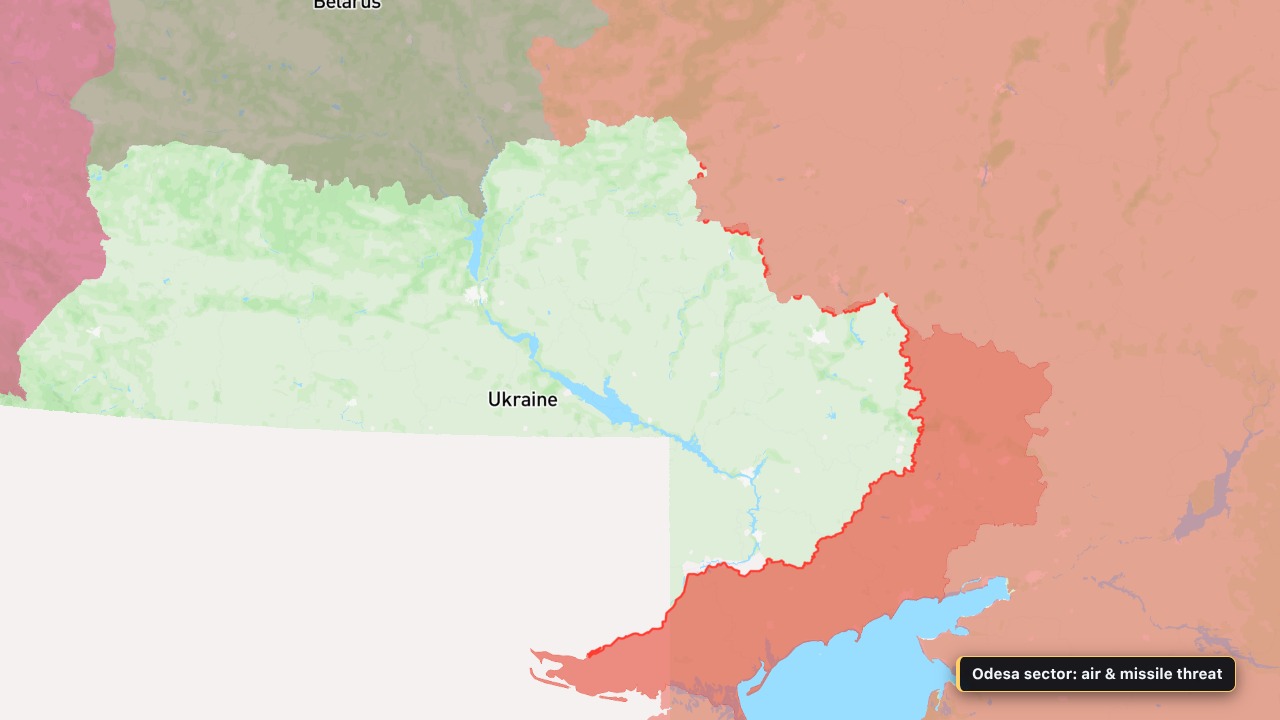
Ukraine's air defenses sustained tempo against Russian strikes on 28-29 September, intercepting 109 targets including cruise missiles, ballistic weapons, and 106 Shahed/Geran drones across overnight operations. Ukrainian General Staff reported 189 combat engagements across all fronts on 29 September alone, absorbing 5,763 kamikaze drone strikes, 46 Russian airstrikes with 172 guided bombs, and 1,938 artillery rounds. Large-scale drone attacks targeted Kyiv with multiple waves transiting from northern routes via Chornobyl Exclusion Zone toward western population centers. Despite massive attrition rates, Russian drone production and deployment rates remain operationally significant, indicating sustained logistical capacity despite eighteen-month conflict duration.
Russian strategic aviation suffered notable losses on 29 September, with at least two Tu-95MS strategic bombers—nuclear-capable platforms integral to Russia's nuclear triad—reported destroyed or crashed near Krasnoyarsk Krai and Amur Oblast. A Tu-154 military transport aircraft also crashed in Amur Oblast with six personnel killed. While attribution remains unconfirmed pending verification, Ukrainian long-range strike capability or sabotage represent likely mechanisms. These losses affect Russia's limited inventory of strategic bombers used for cruise missile strikes against Ukrainian infrastructure. Russia simultaneously announced record 17.1 trillion ruble ($203 billion) defense budgets for 2027, representing 27 percent increase from prior plan, with military-security spending consuming 43.9 percent of federal budget.
NATO and Western allies reinforced commitment to Ukrainian support despite Russian escalation messaging. NATO Secretary General Mark Rutte stated Russia is losing over 40,000 soldiers monthly while failing diplomatically to divide the alliance. German Chancellor Friedrich Merz declared Russia cannot win the war and will face severe consequences if conflict continues, reaffirming long-term military support. Merz called for serious Russian negotiations while warning Ukraine's collapse would endanger European peace and freedom. Poland's PM Donald Tusk warned of difficult weeks ahead with increasing Russian aggression; security services mobilized to prevent territorial expansion into NATO space. Russia announced plans to deploy up to 300,000 additional personnel to Ukrainian frontlines by year-end, signaling sustained mobilization intensity.
- Tu-95MS strategic bomber crashed in Amur Oblast. The Tu-95MS is Russia's nuclear-capable strategic bomber, a k
- Russian Tu-95M strategic bomber crashed shortly after takeoff from Krasnoyarovo airbase in Krasnoyarsk Krai. A
- NATO Secretary General Mark Rutte condemns Russia's hostile campaign against NATO allies, asserting Russia is
- Ukrainian air defenses intercepted 109 Russian targets in overnight attack of Sept 28-29: 1 Zircon/Onyx cruise
- Ukrainian General Staff reports 189 combat engagements across all fronts on 29 Sep 2026. Russia conducted 1 mi
- Ukrainian air monitoring reports 1 Russian reactive drone (Shahed-136 variant) transiting over Zhytomyr Oblast
What to watch
Monitor Russia's response to reported strategic bomber losses and verification of aircraft attrition claims over next 48 hours. Track Syrian security operations against remaining militant cells and sustainability of reconstruction momentum amid ongoing Israeli military incursions. Observe Iranian responses to U.S. Iraq withdrawal completion and potential militia activation. Watch for Russian mobilization progress toward announced 300,000-personnel deployment target and sustainability of 27 percent defense budget increase implementation. Monitor Strait of Hormuz maritime activity and any escalation following vessel strike incident. Track NATO/Western supplementary aid packages to Ukraine and German-led diplomatic initiatives toward negotiation frameworks.