Syria faces cascading infrastructure failure as Iran-U.S. diplomacy collapses; Ukraine endures massed drone campaign
Key developments
- Syria's Tishreen power station gas pipeline explosion cascades to water and electricity infrastructure, expanding humanitarian impact in Latakia region.
- U.S. Secretary of State Rubio ordered Iran's UN delegation to leave the United States, collapsing active U.S.-Iran negotiations with Qatari mediation reportedly stalled.
- Ukraine's air defense intercepted 87 of 107 Russian drones in overnight campaign, including Shahed variants and decoys launched from western Russian regions.
- Israeli forces eliminated a Hamas military operative in Gaza and reportedly set fire to Palestinian olive groves in West Bank during reporting period.
- Russian ground forces advanced ~8 km² in Shakhove sector with no settlement seizures; aerial strikes continued against Ukrainian robotic systems in Donetsk.
- Netanyahu reiterated Israeli assessment that Iran actively pursues nuclear weapons and delivery systems despite extended development timeline.
- Air raid alerts activated and cleared across Kyiv Oblast following detection of massed Russian drone activity throughout overnight hours.
Middle East 6 tracked events
A gas pipeline explosion at Syria's Tishreen power station in Latakia has disrupted electricity generation with cascading effects across critical infrastructure, notably water pumping and treatment facilities. The Energy Ministry reports expanding humanitarian consequences as the dual-use nature of power production means civilian populations face both energy and water supply strain. This incident occurs against Syria's broader energy crisis and underscores the vulnerability of aging infrastructure to both kinetic damage and systemic degradation in the contested Syrian environment.
U.S.-Iran diplomatic engagement has deteriorated sharply following failed negotiations at the United Nations. Secretary of State Marco Rubio ordered Iran's UN delegation, including Foreign Minister Abbas Araghchi, to depart the United States, effectively terminating active negotiation channels. Qatari mediation efforts reportedly stalled without resolution, indicating the diplomatic pathway has contracted considerably. This represents a significant breakdown in the limited structured dialogue that had persisted despite broader regional tensions.
Israeli military operations continued across multiple vectors. Forces eliminated a Hamas military wing operative involved in the October 7 attack in Khan Yunis, Gaza, who had subsequently posed as a journalist. Separately, Israeli forces reportedly set fire to hundreds of olive trees in Deir al-Hatab, West Bank, with the cause under investigation. Prime Minister Netanyahu reiterated allegations that Iran is developing nuclear weapons and delivery systems, claiming the capability development timeline extends beyond the immediate term but that active pursuit is underway. These statements reflect continued Israeli threat assessments regarding Iranian nuclear and conventional capabilities.
- Gas pipeline explosion at Tishreen power station disrupts electricity production and cascades to water pumping
- U.S. Secretary of State Marco Rubio ordered Iran's UN delegation, including Foreign Minister Abbas Araghchi, t
- Netanyahu claims Iran is developing nuclear weapons and delivery systems targeting U.S. cities, stating the pr
- Israeli army eliminated Muhammad Abdulaziz Muhammad Naqar, Hamas military wing terrorist who participated in O
- Israeli forces set fire to hundreds of olive trees in a Palestinian village west of Nablus, West Bank. Cause u
- U.S. Secretary of State Marco Rubio demanded that Iran's UN delegation immediately leave the United States fol
Ukraine 7 tracked events
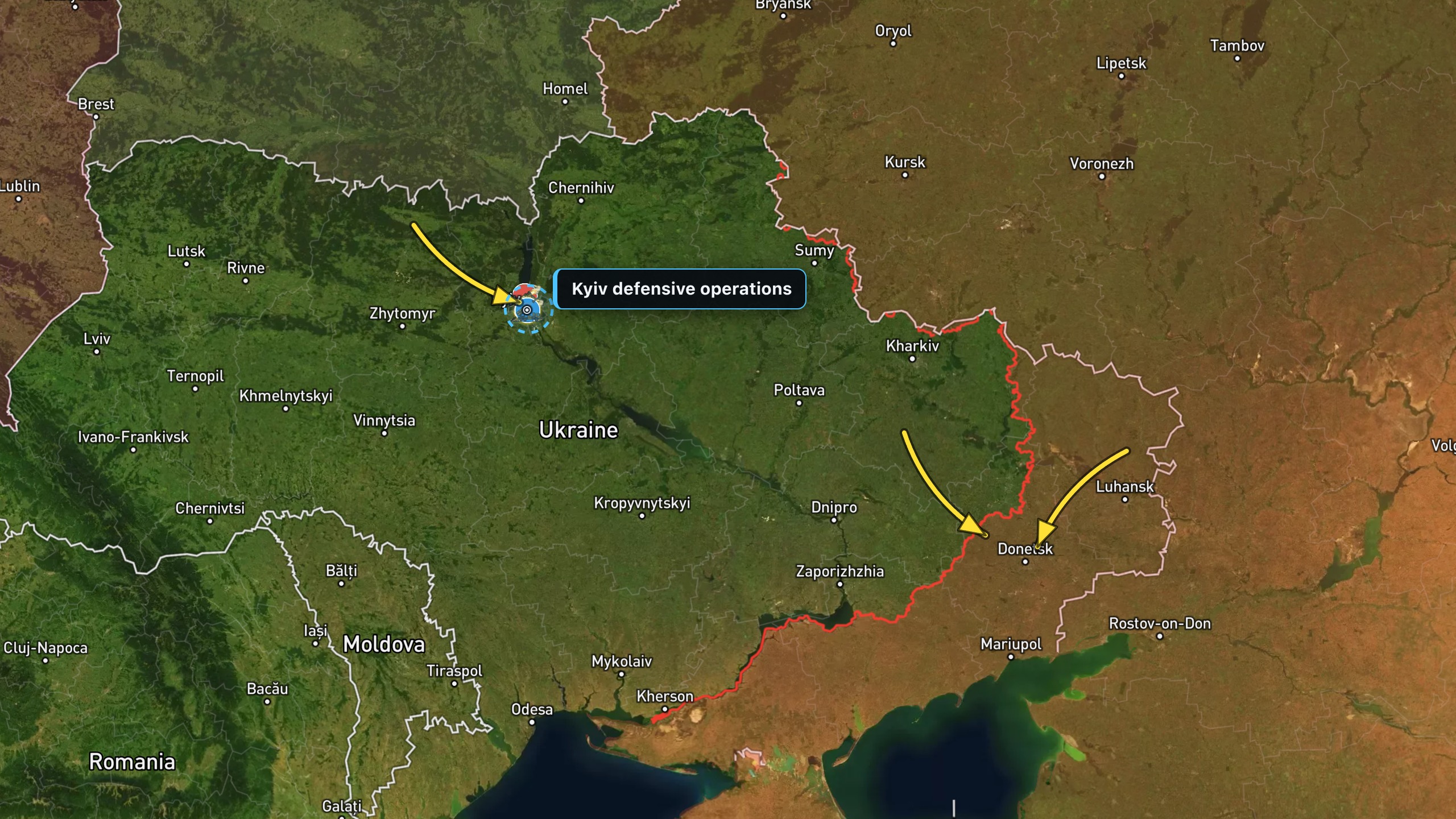
Russia sustained a large-scale unmanned aerial vehicle campaign against Kyiv and surrounding regions overnight into October 1st. Ukrainian air defense reported intercepting or suppressing 87 of 107 Russian drones launched from staging areas in Orel, Bryansk, and Millyrovo, representing an 81 percent successful intercept rate. The campaign consisted of Shahed-136 reactive kamikaze drones, Gerbera variants, and decoy platforms. Multiple drone transits were detected over Solomianka and Malynsk districts; Ukrainian F-16 fighters contributed to the defense effort by destroying at least one Geran-4 drone with air-to-air missiles. Air raid sirens activated and subsequently cleared across Kyiv Oblast.
Ground combat in eastern Ukraine showed incremental Russian gains in the Shakhove sector, where Russian forces advanced approximately 8 square kilometers according to DeepState frontline assessments. No significant settlement changes occurred in this sector during the reporting period. This reflects the ongoing pattern of localized Russian advances in eastern zones at reduced operational tempo, consistent with recent weeks' attrition-driven dynamics.
Ukrainian air defense systems remained active and effective against sustained Russian aerial bombardment. Beyond drone interceptions, Russian aircraft conducted strikes against Ukrainian ground-based robotic systems in Donetsk Oblast, with footage documenting impact near operational units. The combination of massed drone attacks and conventional airstrikes indicates Russia maintains a multi-layered aerial campaign strategy, though the high intercept rate suggests Ukrainian air defense integration and countermeasure deployment continue to degrade campaign effectiveness.
- Russian Shahed-136 reactive (jet-engine) kamikaze drone detected in transit over Solomianka district, Kyiv, he
- Russian aerial bombs struck a Ukrainian ground-based robotic system moving along a road in Donetsk region. Foo
- Ukrainian F-16 fighter intercepted and destroyed Russian Geran-4 (Shahed variant) suicide drone with air-to-ai
- Ukrainian air defense shot down or suppressed 87 Russian Shahed, Gerbera, and decoy drones in overnight attack
- Ukrainian air monitoring reports one Russian Shahed-136 reactive (jet-engine) kamikaze drone transiting over M
- Russian forces advanced (~8 km²) in the Shakhove sector per DeepState frontline update. No settlement center c
What to watch
Monitor Syrian infrastructure damage assessment and water supply continuity over next 48 hours; assess whether U.S.-Iran diplomatic rupture triggers escalatory signaling from Tehran or proxy actors. Track Russian drone campaign sustainability—high intercept rates may constrain future launch scales. Observe Gaza and West Bank for escalatory cycles following Israeli operations. Watch for Russian ground offensive tempo changes in eastern Ukraine sectors; assess whether Shakhove advances presage broader eastward momentum or represent localized attrition exchanges.