Russia sustains massed drone campaign on Kyiv as Yemen airstrikes intensify; US bolsters Gulf defenses
Key developments
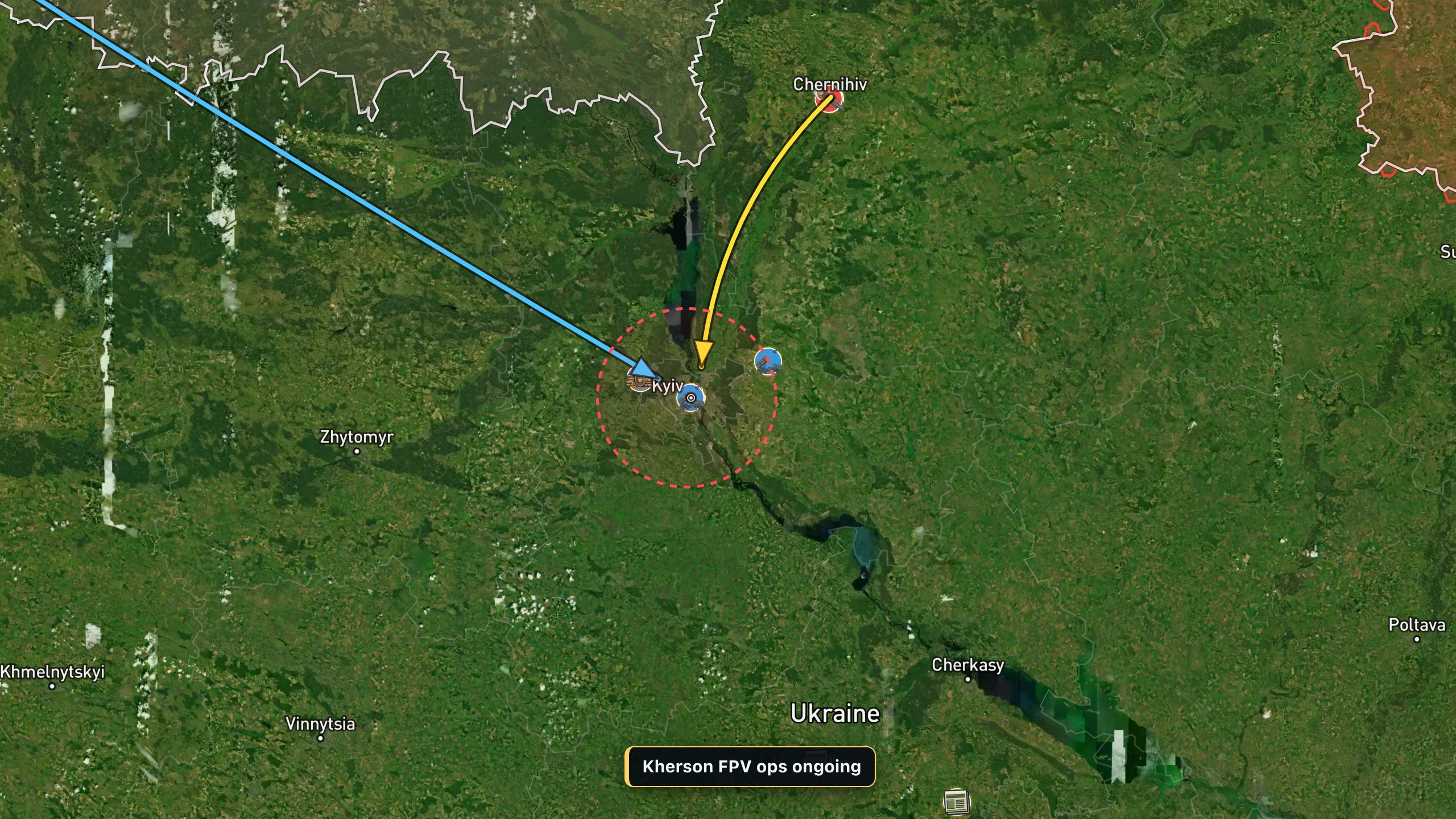
- Russia launched 108 attack drones against Kyiv overnight October 1–2; Ukrainian air defenses shot down or suppressed 88, with multiple Shahed-variant kamikaze drones tracked transiting city districts.
- Ukraine struck Russian LPDS Samara fuel depot in Samara Oblast, initiating fires at critical energy infrastructure as part of ongoing counterattack campaign.
- Saudi Arabia and Yemeni Armed Forces conducted parallel airstrikes on Houthi positions across Taiz, Saada, Amran, and Sanaa provinces in coordinated coalition operations.
- US deployed two additional Patriot air-defense batteries to Saudi Arabia and Qatar, citing protection of oil and gas infrastructure amid Iranian retaliation concerns.
- USS George Washington carrier strike group maintains active flight operations in Arabian Sea and Gulf of Oman, sustaining visible strategic US presence in region.
- Ukrainian forces released footage of FPV kamikaze drone strikes against Russian military targets, demonstrating sustained offensive drone capability despite attrition.
- No new Iranian missile or major kinetic attacks reported; regional tensions remain elevated but no escalation beyond established drone and conventional air operations.
Middle East 4 tracked events
Saudi Arabia conducted multi-province airstrikes across Yemen on October 2, targeting Sanaa and the Houthi strongholds of Saada, Taiz, and Amran. Concurrently, Yemeni Armed Forces—the Saudi-led coalition partner—reported executing 27 airstrikes against Houthi positions in Taiz province over three hours, claiming destruction of vehicles and personnel. This dual-layer air campaign reflects continued coalition pressure on Houthi military infrastructure in northern and central Yemen, though tactical coordination between Saudi and Yemeni command structures remains opaque.
The United States reinforced its regional military posture with two additional Patriot air-defense battery deployments to Saudi Arabia and Qatar, explicitly framed as protection for oil and gas infrastructure amid Iranian retaliation concerns. Simultaneously, the USS George Washington carrier strike group maintains active flight operations in the North Arabian Sea and Gulf of Oman, sustaining a visible strategic presence. These deployments signal Washington's intent to reassure Gulf partners and deter further Iranian-linked missile or drone attacks on critical energy assets.
The pattern of escalating air operations underscores persisting tensions between Saudi-led coalition forces and Iranian-backed Houthi capabilities. While the Houthis' own strike capacity remains degraded, coalition vulnerability to anti-ship and land-attack missiles justifies enhanced air-defense coverage. No significant new missile attacks were reported on October 2, but the defensive posture suggests Washington assesses the threat as sustained rather than imminent.
- Saudi Arabia conducted airstrikes on Sanaa and provinces of Saada, Taiz, and Amran. Yemen's military separatel
- Yemeni Armed Forces air force struck 20 Houthi military positions across Taiz province over three hours. Spoke
- USS George Washington (CVN 73) carrier strike group conducting flight operations in Middle East regional water
- U.S. deploys two additional Patriot air-defense batteries to Saudi Arabia and Qatar to protect oil and gas inf
Ukraine 27 tracked events
Russia launched a sustained massed drone offensive against Kyiv and surrounding oblast on the night of October 1–2, dispatching 108 attack drones from staging areas in Bryansk, Primorsko-Akhtarsk, and occupied Donbas and Crimea. Ukraine's air-defense systems intercepted or suppressed 88 of these platforms, comprising Shahed variants, Gerbera drones, and decoys. Tracking reports indicate multiple Shahed-variant jet-powered kamikaze drones transited across northern, eastern, and southern approaches to the Kyiv metropolitan area, targeting infrastructure across multiple districts and surrounding municipalities.
Real-time monitoring documented individual Shahed-variant kamikaze drones crossing specific waypoints including Chernihiv Oblast, Bucha, Irpin, Boryspil, Vasylkiv, and multiple Kyiv city districts (Osokorky, Vidradnyi, Krukyivshchyna, Holosiyivskyi Park, and Pivdennyi Bridge). This dispersed routing pattern suggests Russian efforts to saturate air defenses and increase probability of target penetration. Ukrainian forces maintain active tracking and intercept capability, though the volume and distributed flight paths indicate Russia sustains substantial loitering-munition inventory despite cumulative attrition.
Ukraine struck back with reported drone operations targeting Russian energy infrastructure, specifically the LPDS Samara fuel depot in Svetly village, Samara Oblast, triggering fires at the petroleum storage and distribution facility. Additionally, Ukrainian forces released footage of FPV kamikaze drone strikes against Russian military targets, indicating continued tactical drone warfare capability. The operational tempo—mass Russian attacks combined with Ukrainian counterstrikes on Russian rear-area infrastructure—reflects the established pattern of reciprocal drone warfare without indication of strategic position shift.
- Ukrainian air defenses shot down or suppressed 88 Russian drones (Shahed, Gerbera, decoys) overnight Oct 1-2.
- One Russian Shahed-variant reactive (jet-powered) kamikaze drone tracked transiting from Chernihiv Oblast towa
- One Russian Shahed-variant reactive kamikaze drone tracked transiting from Dymery toward Kyiv city as part of
- Russian Shahed-variant reactive kamikaze drones tracked transiting over Bucha and Vorzel sectors, Kyiv Oblast,
- Russian reactive/jet-powered Shahed-variant kamikaze drones tracked transiting over Mriya/Kapitanivka sector,
- Russian Shahed-variant reactive kamikaze drones tracked transiting over Irpin (4km), Boyarka, and Lyutizh in K
What to watch
Monitor Kyiv air-defense effectiveness and casualty reports as Russia sustains drone tempo; assess whether Ukrainian counterattack on Samara oil facilities prompts Russian retaliation escalation. Track USS George Washington positioning and any Iranian naval or air activity in Arabian Sea. Watch for Houthi statements or operational claims following Saudi-Yemeni coalition airstrikes; assess whether anti-ship missile readiness increases. Observe US diplomatic messaging and any indication of broader Iran-US escalation risk in coming 48 hours.