Israel-Lebanon escalation, Yemen offensive surge; Ukraine intensifies long-range strikes amid Russian strategic repositioning
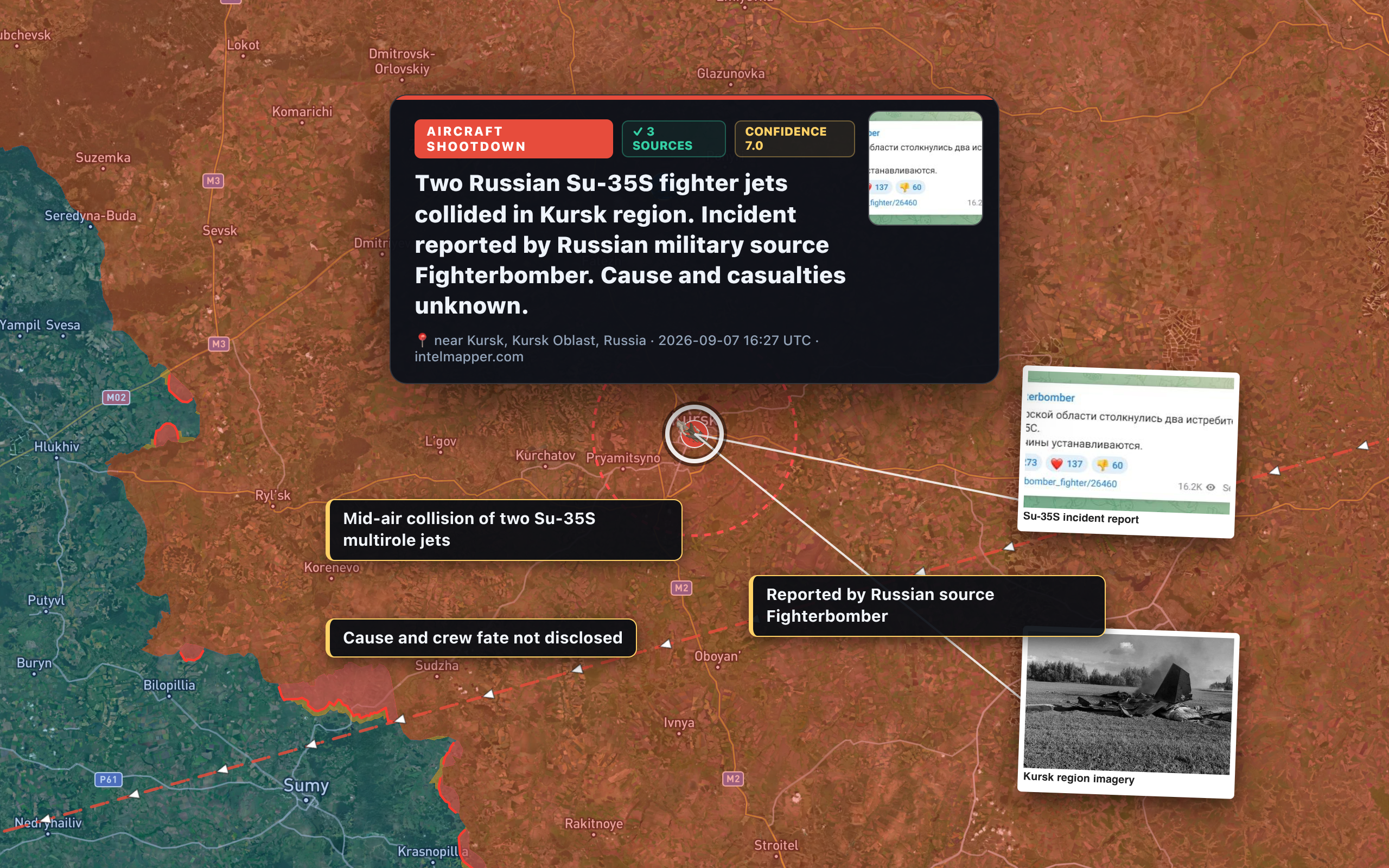
Two Russian Su-35S fighter jets collided in Kursk region. Incident reported by Russian military source Fighterbomber. Cause and casualties u
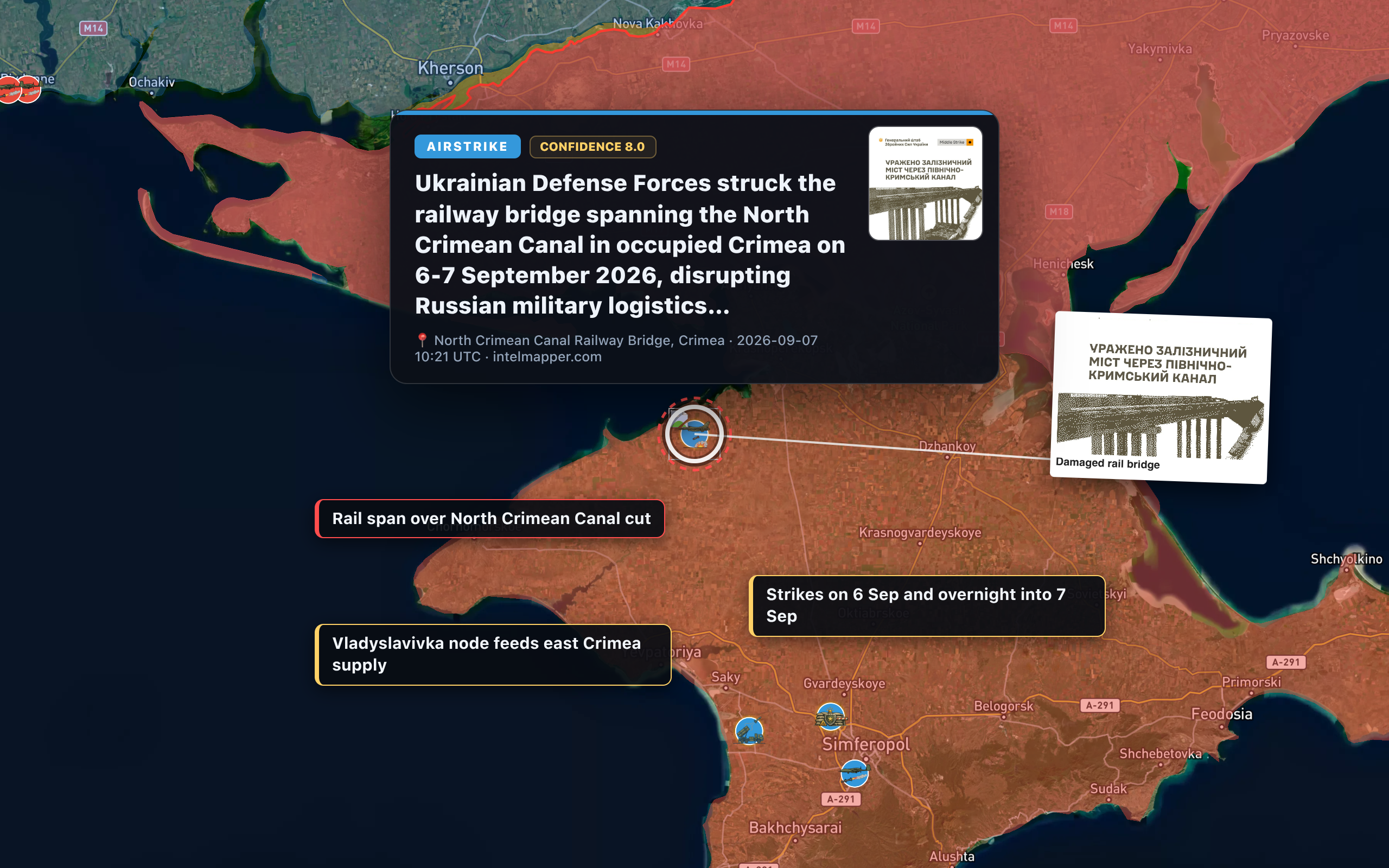
Ukrainian Defense Forces struck the railway bridge spanning the North Crimean Canal in occupied Crimea on 6-7 September 2026, disrupting Rus
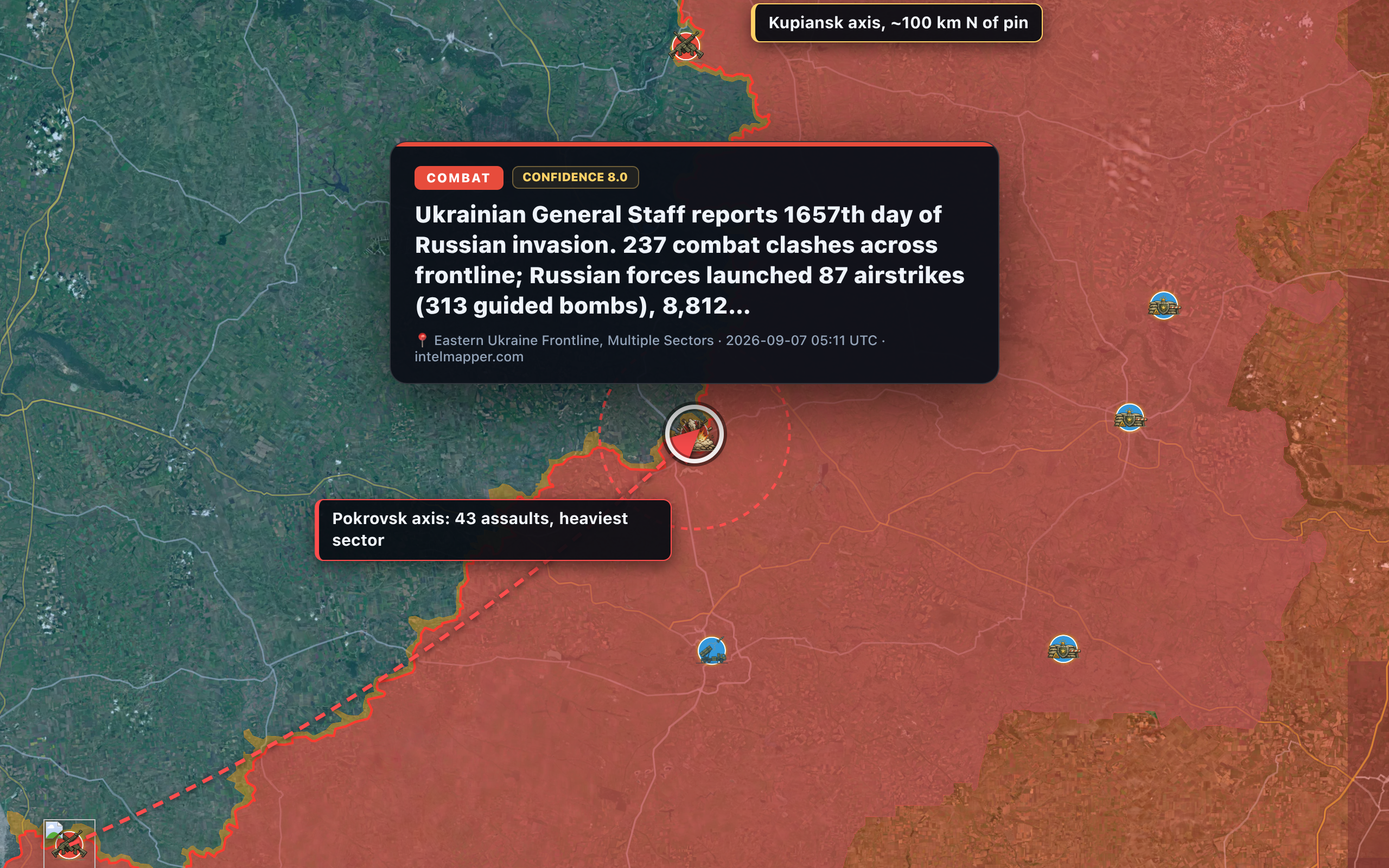
Ukrainian General Staff reports 1657th day of Russian invasion. 237 combat clashes across frontline; Russian forces launched 87 airstrikes (
Ukrainian offensive operations intensified with deep-strike capabilities, demonstrating expanded reach into Russian territory. An An-196 Liutyi drone struck a residential building in Perm, approximately 1,600 kilometers from Ukrainian-held territory, killing one civilian and injuring four—reportedly navigated by electronic warfare diversion. Ukrainian drones also struck a Russian Su-24 at Saki Air Base in Crimea and targeted the North Crimean Canal railway bridge, disrupting Russian military logistics. General Staff reported systematic strikes on Russian military infrastructure over August 31–September 6, including oil refineries at Ryazan and Novatek-Usť-Luga, air defense radars, and S-400 systems. Former GUR chief Budanov released Military Intelligence Day materials affirming Ukrainian intelligence operations in Africa and the Moscow region.
Russian strategic aviation repositioned for potential combined offensive operations. Six Tu-95MS bombers armed and ready for takeoff were reported at Saratov Oblast, with at least four Tu-160 strategic bombers launching from the Far East heading westbound toward European Russia. Tu-95MS bombers were redeployed from Ukrainka air base in the Far East to Oleniya air base in Arkhangelsk Oblast, assessed by Ukraine as preparation for combined missile attack. Russian warnings indicated high ballistic missile threat with Iskander, S-400, or Zircon launches possible from active enemy forces in Bryansk, Kursk, and Voronezh oblasts. Two Russian Su-35S fighter jets collided in Kursk region, though cause and casualties remain unreported.
Air defense operations and diplomatic signaling marked the operational environment. Ukrainian air defenses intercepted 71 of approximately 92 Shahed-type and cruise missile drones overnight of September 6–7. Russian forces claimed interception of 306 Ukrainian drones overnight across multiple regions. The General Staff reported 1,657 days of invasion with 237 combat clashes, 87 Russian airstrikes dropping 313 guided bombs, and 8,812 kamikaze drone sorties. President Zelensky noted U.S. exploration of winter de-escalation negotiations with Russia, warning that Moscow views winter as an opportunity to pressure Ukraine and emphasizing the need for security guarantees. Russian Foreign Minister Lavrov reiterated that ending the 'special military operation' must ensure 'no more Nazism in Europe,' maintaining Moscow's conflict justification framework.
Key developments
- Israeli airstrike on Kfar Raman, Lebanon killed 11 civilians; reported Lebanese toll from Israeli operations since March 2024 now 4,381 dead and 12,402 wounded.
- Saudi-led coalition launched broad ground offensive in Yemen's Al Jawf; Houthis responded with ballistic missiles and drones, keeping Jizan refinery offline since late July.
- Ukrainian drone struck Russian Su-24 at Saki Air Base and penetrated 1,600 km into Russia (Perm), killing one civilian; deep-strike capabilities demonstrated.
- Russian strategic aviation repositioned: Tu-95MS and Tu-160 bombers redeployed to western Russia, assessed as preparation for combined missile offensive.
- Ukrainian air defenses intercepted 71 of ~92 drones overnight; 1,657 days of invasion saw 237 frontline clashes with sustained Russian kinetic pressure.
- Turkish President Erdogan condemned Israeli actions as destabilizing; Syria pursued Arab League inclusion and state consolidation through tripartite Jordan roadmap.
- Zelensky indicated U.S. exploring winter de-escalation with Russia; Moscow views winter as leverage opportunity; Russian Su-35S jets collided in Kursk region (cause unreported).