Escalating drone campaigns and maritime tensions amid diplomatic engagement across Middle East, Ukraine
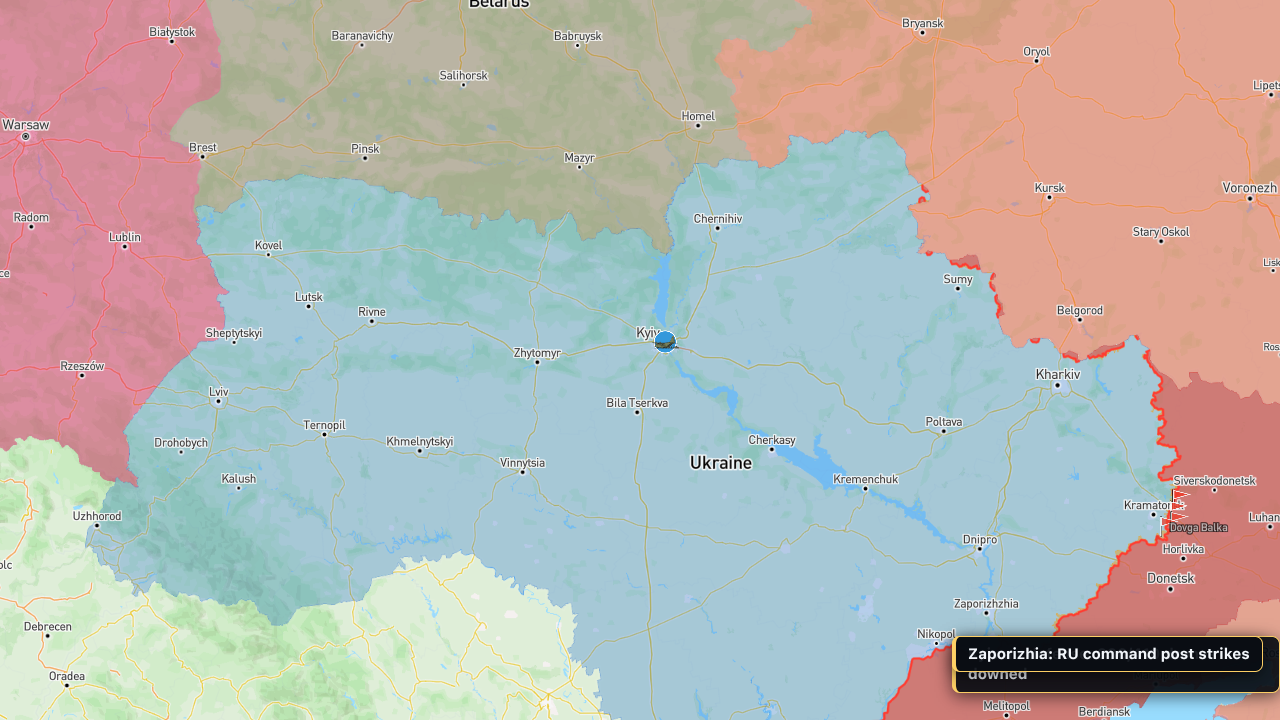
Key developments
- Saudi Aramco's Jazan refinery sustained confirmed damage from Houthi attacks; Saudi Arabia conducted 129 airstrikes across Yemen in 48 hours with continued air campaign.
- Ukraine's Sargan-3000 autonomous naval drone achieved first fully autonomous naval combat kill against Russian drone in Black Sea; naval strike operations continue against Russian shadow fleet.
- Russia sustained 336 of 410 drone interceptions by Ukrainian air defense on 12 September; approximately 50-aircraft Shahed waves detected transiting toward multiple northern and central oblasts.
- Iran conducted extensive security operations in Sistan and Baluchestan Province with nine-hour engagement in Saravan; simultaneous unexplained explosion reported on Keshm Island.
- BRICS summit in New Delhi featured China's mediation offer for Middle East peace and bilateral Iran-China diplomatic engagement; Iran simultaneously announced maritime security corridor talks in Oman.
- Ukraine deployed military training teams to five Middle Eastern countries for drone-defense instruction and drone specialists to Mali; operations extend global dimension of conflict.
- Israeli national security officials issued threats toward Iranian energy infrastructure and emigration-promotion rhetoric; Russia extended Cyprus arms embargo waiver through September 2027.
Middle East 30 tracked events
Houthi forces sustained operational momentum in Yemen while escalating coercive rhetoric. The militant group released combat footage documenting recent western coast offensive operations and announced the liberation of 210 prisoners of war held by Saudi-backed forces, some detained for up to eight years. Concurrently, Houthi leadership threatened to target Saudi oil infrastructure and block Suez Canal transit if regional tensions worsen—a threat given weight by confirmed satellite imagery documenting damage to Saudi Aramco's Jazan refinery following recent attacks. Saudi Arabia responded with sustained air operations, conducting 129 airstrikes across seven Yemeni provinces over 48 hours using F-15 and Typhoon fighter jets. This operational cycle reflects the persistence of kinetic competition between coalition and insurgent forces.
Iran's southeastern border region experienced significant security operations concurrent with external diplomatic positioning. Heavy clashes erupted in Saravan, Sistan and Baluchestan Province, with security forces conducting a dawn raid on a purported terrorist hideout that generated approximately nine hours of sustained gunfire and explosions involving armored vehicles. An unexplained explosion was simultaneously reported on Keshm Island in Hormozgan Province. These domestic security incidents occurred as Iraq took precautionary measures, closing the Shalamcheh border crossing with Iran following drone attacks attributed to Iraqi-origin sources—a demonstration of transnational security spillover. Separately, U.S. officials reported that Iran obtained high-resolution Chinese satellite imagery prior to the July ballistic-missile strike on Muwaffaq Salti Air Base in Jordan that killed three American service members.
Diplomatic engagement intensified at the BRICS summit in New Delhi, where Chinese President Xi Jinping offered mediation assistance for Middle East peace with Iran's president present, while Iranian and Chinese foreign ministers conducted bilateral talks on the summit margins. Concurrently, Iran announced plans for a Monday meeting in Oman to establish temporary maritime security corridors via Iran-Oman memorandum of understanding. These diplomatic channels operate parallel to maritime threats: Ukraine's naval drone operations extended into the region, with reported strikes against Russian shadow fleet vessels from a Libyan base. UK and Turkey reaffirmed support for Saudi sovereignty, while Israel's national security establishment issued threatening rhetoric toward Iran regarding energy infrastructure targeting and emigration policies in occupied territories.
- Houthi spokesperson threatens to target Saudi oil infrastructure and halt exports through Suez Canal if region
- Turkey strongly condemned drone attacks launched from Iraqi territory against Saudi Arabia, reaffirming suppor
- Iranian Foreign Minister Araghchi and Chinese Foreign Minister Wang Yi held bilateral talks at the BRICS leade
- Iraq closes Shalamcheh border crossing with Iran as a precautionary measure following drone attacks on Saudi A
- Heavy clashes in Saravan, southeastern Iran. Security forces raided a hideout at 4 a.m.; fighting lasted ~9 ho
- U.S. officials report Iran obtained high-resolution Chinese satellite imagery before July 17 ballistic-missile
Ukraine 30 tracked events
Russia sustained intensive drone operations targeting Ukrainian civilian and military infrastructure with mixed tactical results. On 12 September, air defense systems downed or suppressed 336 of 410 Russian attack drones nationwide, including 23 of 37 reactive Shahed variants, though approximately 55 additional drones remained in-country at reporting time. Russia conducted coordinated strikes on gas stations across Kyiv during morning rush hours, including double-tap attacks targeting emergency responders—a tactic demonstrating deliberate targeting of civilian services. Shahed-136 drone groups transited multiple corridors toward Zhytomyr, Volyn, Rivne, and Sumy Oblasts in waves reportedly numbering 50 aircraft in single formations. Russian strikes damaged civilian housing, railway infrastructure, and commercial facilities in Zvyahel and Lutsk.
Ukrainian forces demonstrated advancing autonomous maritime and drone capabilities while sustaining air defense pressure. The Sargan-3000 autonomous naval drone engaged and sank a Russian armed drone in the first fully autonomous naval combat engagement, representing a capability escalation. Ukrainian operators conducted strikes against the sanctioned tanker Armada Leader off Sochi despite Russian helicopter interception attempts, with the drone evading defensive fire to achieve target impact—part of Operation MoLoChKa targeting Russian shadow fleet vessels. President Zelensky assessed Ukrainian military strength as significantly improved relative to the prior year, characterizing Russian casualties at 30,000+ monthly and describing their battlefield progress as severely constrained. Ukrainian forces deployed military training teams across at least five Middle Eastern countries and drone specialists to Mali.
Diplomatic and strategic signaling escalated across both sides. Russian Foreign Minister Lavrov announced an invitation extended to President Zelensky for talks, described as a gesture of goodwill, while the Kremlin suggested Zelensky travel to Moscow rather than meet at a G20 summit venue. Putin reiterated warnings that NATO deployments to Ukrainian territory would trigger military consequences. NATO Secretary-General Rutte condemned Russian actions as reckless and dangerous, reaffirming alliance solidarity. President Zelensky requested 100-120 air defense interceptors monthly to counter Russia's reported production rate of 140 ballistic missiles monthly during winter operations. The European Commission approved a €6.1 billion aid package for Ukraine with expedited defense procurement exemptions. British military intelligence assessed Russian casualties at 500,000 since February 2022.
- Russian Shahed drone struck civilian infrastructure in Zvyahel, Zhytomyr Oblast. Multiple targets hit includin
- President Zelensky assesses Ukraine's military strength as significantly improved compared to last year. He em
- Ukrainian Sargan-3000 autonomous naval drone engaged and sank a Russian armed drone in the first fully autonom
- Ukrainian drone struck Russian sanctioned tanker Armada Leader off Sochi despite Russian helicopter intercepti
- Putin warns that NATO/Western powers are pushing Ukraine toward war with Russia and threatens military consequ
- Ukrainian air defense warning: elevated threat of Shahed-136 drone strikes and ballistic missiles across Kyiv,
What to watch
Monitor Houthi follow-through on Saudi infrastructure threats and Suez Canal disruption rhetoric against operational capacity constraints. Track Ukrainian autonomous maritime drone expansion and any escalation in Black Sea shadow fleet targeting. Observe Russian drone intensity patterns as autumn weather transitions approach and Zelensky's response to Lavrov's dialogue invitation. Watch Iran's Oman maritime security coordination and regional military posture following Saravan operations. Monitor BRICS mediation track tangibility and Chinese-Iranian coordination depth. Track NATO responses to Putin's deployment warnings and any European military commitment announcements. Assess whether reported Houthi-U.S. contact communications carry negotiation weight.