Houthi strikes on Riyadh airport escalate Gulf tensions; Ukraine sustains Russian airstrikes
Key developments
- Houthi ballistic missiles struck King Khalid International Airport Terminal 3 in Riyadh with confirmed direct hits, causing injuries and airport evacuation amid escalating Gulf tensions.
- Trump administration threatened U.S. military action against Iran if Saudi Arabia continues facing attacks, signaling potential escalation ahead of presidential transition.
- Russian airstrikes killed at least twelve people in Zaporizhzhia overnight with coordinated strikes across thirteen Ukrainian regions targeting civilian infrastructure and power grid.
- Ukrainian forces conducted widespread strikes on Russian energy infrastructure (oil terminals, pumping stations, thermal plants) and logistics targets despite incoming U.S. pressure to cease energy targeting.
- Trump threatened to cut U.S. intelligence sharing with Ukraine if energy infrastructure strikes continue, creating potential policy friction between incoming U.S. administration and Ukrainian military doctrine.
- Israeli military declined U.S. requests for unilateral Iran strikes, with leadership warning action would force election postponements, indicating domestic political constraints on escalation.
- Syrian post-Assad government consolidated control through counter-narcotics operations and security arrests while conducting cultural restoration projects, suggesting stabilization trajectory.
Middle East 30 tracked events
Houthi forces conducted multiple ballistic missile strikes against King Khalid International Airport in Riyadh on October 10, with reports confirming direct hits on Terminal 3 causing injuries, forcing airport evacuation, and diverting flights. The attack, documented by four independent sources, represents a significant escalation in Houthi capabilities and willingness to target Saudi Arabia's critical infrastructure. This follows sustained Houthi expansion in Ta'izz Governorate and continued maritime interdiction efforts, including reported mine strikes on commercial shipping in the Strait of Hormuz. The incoming Trump administration has responded with heightened rhetoric: Trump warned of potential U.S. military action against Iran if Saudi attacks continue, signaling possible escalation ahead of the presidential transition.
Israeli military operations continued across multiple theatres with airstrikes in Gaza, aerial operations over Syria's Daraa Governorate, and reported advances along the Quneitra-Israeli border zone. Turkish-Syrian military engagement shows signs of normalization, with the Turkish and Syrian Chiefs of Staff holding bilateral discussions on military relations and regional security. Separately, Israel reportedly received U.S. requests for unilateral strikes against Iran but declined, with Israeli military leadership warning such action would force election postponements. These diplomatic and operational patterns suggest cautious recalibration of regional military postures amid broader U.S. policy uncertainty.
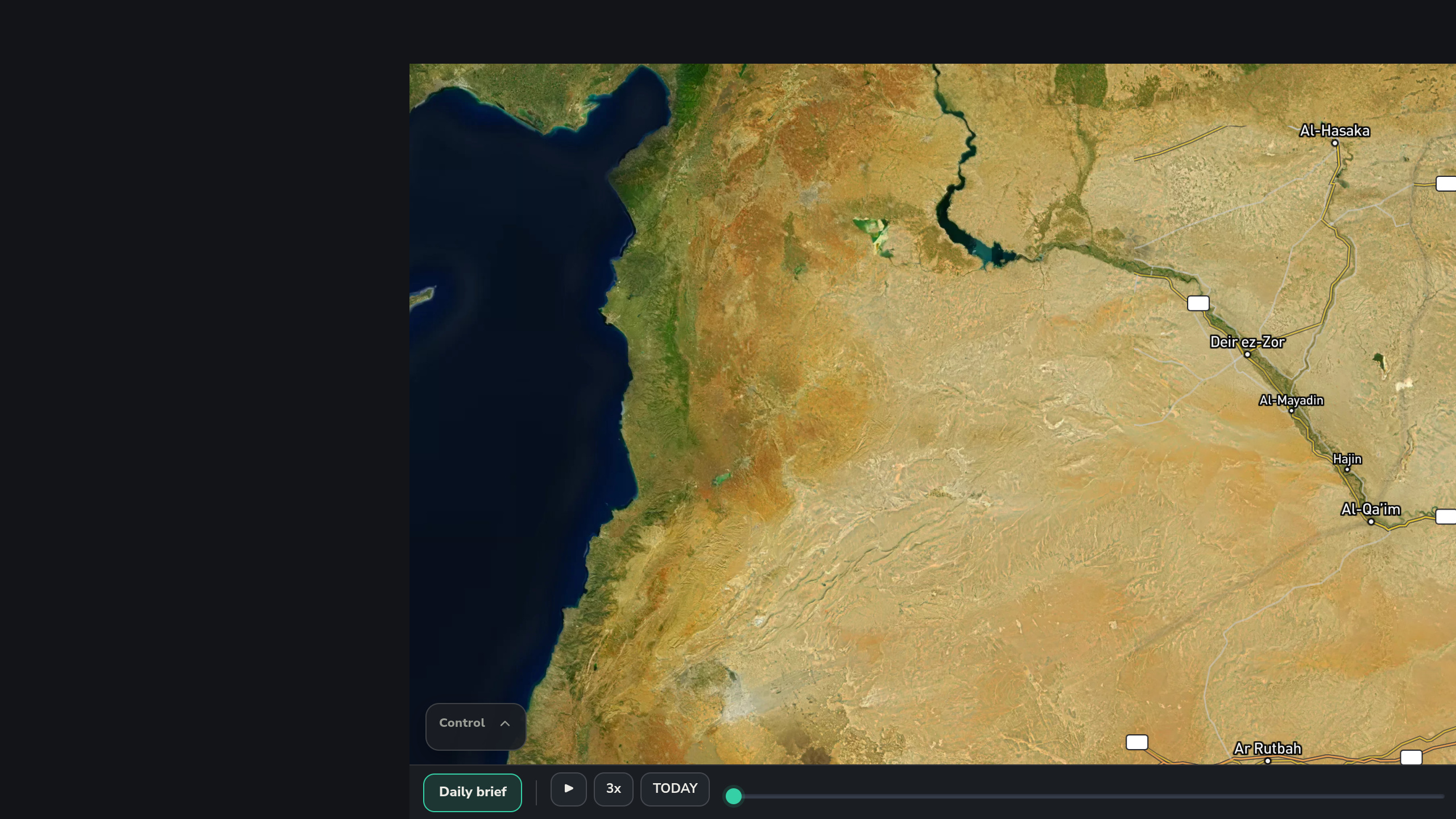
Syria's post-Assad transitional governance conducted counter-narcotics operations dismantling drug trafficking networks across Deir ez-Zor and Al-Hasakah near Iraqi borders, while arrested former Republican Guard commander Brigadier General Mard Muhammad signals ongoing security consolidation. Syrian authorities began restoration work on the Saladin statue, indicating cultural normalization efforts. Meanwhile, Arab monitoring groups documented 93 Israeli violations in southern Syria during October's first ten days. Lebanese Army destroyed 60 hectares of cannabis crops in the Bekaa Valley, arresting seventeen undocumented Syrian workers. These activities reflect stabilization efforts amid continued security challenges and external military pressure.
- Houthi forces conducted a ballistic missile strike on King Khalid International Airport in Riyadh, causing rep
- Houthi forces struck King Khalid International Airport Terminal 3 in Riyadh with a ballistic missile on Saturd
- Iran's IRGC claims a supertanker carrying crude oil struck a naval mine while attempting to exit the Strait of
- Trump warns Iran of U.S. military action if Saudi Arabia continues facing attacks, signaling potential escalat
- Turkish Chief of Staff General Selçuk Bayraktaroğlu held a telephone conversation with Syrian Chief of Staff G
- Israeli airstrikes conducted against Gaza. No specific targets, casualties, or impact details provided.
Ukraine 30 tracked events
Russian airstrikes on October 10 killed at least twelve people including three children in Zaporizhzhia, with five guided aerial bombs striking residential buildings. Overnight attacks across thirteen Ukrainian regions targeted civilian and infrastructure targets, continuing Russia's sustained bombardment campaign. Ukrainian air defense repelled multiple ballistic and cruise missile threats over Kyiv, though critical infrastructure suffered damage with all electric public transport halted due to power grid disruption. Russian forces announced new DF-3 Gadyuka anti-drone systems purportedly capable of destroying fifteen to twenty enemy drones per sortie at high speeds, indicating intensified air defense modernization.
Ukrainian forces conducted widespread drone and precision strikes against Russian logistics and energy infrastructure, including strikes on Novoshakhtinsk oil loading terminal causing large fires, multiple attacks on the Yuzhnyy Rus terminal in Rostov, and strikes on Samara pumping station and Belgorod Thermal Power Station. Ukrainian counter-attacks near Lyman reportedly repelled Russian northern flank encirclement attempts, with forces advancing within ten kilometers of Velyka Novosilka. Coordinated strikes targeted Russian command posts, repair bases, training centers, and electronic warfare facilities across multiple oblasts, reflecting sustained Ukrainian offensive capabilities despite reported critical shortages of modern air-to-air missiles for fighter aircraft.
The incoming Trump administration escalated pressure on Ukraine regarding energy infrastructure targeting. Trump reiterated threats to cut U.S. intelligence sharing if Ukraine continues striking Russian oil refineries, while envoy Keith Witkoff specifically threatened intelligence suspension. Trump also stated Ukraine needs new leadership and claimed President Zelenski refuses negotiations. Ukraine's General Staff and political leadership reaffirmed commitment to striking Russian energy infrastructure regardless of reported diesel agreements between Trump and Putin, indicating potential friction between incoming U.S. policy and Ukrainian operational doctrine. German domestic opposition emerged with thousands protesting in Berlin demanding Chancellor Merz's resignation and calling for resumed Russia dialogue.
- Russian airstrike on Zaporizhzhia killed at least 12 people including 3 children; 5 guided aerial bombs struck
- A large fire broke out at the Novoshakhtinsk oil products plant and loading terminal in Russia's Rostov Oblast
- Trump reiterates warning to Ukraine against striking Russian oil refineries, threatening loss of U.S. intellig
- Ukrainian drone strike on Yuzhnyy Rus oil loading terminal in Rostov. Additional strikes reported on nearby ra
- Ukrainian B-2 type attack drone struck a military transport truck after causing a traffic accident. Specific l
- Trump envoy Keith Witkoff threatened to cut off U.S. intelligence sharing with Ukraine if it continues strikin
What to watch
Monitor whether Trump's Iran threats translate into specific military contingencies or messaging during Saudi-U.S. coordination. Track Ukrainian compliance patterns with U.S. intelligence pressure versus operational sustainability of energy targeting campaign. Observe Israeli decision-making on Iran military action as U.S. political transition progresses and regional escalation dynamics evolve. Watch for Houthi response cadence—whether airport strikes represent isolated operation or new attack tempo pattern. Monitor Turkish-Syrian military dialogue trajectory and any spillover effects on Israeli operations in southern Syria. Assess whether German domestic opposition spreads to other NATO allies regarding Ukraine policy.