Explosions reported in Aqaba, Jordan following Iranian ballistic missile launches
What happened
Explosions were reportedly detected in Aqaba, Jordan's southern port city, on August 30 at approximately 21:42 UTC. The blasts followed Iranian ballistic missile launches, which Tehran stated were retaliation for U.S. airstrikes targeting Islamic Revolutionary Guard Corps (IRGC) positions at Larak Island. Reports indicate that air defense systems were activated to intercept incoming missiles, though the extent of any interceptions remains unclear from available reporting.
Context and assessment
Aqaba's strategic importance as Jordan's only port and its proximity to Israeli territory make it a sensitive location in regional security dynamics. This incident represents an escalation in direct Iranian military action beyond Syria and Iraq, marking a rare instance of ballistic missile use against a neighboring country outside the immediate conflict zones. The reported retaliation suggests Iran is pursuing a broader response to perceived U.S. military actions, though the scale and intended targets of such operations remain uncertain. This pattern, if confirmed, indicates a willingness to extend military responses regionally despite potential diplomatic consequences.
Sources and confidence
Three sources reported the incident: Telegram channels ClashReport and warmonitors, and X account ConflictTR. The confidence score of 6.0 reflects multiple independent channel reporting but notes that cross-confirmation details remain limited. Confidence would increase with official Jordanian government statements, visual damage assessment, or confirmed casualty figures. It would decrease if air defense claims cannot be substantiated or if the explosions are definitively attributed to other causes.
Location
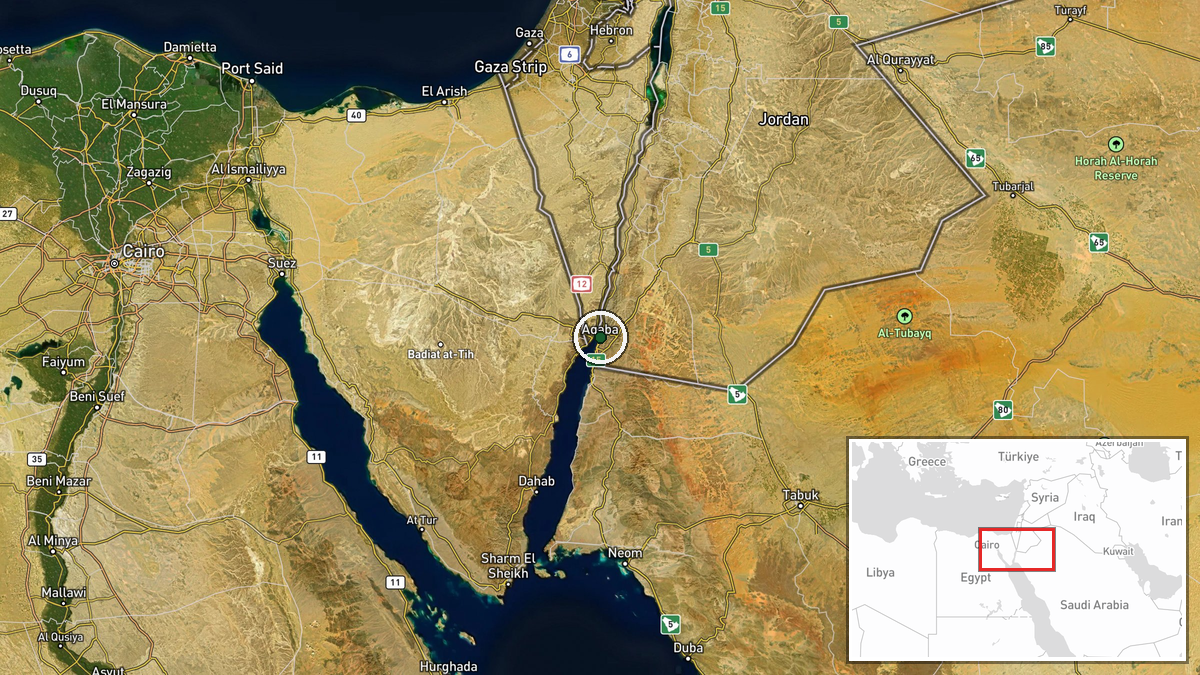
Aqaba is located in Ma'an Governorate in southwestern Jordan at coordinates 29.5461°N, 35.0075°E. The city serves as Jordan's primary maritime gateway on the Red Sea, situated approximately 330 kilometers south of Amman. The location is near the Jordanian-Israeli-Saudi Arabian border region, making it strategically significant for regional logistics and security.
▶ View this event on the live map
Intel Mapper aggregates open-source reports from monitored Telegram and X channels, geolocates them, cross-checks duplicates across sources and assigns a confidence score. Entries are updated as new confirmations arrive. Read how we verify events.