Iranian ballistic missile strikes U.S. position in Aqaba, Jordan
What happened
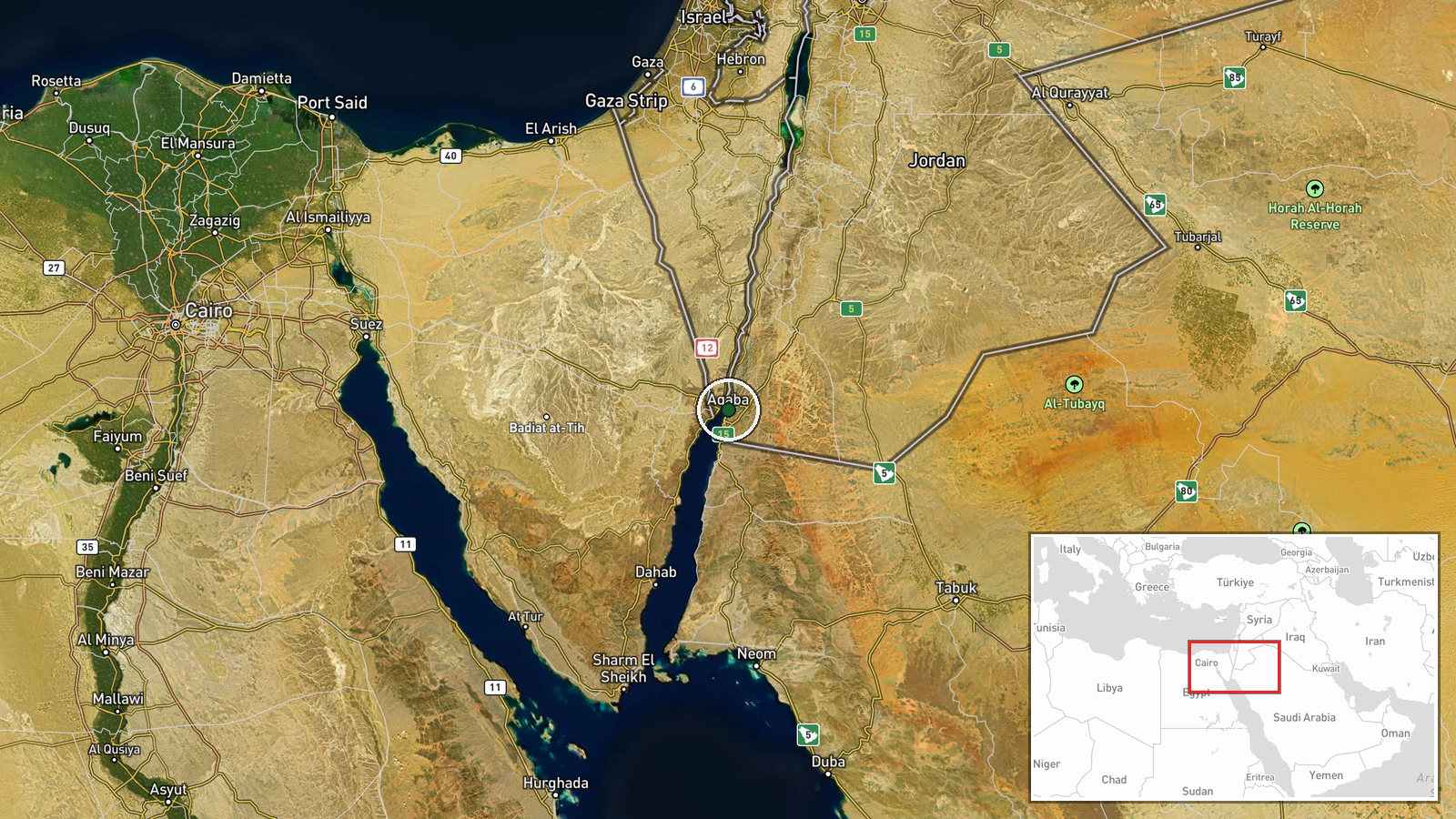
An Iranian ballistic missile reportedly struck a position in Aqaba, Jordan where U.S. military personnel were located on September 1, 2026 at approximately 20:06 UTC. The report, citing Turkish conflict monitoring channels, describes the strike as a direct impact. The incident is characterized as part of Iran's escalatory retaliation against U.S. operations in the region. Details on casualties or damage remain unconfirmed from available sources.
Context and assessment
Aqaba hosts significant U.S. military infrastructure and serves as a transit point for regional operations. The strike follows minutes-earlier air defense activity over nearby Eilat, Israel, suggesting a coordinated Iranian missile attack across the eastern Mediterranean region. This escalation reflects heightening tensions between Iran and Western military presence in the Middle East, with Iran conducting multiple strikes in apparent response to prior U.S. actions. Such attacks test regional air defenses and signal Iran's willingness to directly target Western positions beyond its borders.
Sources and confidence
Two sources reported the incident: Telegram channel ClashReport and X account ConflictTR, both Turkish conflict monitoring outlets. No cross-confirmation from U.S. military, Jordanian, or mainstream international sources is currently available. The confidence score of 6.0 reflects limited source diversity and single-actor reporting chain. Confirmation from official U.S. or Jordanian statements would substantially increase confidence; video evidence or independent third-party verification would further validate the claim.
Location
Aqaba is Jordan's southernmost city and only port, located at the northern tip of the Red Sea where Israel, Saudi Arabia, and Egypt converge. The strike coordinates indicate the settlement itself. The area hosts U.S. military advisors and coordination facilities supporting regional operations. Aqaba lies approximately 60 kilometers southwest of Eilat, Israel, where concurrent air defense activity was reported.
Related events nearby
- Israel's air defense system intercepted incoming projectile(s) launched from Iran targeting Eilat. No direct h2026-09-01 19:57 UTC · Air Defense · Eilat, Southern District, Israel
▶ View this event on the live map
Intel Mapper aggregates open-source reports from monitored Telegram and X channels, geolocates them, cross-checks duplicates across sources and assigns a confidence score. Entries are updated as new confirmations arrive. Read how we verify events.