Russia releases footage of Ukrainian kamikaze drones being intercepted
What happened
Russian sources released video footage on 26 September depicting Ukrainian FPV (first-person-view) kamikaze drones being shot down, according to a post on X by the @ConflictTR account. The footage is presented as evidence of Russian air defense operations against incoming Ukrainian unmanned aerial vehicles. No specific location, timestamp, or casualty information is provided in the source material.
Context and assessment
This release occurs amid an intensifying pattern of drone operations across the conflict. Ukrainian forces have been conducting FPV-kamikaze attacks against Russian military personnel in the Kyiv area, while Russian forces continue sustained barrages of Shahed-136 and other loitering munitions. Ukrainian military intelligence warned on 26 September of preparations for a combined Russian missile attack expected on 27 September. The release of interceptor footage by Russian forces may serve dual purposes: demonstrating air defense capability to domestic audiences and documenting tactical responses to Ukrainian drone threats. Such video releases are routine for both belligerents and typically reflect operational tempo rather than strategic shifts.
Sources and confidence
Single source: X account @ConflictTR, a Turkish conflict monitoring channel. No cross-confirmation from Ukrainian sources, Russian military official channels, or other open-source intelligence accounts is noted. Confidence score of 6.0 reflects the single-source nature and lack of corroborating reports. Confirmation from Russian Ministry of Defence or verified Ukrainian acknowledgment would strengthen confidence; independent geolocation of the video would raise it further.
Location
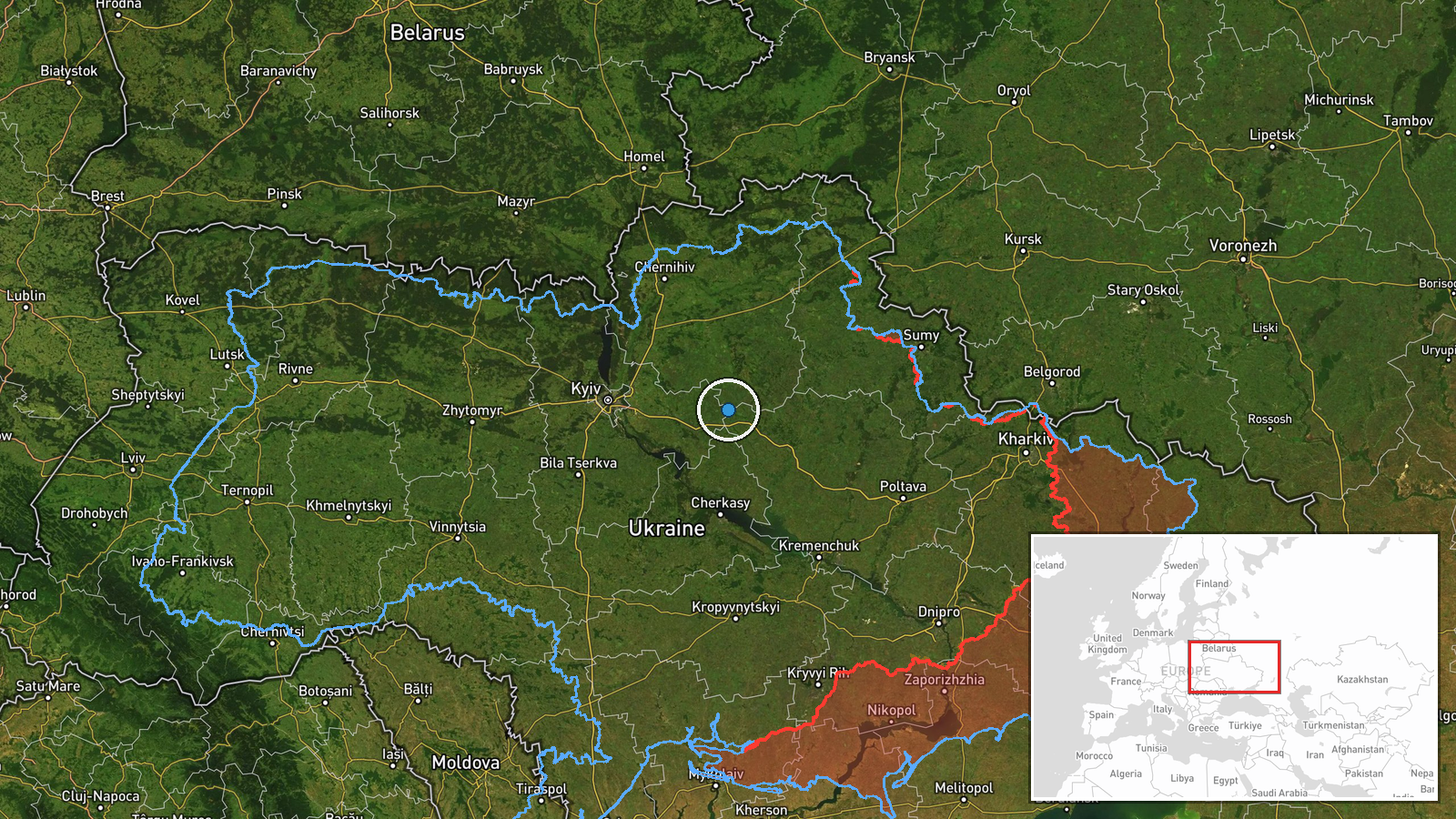
Geolocation precision is low and limited to Kyiv settlement level based on the related drone activity pattern from 26 September. The actual location where the interceptor footage was recorded remains unspecified in the source. Kyiv Oblast has been a focal point for both Ukrainian FPV attacks and Russian drone barrages throughout late September 2026.
Related events nearby
- Ukrainian FPV-kamikaze drones targeted Russian soldiers. Video evidence released showing attack on Russian mil2026-09-26 19:00 UTC · UAS Strike · Kyiv, Ukraine
- Ukrainian President Zelenskyy states that according to intelligence reports, Putin plans to expand the war in 2026-09-26 18:29 UTC · Statement · Kyiv, Ukraine
- Ukrainian military intelligence warns of Russian preparations for a combined missile attack on the night of 272026-09-26 18:25 UTC · Report · Kyiv, Ukraine
- One Russian Shahed-136 reactive (jet-propelled) kamikaze drone detected transiting from Bryansk Oblast toward 2026-09-26 06:03 UTC · Air Defense · Kyiv, Ukraine
- Ukrainian air defenses successfully intercepted/destroyed 134 Russian attack drones (173 launched: Shahed, Ger2026-09-26 05:22 UTC · Air Defense · Kyiv, Ukraine
▶ View this event on the live map
Intel Mapper aggregates open-source reports from monitored Telegram and X channels, geolocates them, cross-checks duplicates across sources and assigns a confidence score. Entries are updated as new confirmations arrive. Read how we verify events.