Ukrainian FPV drones strike Russian positions in eastern Ukraine
What happened
Ukrainian forces reportedly deployed first-person-view kamikaze drones against Russian military positions in eastern Ukraine on October 3, according to a report shared on X by @ConflictTR. Video documentation of the strikes was released by the source. The report indicates multiple Russian personnel were struck in the operation, though specific casualty figures and precise target locations were not disclosed.
Context and assessment
FPV drone attacks have become increasingly prevalent along the eastern front, where Ukrainian forces have systematically targeted Russian concentrations to disrupt operations and inflict losses. This incident follows a similar report from October 2 in which Ukrainian Airborne Forces claimed precision strikes against Russian personnel and equipment in the Kupiansk area of Kharkiv Oblast. The pattern suggests Ukrainian drone operators continue to exploit tactical opportunities against exposed or concentrated Russian forces, particularly in regions of active ground contact where Russian personnel may be less dispersed. Such strikes typically aim to degrade Russian combat capacity incrementally rather than achieve singular large-scale effects.
Sources and confidence
The report originates from a single X account (@ConflictTR) with no visible cross-confirmation from other open-source monitors at present. The source released video documentation, which may support verification but has not been independently confirmed. The low confidence score reflects single-source reporting and regional-level location precision, limiting assessment of tactical significance or specific impact.
Location
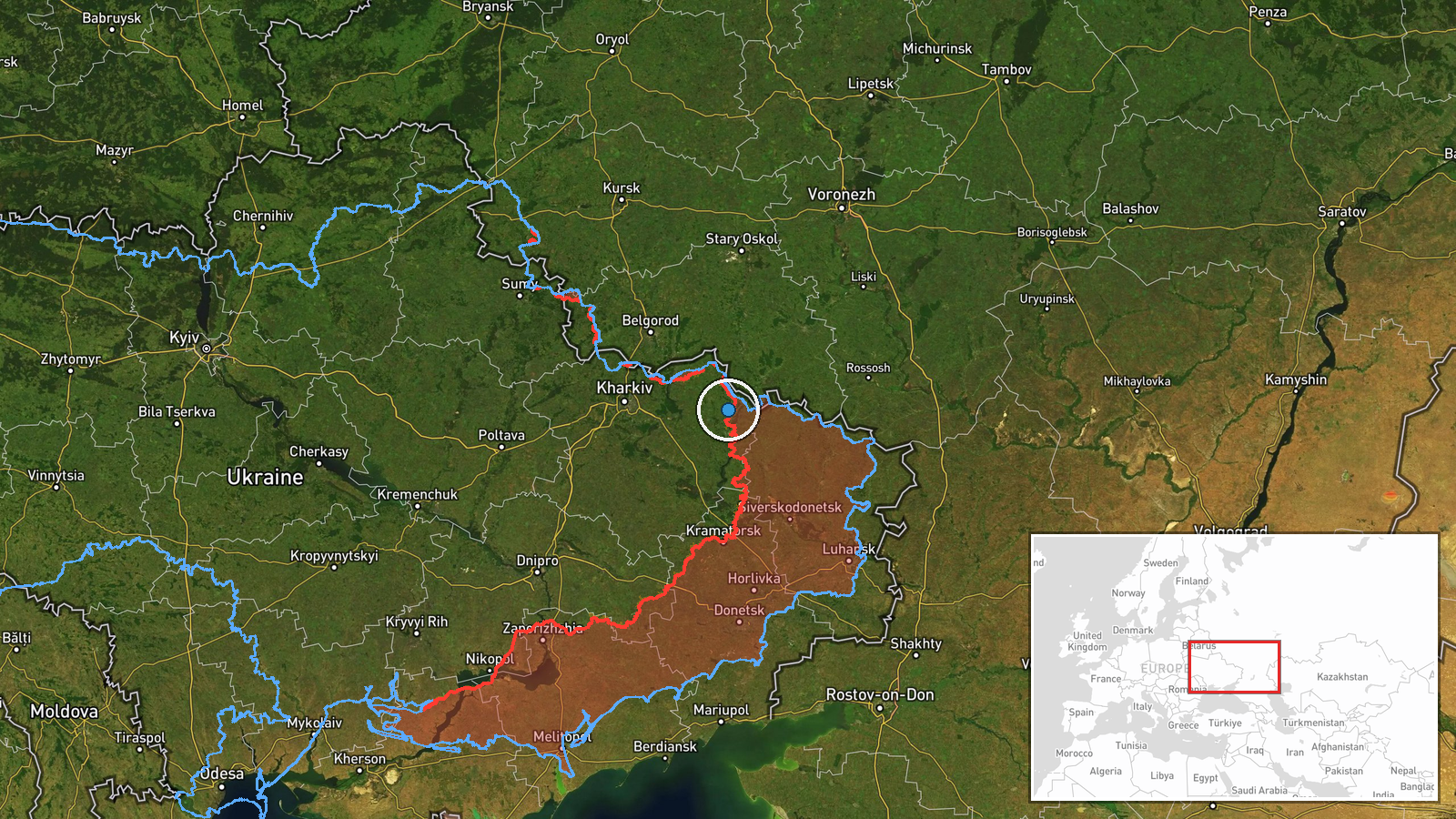
The reported strike location is placed in eastern Ukraine at approximately 49.92°N, 37.65°E, corresponding to the broader Donbas region with low geographic precision. The coordinates fall within or near contested areas where active ground operations occur, though the exact settlement or facility targeted remains unspecified in available reporting.
Related events nearby
- Ukrainian Airborne Forces (ДШВ) report systematic destruction of Russian personnel and equipment through preci2026-10-02 15:29 UTC · Report · Kupiansk, Kharkiv Oblast, Ukraine
▶ View this event on the live map
Intel Mapper aggregates open-source reports from monitored Telegram and X channels, geolocates them, cross-checks duplicates across sources and assigns a confidence score. Entries are updated as new confirmations arrive. Read how we verify events.