Greece plans 522 new fortifications along Turkey border and Aegean islands
What happened
Greek military officials reportedly plan to construct 522 new fortifications along the Evros River border region with Turkey and on Aegean islands, according to Turkish media reporting on Greek defense announcements. The fortification program reportedly draws on lessons learned from recent conflicts in Iran and Ukraine, suggesting a focus on defensive infrastructure adapted to contemporary warfare patterns. The timing and scale indicate a significant military investment in border security.
Context and assessment
The Evros River marks Greece's land border with Turkey, a flashpoint for periodic tensions over maritime boundaries, airspace, and migration. Greece has historically maintained military presence in the region, and the Aegean islands remain strategically significant in Greek-Turkish relations. The reported emphasis on lessons from Ukraine and Iran suggests Greek planners may be incorporating observations about drone vulnerabilities, dispersed defenses, and hardened positions. This defensive buildup could reflect broader NATO member concerns about regional stability and deterrence posture, though the stated rationale and scale require independent confirmation.
Sources and confidence
Reported by Turkish media outlet @ConflictTR via X (formerly Twitter) citing Greek military sources. Single-source reporting limits independent verification. Confidence score of 6.0 reflects lack of cross-confirmation from Greek official statements or Western defense analysts. Confirmation from Greek military statements or NATO assessments would strengthen confidence; retraction or contradiction from official Greek sources would lower it significantly.
Location
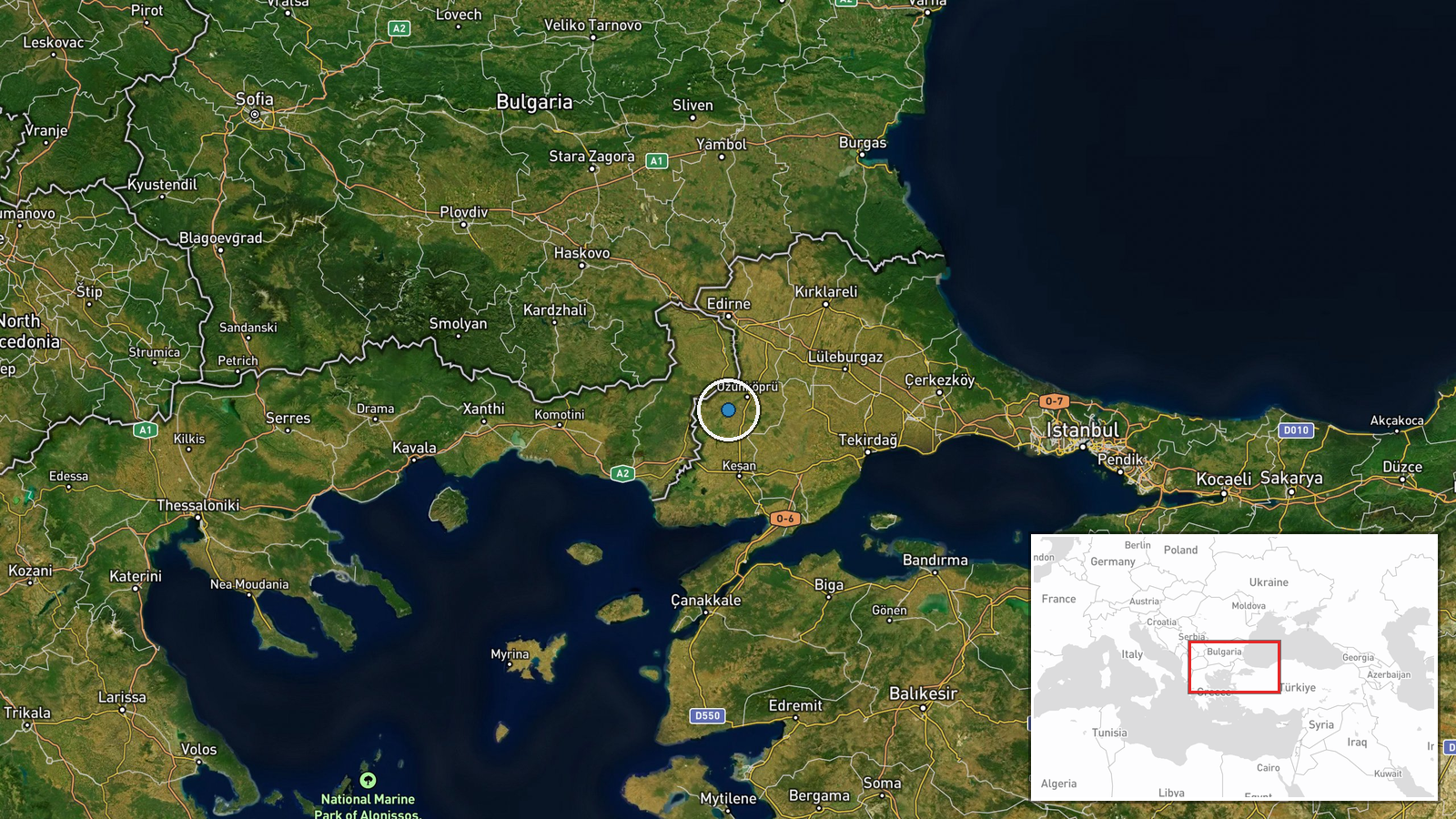
The Evros River forms the Greece-Turkey land border in northeastern Greece (Thrace region). The fortifications are reportedly planned for both the river valley and Aegean islands to the south. The Evros region sits approximately 250 kilometers northeast of Athens and represents Greece's primary terrestrial border with Turkey.
▶ View this event on the live map
Intel Mapper aggregates open-source reports from monitored Telegram and X channels, geolocates them, cross-checks duplicates across sources and assigns a confidence score. Entries are updated as new confirmations arrive. Read how we verify events.