Air raid sirens activated in eastern Poland after Russian UAVs detected
What happened
Air raid sirens were activated across eastern Poland on October 8 following the detection of Russian unmanned aerial vehicles in the region, according to a report from the conflict monitoring account @ConflictTR on X. No strikes were reported at the time of the alert. The activation represents a standard defensive response to airspace incursion, with Polish air defenses and civil protection systems engaging their warning protocols.
Context and assessment
Eastern Poland sits roughly 200–300 kilometers west of the Ukrainian border and has experienced periodic drone and cruise missile activity as Russian strikes on Ukraine have occasionally extended into Polish airspace or seen weapons transit through it. UAV detections typically trigger precautionary siren activation to alert civilians and military personnel. Such incidents have become routine along Poland's eastern frontier since Russia's 2022 invasion of Ukraine, though Polish territory itself has seen limited direct strikes. The alert reflects the continued volatility in the region and the readiness of Polish civil defense systems to respond to transborder aerial threats.
Sources and confidence
A single source, @ConflictTR on X, reported the incident with no immediate cross-confirmation from Polish official channels or other monitors. The confidence score of 6/10 reflects single-source reporting and the absence of corroboration from Polish government statements or multiple independent channels. Official Polish military or Interior Ministry confirmation would raise confidence; detailed casualty or damage claims from unverified sources would lower it.
Location
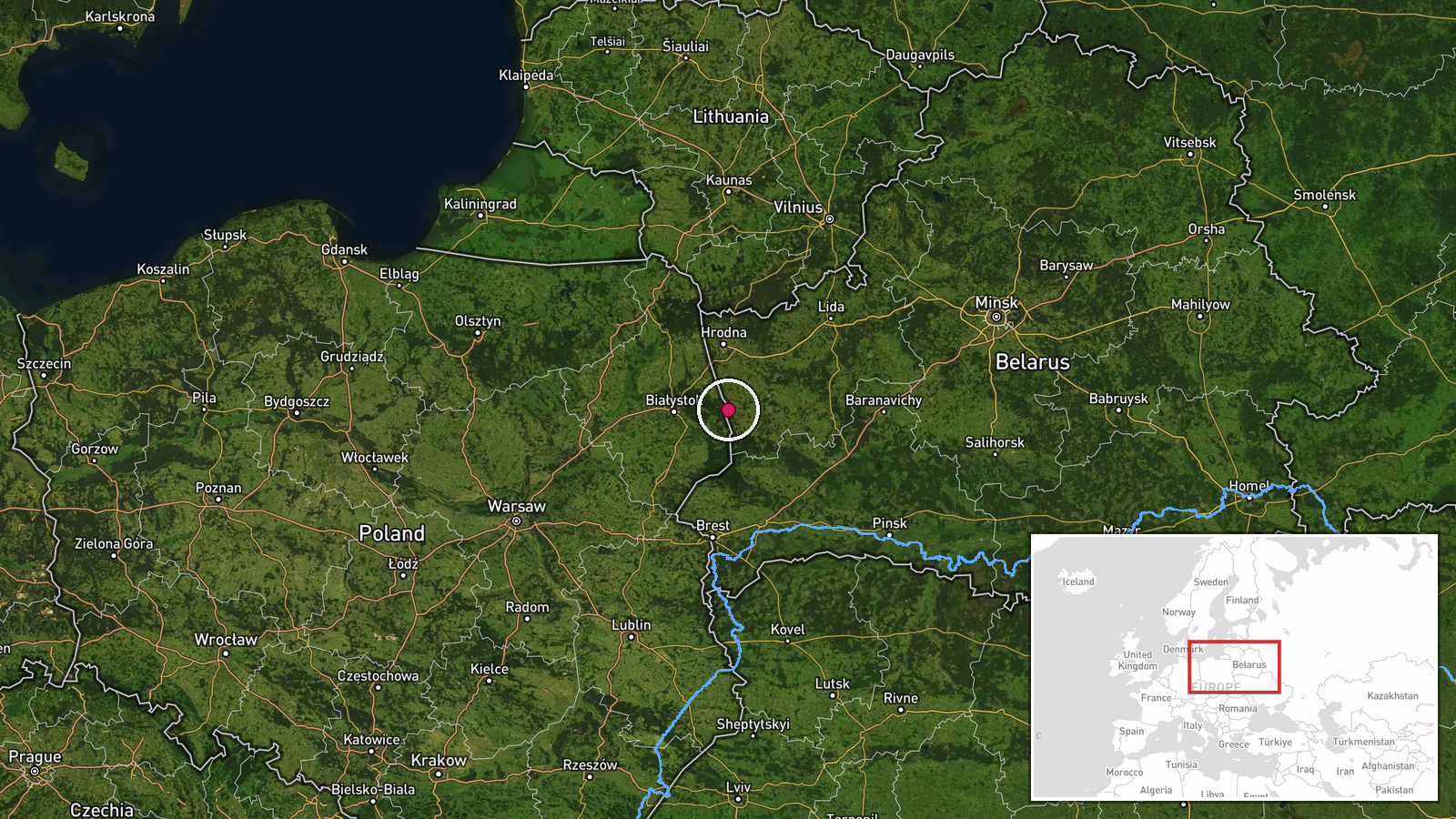
Eastern Poland, located at approximately 53.15°N, 23.89°E. The precision is regional rather than site-specific due to limited geographic detail in the source. The coordinates place the alert in the Podlaskie Voivodeship, near the border regions of Belarus and Lithuania, roughly 200 kilometers west of Ukraine.
▶ View this event on the live map

Intel Mapper aggregates open-source reports from monitored Telegram and X channels, geolocates them, cross-checks duplicates across sources and assigns a confidence score. Entries are updated as new confirmations arrive. Read how we verify events.