Saudi Arabia reports airports targeted in attacks over four-day period
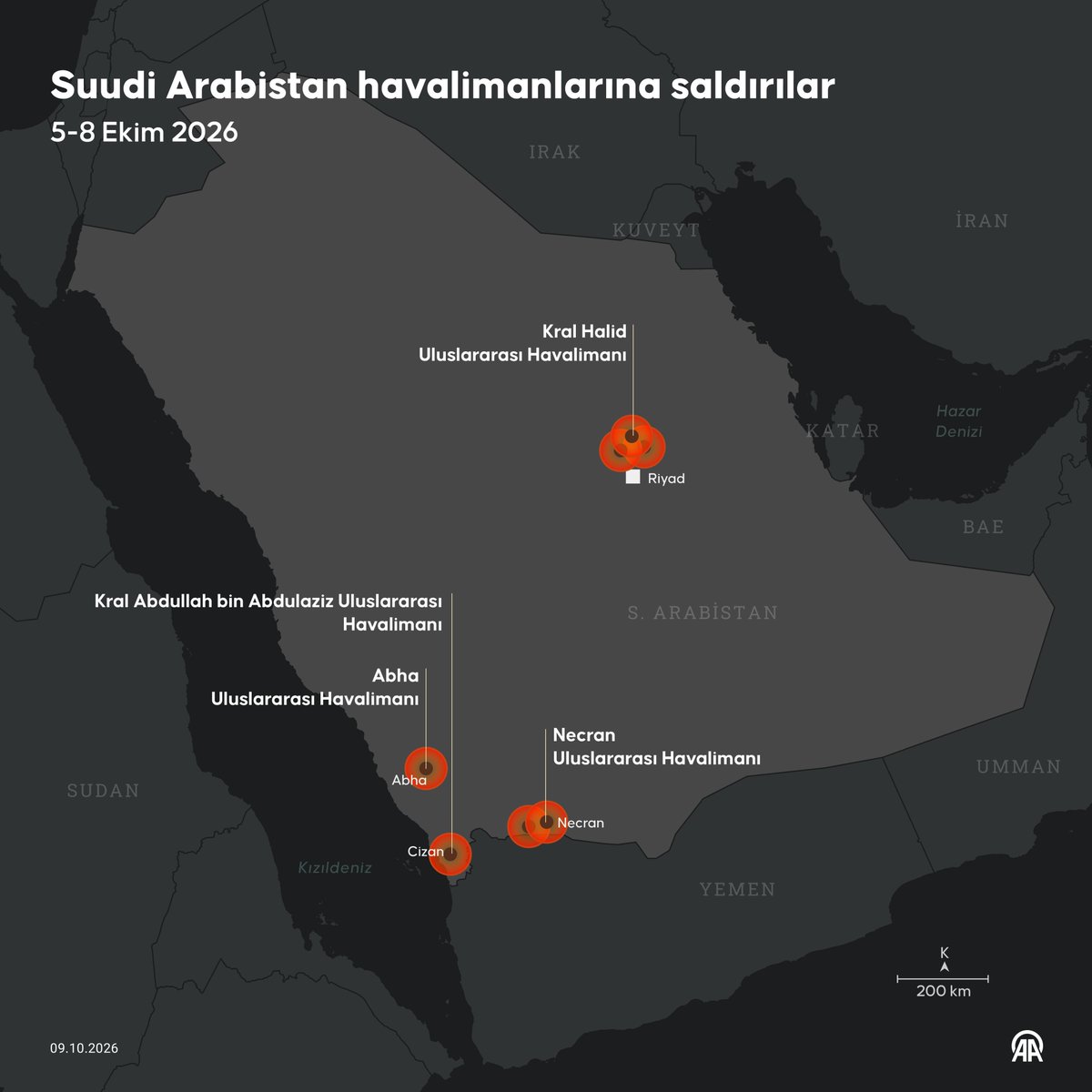
What happened
Saudi Arabia issued a statement on October 9 reporting that multiple airports within its territory came under attack over a four-day window. The announcement, distributed via the state news agency AA, did not specify which airports were affected, provide casualty figures, or detail the weapons used. The statement referenced a media attachment but offered no further elaboration on the incidents.
Context and assessment
The report coincides with an intensification of cross-border strikes on Saudi infrastructure. Related statements from Saudi officials on the same day indicate heightened tensions with Houthi forces, with Riyadh rejecting ceasefire proposals and asserting it will not negotiate until the Saudi-backed Yemeni government recovers recently lost territory. A ballistic missile strike on King Khalid International Airport in Riyadh on October 9 reportedly killed three people and damaged aircraft, disrupting regional air traffic. This pattern suggests sustained pressure on Saudi aviation assets and may reflect Houthi efforts to degrade Saudi military and civilian air capabilities as part of the broader Yemen conflict.
Sources and confidence
Reported by X account @ConflictTR citing Saudi state news agency AA. Single source with no independent cross-confirmation of specific airports, attack methods, or damage assessment. Confidence score of 6.0 reflects the official Saudi statement as credible but the lack of operational detail and source diversity. Score would increase with named airports, confirmed casualty figures, or corroboration from international news agencies; would decrease if details contradict established reporting on concurrent incidents.
Location
Riyadh, Saudi Arabia (24.63°N, 46.72°E). The statement references airports broadly without geographic specificity, though related incidents on October 9 targeted King Khalid International Airport in Riyadh, the capital's primary hub. Geographic precision set to settlement level due to ambiguity in the original statement regarding which of Saudi Arabia's multiple airports were struck.
Related events nearby
- Saudi Ambassador to Yemen Mohammed Al Jaber claims Bab el-Mandeb Strait has been cleared of Houthi forces foll2026-10-09 11:23 UTC · Statement · Riyadh, Saudi Arabia
- Saudi Arabia declares it will not accept a ceasefire with the Houthis until the Saudi-backed Yemeni government2026-10-09 09:20 UTC · Statement · Riyadh, Saudi Arabia
- Pakistan PM Sharif condemned Houthi strikes on Saudi airports that killed three (including a Saudia pilot) and2026-10-09 09:48 UTC · Airspace Closure · King Khalid International Airport, Riyadh, Saudi A
- Houthis launched ballistic missile strike on King Khalid International Airport in Riyadh on Thursday. Three Sa2026-10-09 07:49 UTC · Ballistic Missile · King Khalid International Airport, Riyadh, Saudi A
▶ View this event on the live map

Intel Mapper aggregates open-source reports from monitored Telegram and X channels, geolocates them, cross-checks duplicates across sources and assigns a confidence score. Entries are updated as new confirmations arrive. Read how we verify events.