Pakistan tests Fatah-2 hypersonic ballistic missile
What happened
Pakistan's military conducted a test launch of the Fatah-2 hypersonic ballistic missile on 13 October, according to a report via X. The test demonstrated what officials characterize as an advancement in the country's ballistic missile capabilities. No details were provided regarding the launch location, trajectory, or performance parameters. The announcement came hours after a phone conversation between Turkish and Pakistani defense leadership.
Context and assessment
Pakistan has pursued hypersonic missile development as part of a broader modernization of its strategic arsenal, partly in response to regional military developments. The Fatah series represents an effort to acquire systems capable of penetrating advanced air defenses. The timing of this test, occurring the same day as high-level military talks with Turkish leadership, may reflect coordination among regional powers on defense matters, though no direct link has been stated. Such tests are typically conducted at designated ranges and serve as both technical validation and signaling of capability to potential adversaries and allies.
Sources and confidence
A single source—the X account @ConflictTR—reported the test. There is no independent cross-confirmation from Pakistani military statements, international monitoring services, or other open-source channels. The low confidence score reflects the single-source constraint and lack of official corroboration. Confirmation from Pakistani defense ministry statements, satellite imagery of launch sites, or secondary reporting would substantially increase confidence.
Location
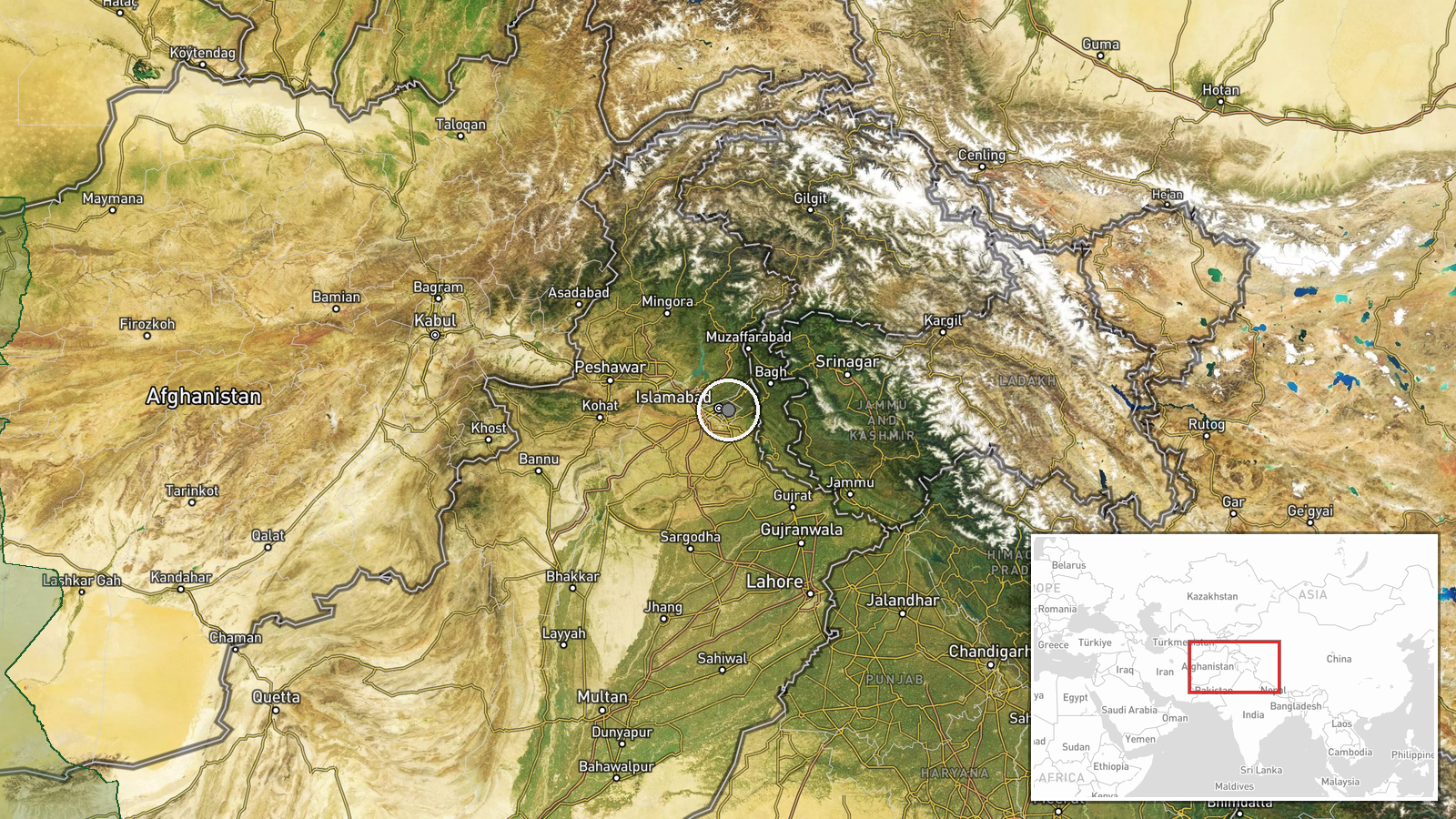
The test location was not disclosed in available reporting. The event is registered at a region-level precision (approximate coordinates in central Pakistan) reflecting the absence of specific launch-site information. Pakistan operates several ballistic missile test ranges, including facilities in Balochistan and Sindh provinces, though the actual launch location remains unconfirmed.
Related events nearby
- Turkish Chief of General Staff Gen. Selçuk Bayraktaroğlu held a phone conversation with Pakistani Defense Forc2026-10-13 10:10 UTC · Diplomacy · Islamabad, Pakistan
▶ View this event on the live map

Intel Mapper aggregates open-source reports from monitored Telegram and X channels, geolocates them, cross-checks duplicates across sources and assigns a confidence score. Entries are updated as new confirmations arrive. Read how we verify events.