South Sudan army says it dismantled Juba child-trafficking ring, arrests eight suspects
What happened
According to a Radio Tamazuj web report published on 20 October 2026, the South Sudan People's Defence Forces (SSPDF) announced the dismantling of a child-trafficking network operating in Juba, the South Sudanese capital. SSPDF spokesperson Maj. Gen. Lul Ruai reportedly said the group was involved in the theft and sale of 23 children over recent weeks. Eight suspects have been arrested, including former government officials, and the report indicates a manhunt is continuing for others. The article's text is truncated in the feed, so the full charges, the identities of the detainees and the status of the children are not available here. The piece is framed largely around civil society praise for the army's campaign, and the wording of the announcement is attributed to the spokesperson rather than independently verified.
Context and assessment
Juba is the seat of government and the country's main urban hub, so arrests there carry institutional and public weight. Child abduction and trafficking are not new in South Sudan, where years of conflict, displacement and thinly resourced policing have left children exposed to exploitation. The inclusion of former officials among the suspects is the most significant detail in the report, as it could suggest the network relied on contacts within or near state structures, though the available text does not establish this. A related item from the same morning concerns Kondeko in Yei River County, Central Equatoria, where community leaders called for joint action against gangs, theft and insecurity, proposing limits on discos, tighter bail rules and measures to block gang movement. Taken together, the two items point to a broader public concern about organised crime and insecurity in urban and peri-urban areas rather than a single isolated incident. Operationally, a police-led sweep that names a network and detains several people may serve a public signalling purpose as well as a investigative one. The manhunt for further suspects suggests the network had more participants than those already detained. Whether the arrests will lead to prosecutions, recovery of the children, or wider institutional reform is not indicated in the data.
Sources and confidence
Only one channel is listed: a Radio Tamazuj web article, which is itself a civil society-framed report built around an army announcement. No independent cross-confirmation from another news outlet, a government or police release, or a court record appears in the data. The confidence score of 6.0 reflects a specific, named official, concrete figures and a clear location, but also a single unverified source with no visible second outlet. It would rise if the SSPDF statement were published directly, if wire services or other Juba-based outlets reported the 23 children, the eight arrests and the named officials, or if a court filing followed. It would fall if authorities disputed the numbers or the identities of the suspects, or if the claims proved to rest mainly on the civil society activist's commentary rather than case files.
Location
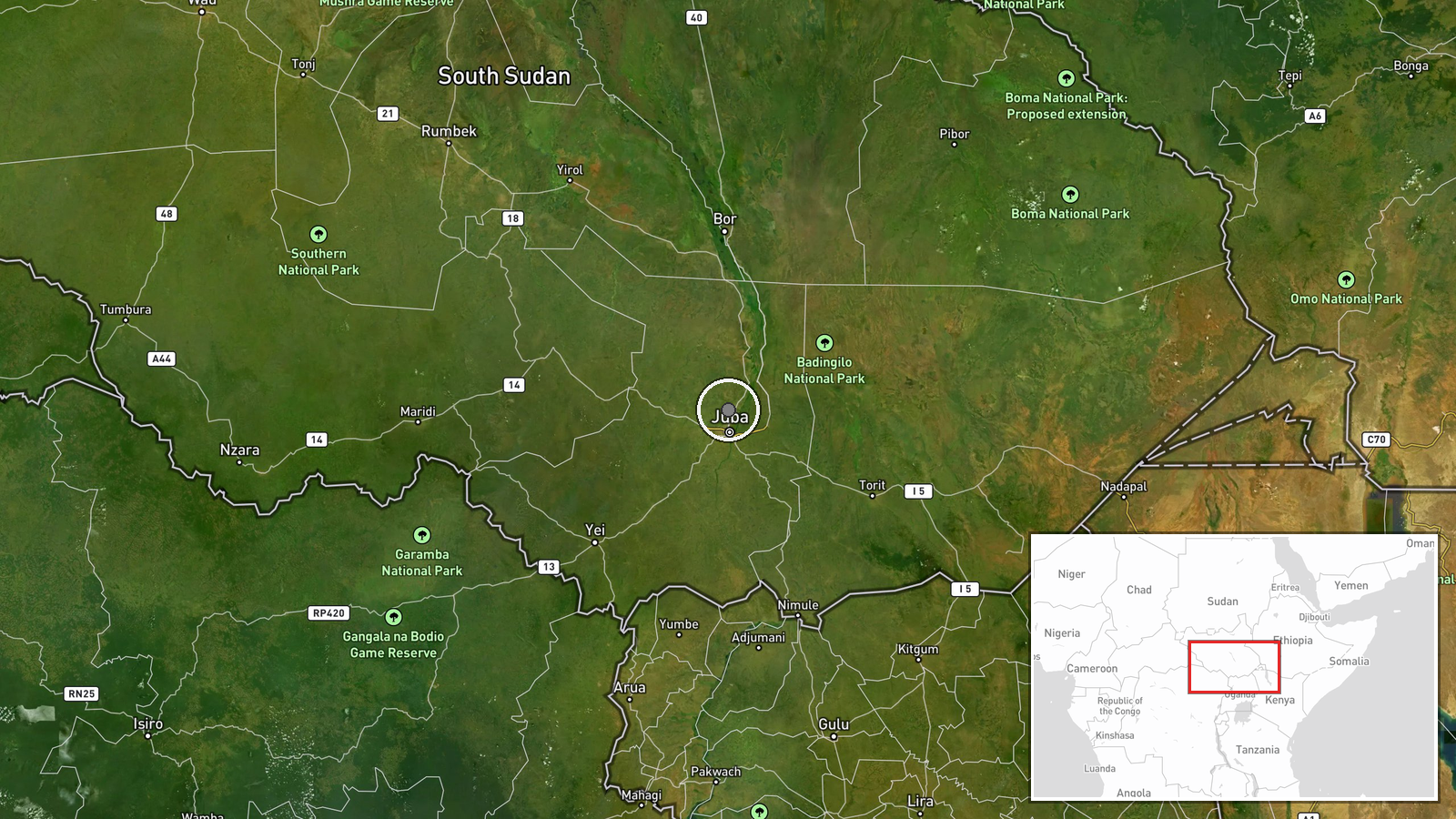
The location is settlement-level: the coordinates (5.0 N, 31.58 E) place the report within the urban area of Juba, which the data rates as high confidence. The point appears to be a city-centre approximation rather than the site of any arrest or facility. Juba sits on the White Nile in the south-central part of South Sudan, and the river is a defining feature of the city's geography and transport routes. The Kondeko event in Yei River County lies in Central Equatoria, a separate administrative area to the southwest.
Related events nearby
- Community leaders in Yei River County call for joint action against gangs, theft and insecurity, proposing an 2026-10-20 08:10 UTC · Security · Kondeko, Yei River County, Central Equatoria, Sout
▶ View this event on the live map

Intel Mapper aggregates open-source reports from monitored Telegram and X channels, geolocates them, cross-checks duplicates across sources and assigns a confidence score. Entries are updated as new confirmations arrive. Read how we verify events.