Iraq to release 457 Syrian detainees lacking prosecutable evidence
What happened
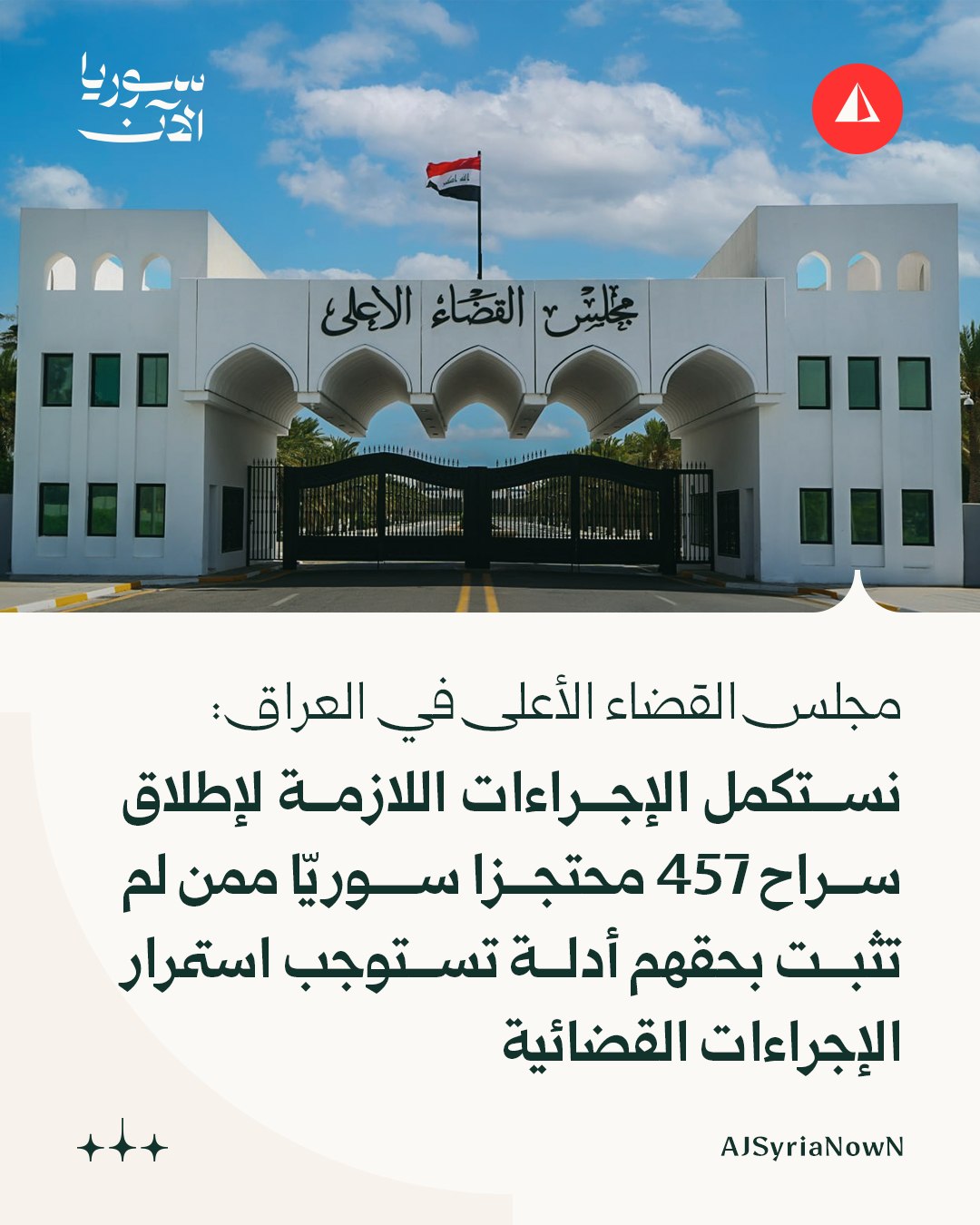
Iraq's Supreme Judicial Council announced coordination with the Syrian Embassy in Baghdad to release 457 Syrian detainees for whom no evidence supporting continued prosecution has been established. The council stated it is completing necessary legal procedures before handing over detainees to Syrian officials. The statement was issued on 1 September via official Iraqi judicial channels and indicates a systematic review of cases lacking sufficient grounds for continued detention.
Context and assessment
The release announcement reflects broader regional reconciliation efforts between Iraq and Syria following years of conflict and displacement. Large Syrian migrant and detainee populations have remained in Iraqi custody since the collapse of ISIS territorial control. This action suggests Iraqi authorities are processing long-held cases to clear detention facilities and normalize legal procedures. The timing coincides with diplomatic engagement, including a concurrent U.S. military aid package to Iraq, indicating wider regional stabilization initiatives. Such releases may ease humanitarian concerns while also reflecting Baghdad's capacity constraints in managing prolonged detentions without formal charges.
Sources and confidence
Reported by Telegram channel @AJSyriaNow citing the Supreme Judicial Council statement. Single-source reporting limits independent verification of the specific detainee count and procedural timeline. Confidence remains moderate pending Syrian government or international corroboration. Cross-confirmation from Syrian Embassy statements or UNHCR monitoring would strengthen confidence; any discrepancy in released numbers or timeline would lower it.
Location
Baghdad, Iraq, determined by identified settlement coordinates. The capital's location as both administrative center and seat of judicial authority is confirmed. The Syrian Embassy presence in Baghdad enables official handover procedures. No specific detention facility was named in the announcement.
Related events nearby
- U.S. State Department approves $800M military package to Iraq: Bell 412EPX/407M helicopters, machine guns, roc2026-09-01 06:40 UTC · Deployment · Baghdad, Iraq
▶ View this event on the live map
Intel Mapper aggregates open-source reports from monitored Telegram and X channels, geolocates them, cross-checks duplicates across sources and assigns a confidence score. Entries are updated as new confirmations arrive. Read how we verify events.