Syrian authorities plan Mezzeh Airport rehabilitation for civilian aviation use
What happened
Syrian authorities announced plans to begin rehabilitation work on Mezzeh Airport in Damascus the following week, according to a Telegram channel citing unspecified sources. The stated purpose is to transition the facility from military to civilian use, specifically as a private aviation hub for business travelers. No timeline for completion or specific renovation details were provided in the announcement.
Context and assessment
Mezzeh Airport has historically served military functions under Syrian government control. The announced shift toward civilian private aviation represents a broader effort to restore normal civil aviation infrastructure in Damascus following years of conflict. This announcement occurs amid broader Syrian government activity focused on demonstrating renewed state capacity and normalization, as evidenced by recent statements from senior officials regarding security improvements and international cooperation on nuclear safeguards. The move may indicate confidence in stabilized security conditions sufficient to support civilian airport operations, though the facility's proximity to central Damascus and its current transition from military use warrant continued monitoring of implementation.
Sources and confidence
Reported solely by Telegram channel @AJSyriaNow, citing unspecified Syrian sources described as 'sources specific to Syria.' Single-source reporting and vague sourcing lower confidence. Cross-confirmation from government statements or aviation authority announcements would substantially increase confidence. Direct statements from relevant Syrian ministries or observable construction activity would further validate the timeline and scope.
Location
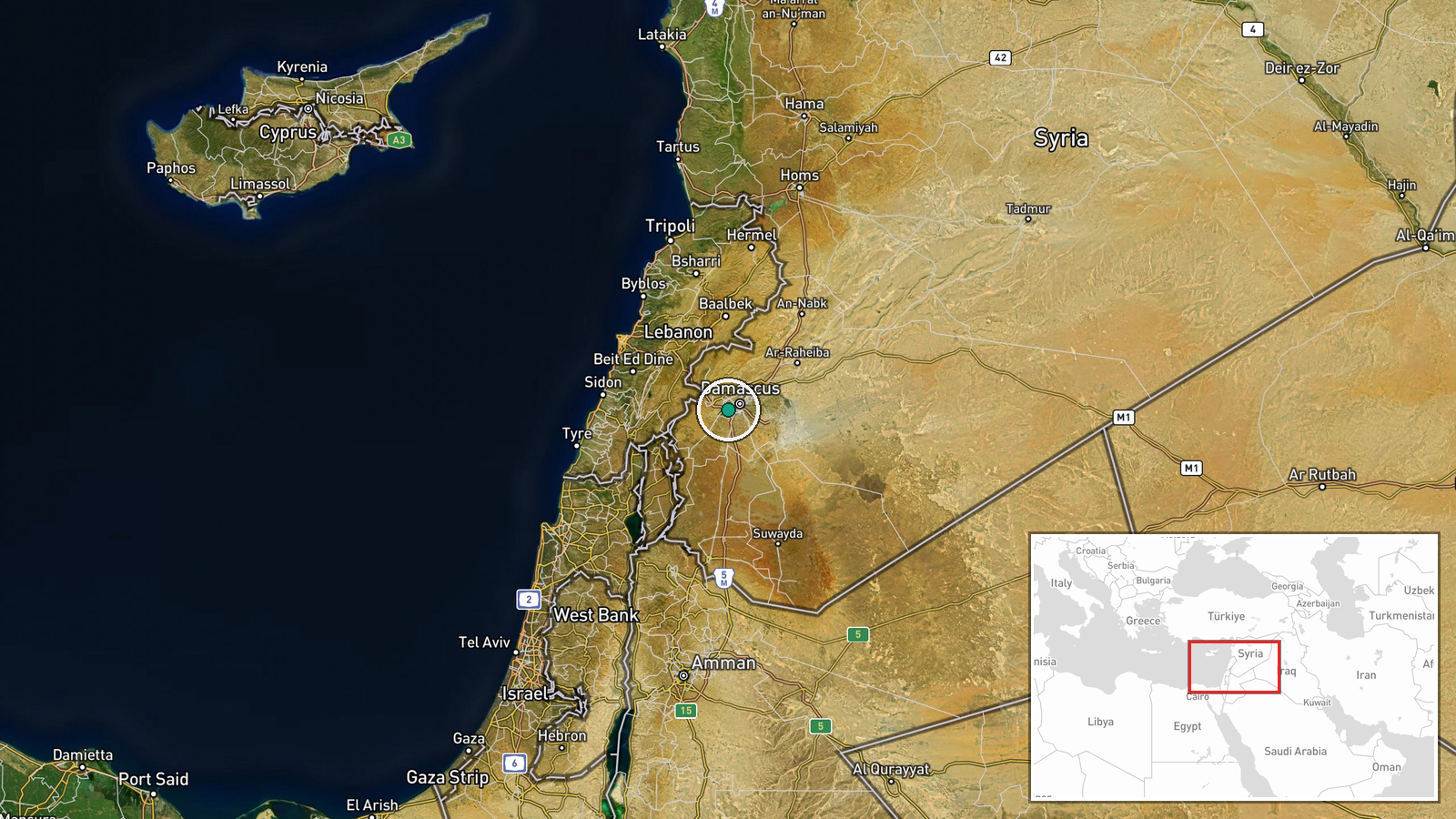
Mezzeh Airport lies approximately 15 kilometers northwest of central Damascus in the Rif Dimashq Governorate at coordinates 33.48°N, 36.23°E. The facility is situated in suburban terrain northwest of the capital and has historically served as a secondary military airfield alongside Damascus International Airport to the south.
Related events nearby
- Syrian Foreign Minister Asaad al-Shaybani revealed 117 Israeli incursions into Syrian territory over 49 days d2026-09-01 13:16 UTC · Statement · Damascus, Syria
- Interior Minister Anas Khattab visited Damascus International Fair, showcasing security capabilities including2026-09-01 21:39 UTC · Statement · Damascus International Fair, Damascus, Syria
- Syrian Civil Defense responded to 70 fires nationwide affecting homes, shops, vegetation, and electrical infra2026-09-02 07:51 UTC · Security · Damascus, Syria
- IAEA reports Syria made significant progress on past secret nuclear activities and has resolved outstanding sa2026-09-01 18:43 UTC · Statement · Damascus, Syria
- Israeli occupation forces detained a shepherd west of Ar-Rafeyd in Quneitra countryside for several hours, the2026-09-01 15:40 UTC · Security · Ar-Rafeyd, Quneitra Governorate, Syria
▶ View this event on the live map
Intel Mapper aggregates open-source reports from monitored Telegram and X channels, geolocates them, cross-checks duplicates across sources and assigns a confidence score. Entries are updated as new confirmations arrive. Read how we verify events.