EU mission chief meets Syrian foreign minister in Damascus to discuss reconstruction and trade
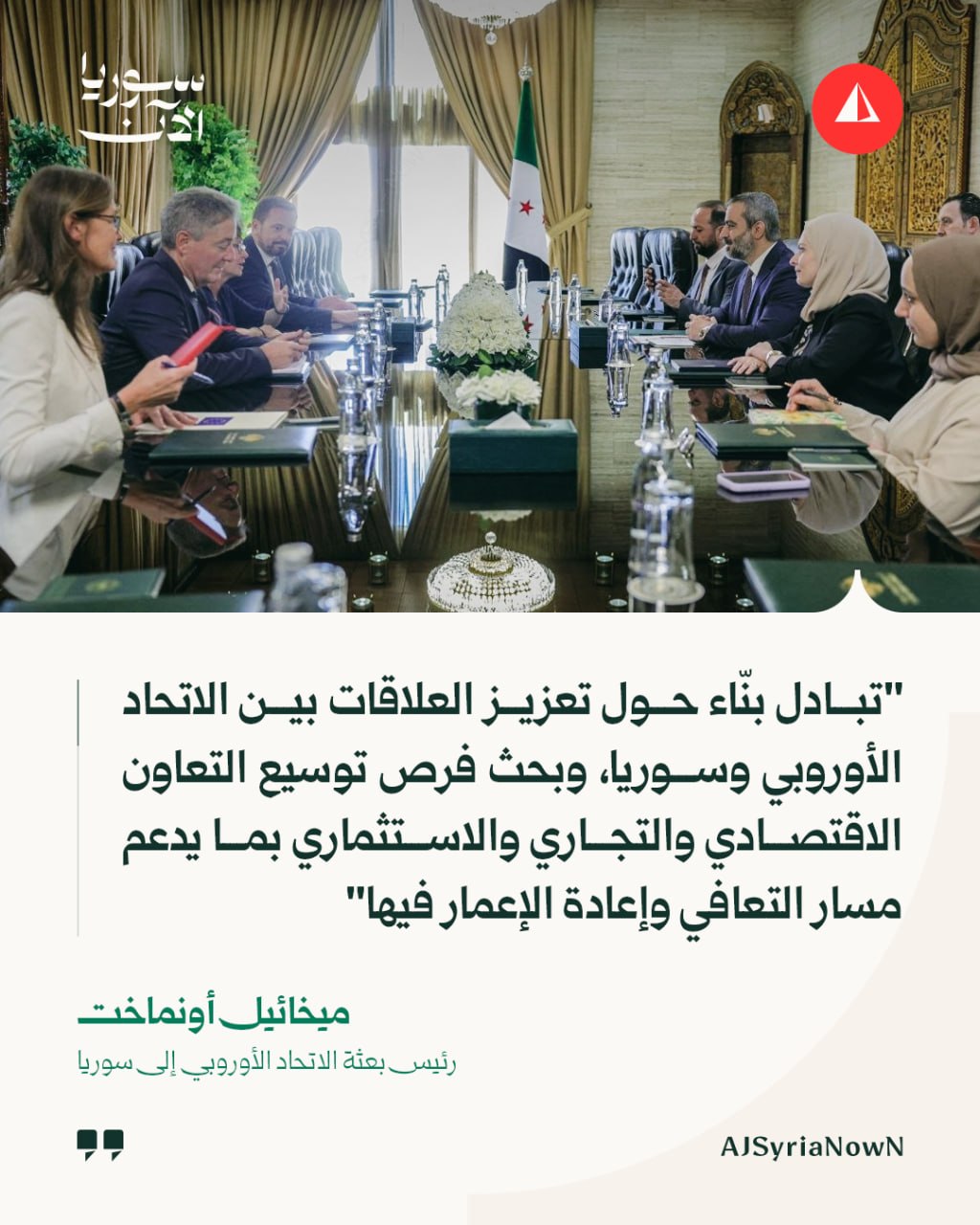
What happened
Mikhaël Unhalt, head of the EU Mission to Syria, met with Syrian Foreign Minister Asaad al-Shaibani in Damascus on September 3. According to an account posted on social media by Unhalt, the two officials held what was described as a constructive exchange covering strengthened EU-Syria relations, expanded economic and trade cooperation, and investment opportunities supporting Syria's recovery and reconstruction efforts.
Context and assessment
The meeting reflects intensifying diplomatic engagement with Syria's new government following recent political transitions. The EU engagement occurs alongside parallel negotiations with Germany on economic cooperation and investment promotion, suggesting a coordinated European approach to Syria's reintegration into international structures. However, this diplomatic momentum faces constraints: simultaneous talks between Israel and Syria over the Golan Heights buffer zone reportedly failed over Israeli refusal to withdraw, highlighting ongoing regional security tensions. Reconstruction finance and normalized trade relations remain central to Syria's stabilization, and EU involvement signals willingness to support this process conditional on political progress.
Sources and confidence
Report originated from @AJSyriaNow Telegram channel, citing Unhalt's social media post. Single-source confirmation limits confidence score to 7.5. The report's factual nature—a diplomatic meeting announcement—makes independent verification less critical than with security incidents. Confidence would increase with corroboration from official EU or Syrian government statements or second-source media reporting.
Location
Damascus, settlement-level precision. Syria's capital and seat of government, located on the Barada River in southwestern Syria approximately 188 kilometers south of the Turkish border and 75 kilometers west of the Anti-Lebanon mountain range. The city remains the administrative center under current Syrian authorities.
Related events nearby
- U.S. airstrike on a wedding in Damascus resulted in multiple child casualties now receiving hospital treatment2026-09-03 07:51 UTC · Airstrike · Damascus, Syria
- Israel-Syria security talks failed over Israeli refusal to withdraw from the Golan Heights buffer zone, which 2026-09-03 07:24 UTC · Diplomacy · Damascus, Syria
- Syrian Foreign Minister Asaad Shybani meets German delegation led by State Secretary Nils Annen to discuss eco2026-09-02 19:29 UTC · Diplomacy · Damascus, Syria
- IAEA closes investigation into alleged secret nuclear activities in Syria. Agency statement follows cooperatio2026-09-02 18:34 UTC · Statement · Damascus, Syria
- Syrian Civil Aviation Authority reports 21,971 aircraft transited Syrian airspace in August, up from 20,315 in2026-09-02 18:10 UTC · Statement · Damascus, Syria
▶ View this event on the live map
Intel Mapper aggregates open-source reports from monitored Telegram and X channels, geolocates them, cross-checks duplicates across sources and assigns a confidence score. Entries are updated as new confirmations arrive. Read how we verify events.