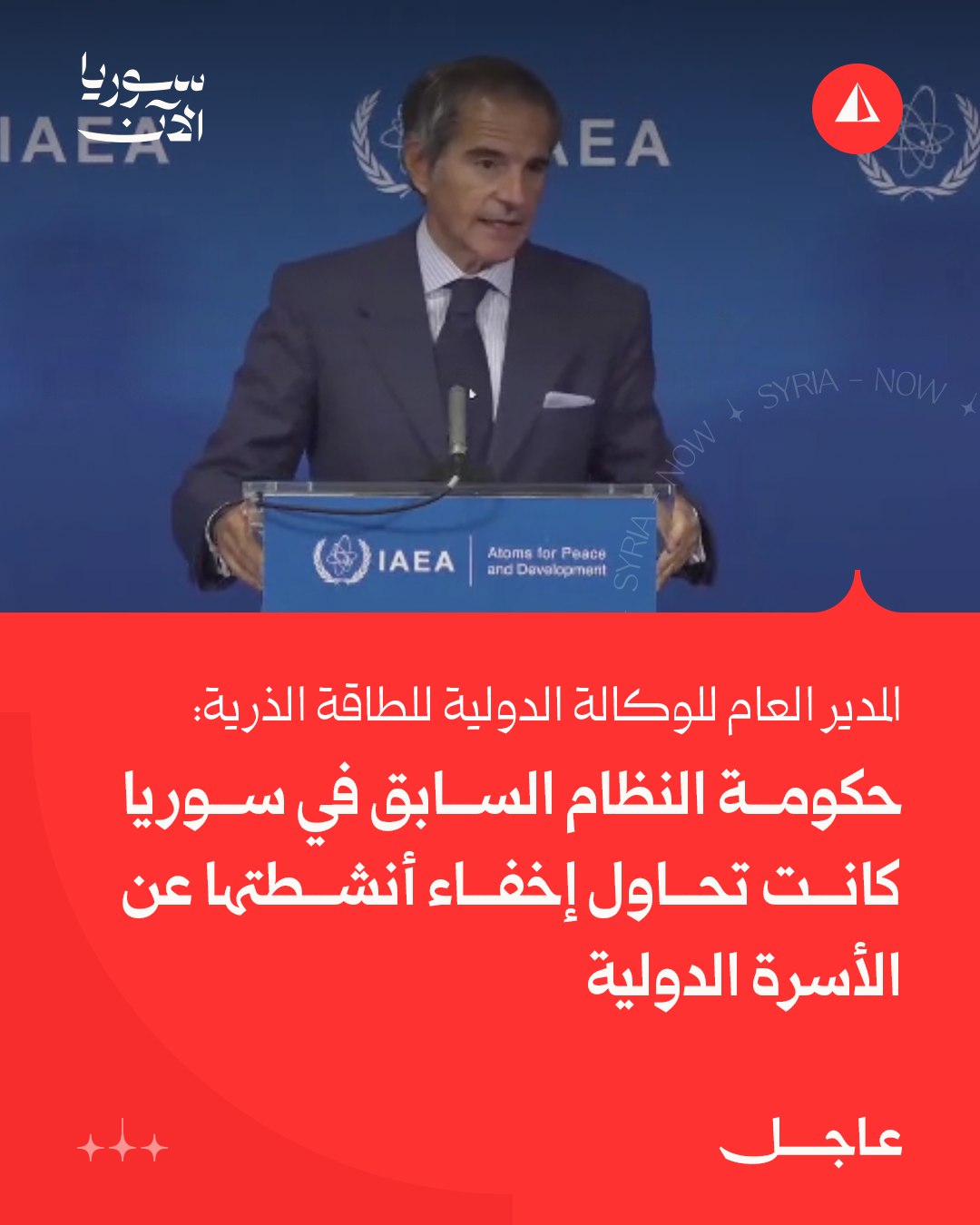
IAEA chief says Assad regime concealed nuclear activities from international community
What happened
Rafael Grossi, Director-General of the International Atomic Energy Agency, stated that Syria's previous government attempted to hide nuclear activities from the international community. The statement was made on September 7, 2026. Grossi's remarks suggest the Assad regime engaged in undisclosed nuclear programs that were not transparently reported to international oversight bodies.
Context and assessment
Syria's nuclear program has long been a subject of international scrutiny. In 2007, Israel conducted an airstrike against what it claimed was a covert nuclear reactor under construction at Al-Kibar in eastern Syria, which the Assad government denied for years before later acknowledging the facility's existence. The IAEA has previously investigated Syrian nuclear activities and raised concerns about incomplete disclosure and access to suspected sites. Grossi's statement appears to reflect ongoing assessments of the extent to which Damascus concealed aspects of its nuclear capabilities from international inspectors, a pattern consistent with broader concerns about transparency in Syria's weapons programs.
Sources and confidence
The statement was reported via Telegram channel @AJSyriaNow on September 7, 2026. Only a single source channel carries this report at present, limiting independent cross-confirmation. The confidence score of 7.5 reflects the credibility of the IAEA Director-General as a source, though the single-channel reporting limits verification. Direct attribution from Grossi or an official IAEA statement would strengthen confidence.
Location
Vienna, Austria, where the IAEA headquarters is located. This is the institutional base from which the Director-General makes official statements on member states' nuclear programs and compliance with international safeguards agreements.
▶ View this event on the live map
Intel Mapper aggregates open-source reports from monitored Telegram and X channels, geolocates them, cross-checks duplicates across sources and assigns a confidence score. Entries are updated as new confirmations arrive. Read how we verify events.