Syrian gas pipeline restored after sabotage repairs completed in Deir ez-Zor
What happened
The Syrian Petroleum Company announced on October 2 that the Jubba gas pipeline had been returned to service in Al-Shula, Deir ez-Zor Governorate, following completion of maintenance and repair work. The pipeline had sustained prior sabotage damage. The restoration marks the conclusion of reconstruction efforts in the area, according to the announcement carried by AJSyriaNow on Telegram.
Context and assessment
The Jubba pipeline serves as critical infrastructure for Syria's energy sector, and its repeated targeting reflects ongoing instability in Deir ez-Zor, a governorate where state control remains contested despite years of military operations. The pipeline's restoration occurs alongside broader Syrian government efforts to rehabilitate regional infrastructure: authorities announced a nine-month Al-Mayadin Bridge reconstruction project on the same day, while security incidents persist in the countryside—an IED strike on a security vehicle wounded two personnel on October 1. The pattern suggests Damascus is attempting to consolidate administrative control and restore economic function in areas nominally under its authority, even as sabotage attacks continue.
Sources and confidence
Reported by AJSyriaNow on Telegram, the sole source for this event. No cross-confirmation from independent monitors or competing accounts has been identified. The confidence score of 7.5 reflects single-source reporting and the absence of verification from alternative channels. Confirmation from Syrian Petroleum Company officials or additional regional sources would strengthen confidence; reports of renewed pipeline damage would lower it.
Location
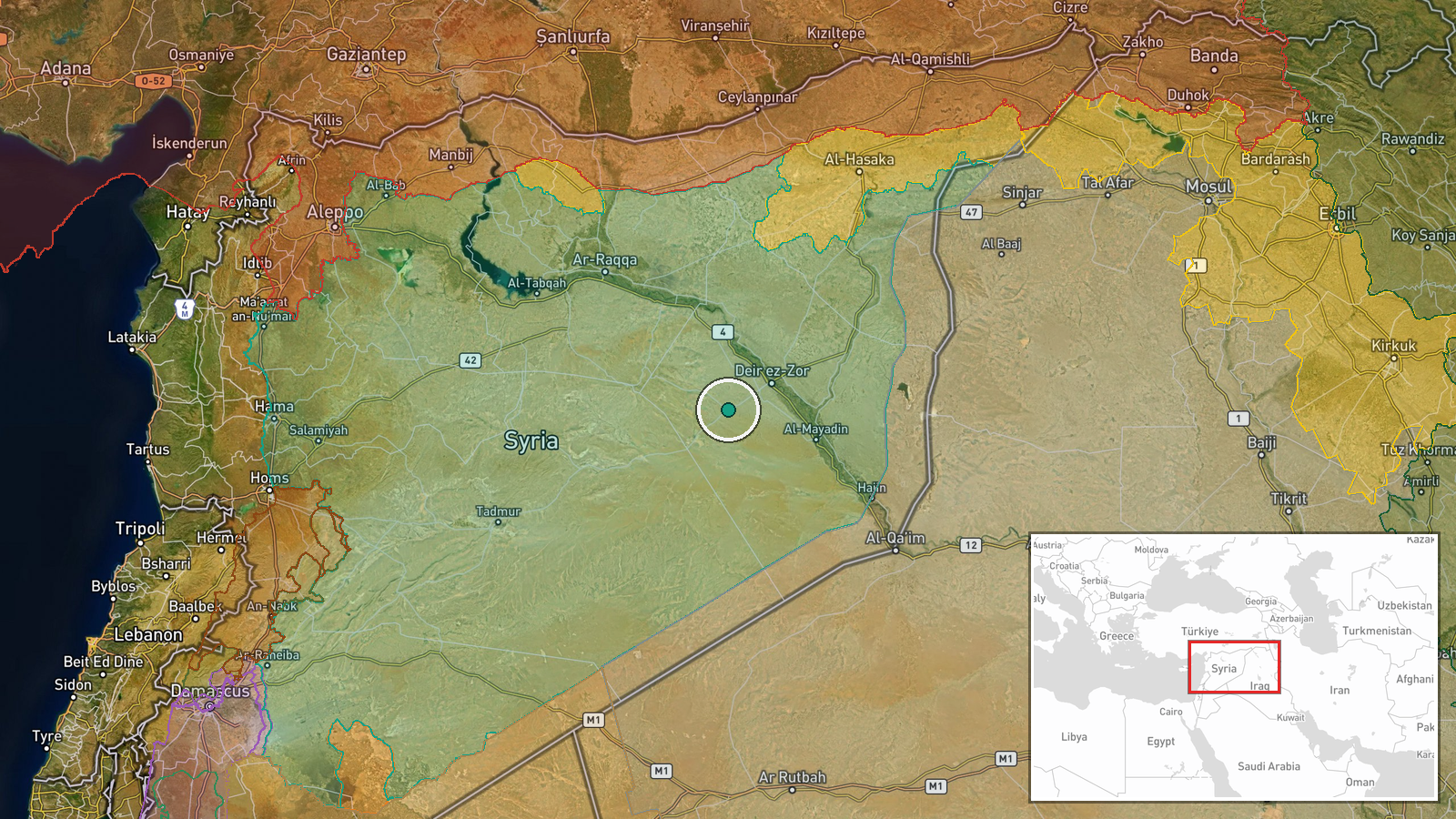
Al-Shula (also transliterated Ash-Shula) lies in Deir ez-Zor Governorate in eastern Syria, approximately 35.19°N, 39.85°E. The settlement sits in the broader Deir ez-Zor countryside, a semi-arid region crossed by the Euphrates River. The Jubba pipeline corridor traverses this territory as part of Syria's national gas infrastructure network.
Related events nearby
- Syrian authorities continue repairs on gas pipeline in Ash-Shula area, Deir ez-Zor countryside, following rece2026-10-01 10:58 UTC · Humanitarian Aid · Ash-Shula, Deir ez-Zor Countryside, Syria
- Deir ez-Zor Governor Ziyad Al-Aish announced the launch of the Al-Mayadin Bridge reconstruction project, a key2026-10-01 12:10 UTC · Humanitarian Aid · Al-Mayadin Bridge, Al-Mayadin, Deir ez-Zor
▶ View this event on the live map
Intel Mapper aggregates open-source reports from monitored Telegram and X channels, geolocates them, cross-checks duplicates across sources and assigns a confidence score. Entries are updated as new confirmations arrive. Read how we verify events.