Syrian authorities seize 62 kg hashish, 210,000 captagon pills in Damascus drugs bust
What happened
Syrian anti-narcotics authorities reportedly intercepted a major drug smuggling operation in rural Damascus on October 6, confiscating 62 kilograms of hashish and 210,000 captagon pills. The smuggled consignment originated from Lebanon, according to a Telegram announcement by anti-narcotics management. No arrests or additional operational details were disclosed in the available reporting.
Context and assessment
Drug trafficking across the Syria-Lebanon border remains a persistent security concern, reflecting broader regional instability and porous cross-border controls. The seizure occurs amid a wider pattern of Syrian security operations, including a weapons cache raid in Daraa Governorate on October 5 targeting militant networks. These enforcement actions suggest the Syrian government is attempting to reassert administrative control over trafficking routes and criminal networks. Captagon, a stimulant widely trafficked in the Levant, has become a significant revenue source for armed groups and criminal organizations across Syria and the region.
Sources and confidence
Single source: Telegram channel @AJSyriaNow reporting Syrian anti-narcotics authority statement. No cross-confirmation from independent monitors or second official channels detected. Confidence score of 7.5 reflects official government channel but absence of verification. Confirmation by additional Syrian security sources or international drug enforcement agencies would strengthen confidence. Clarification of seizure circumstances and location precision would also increase reliability.
Location
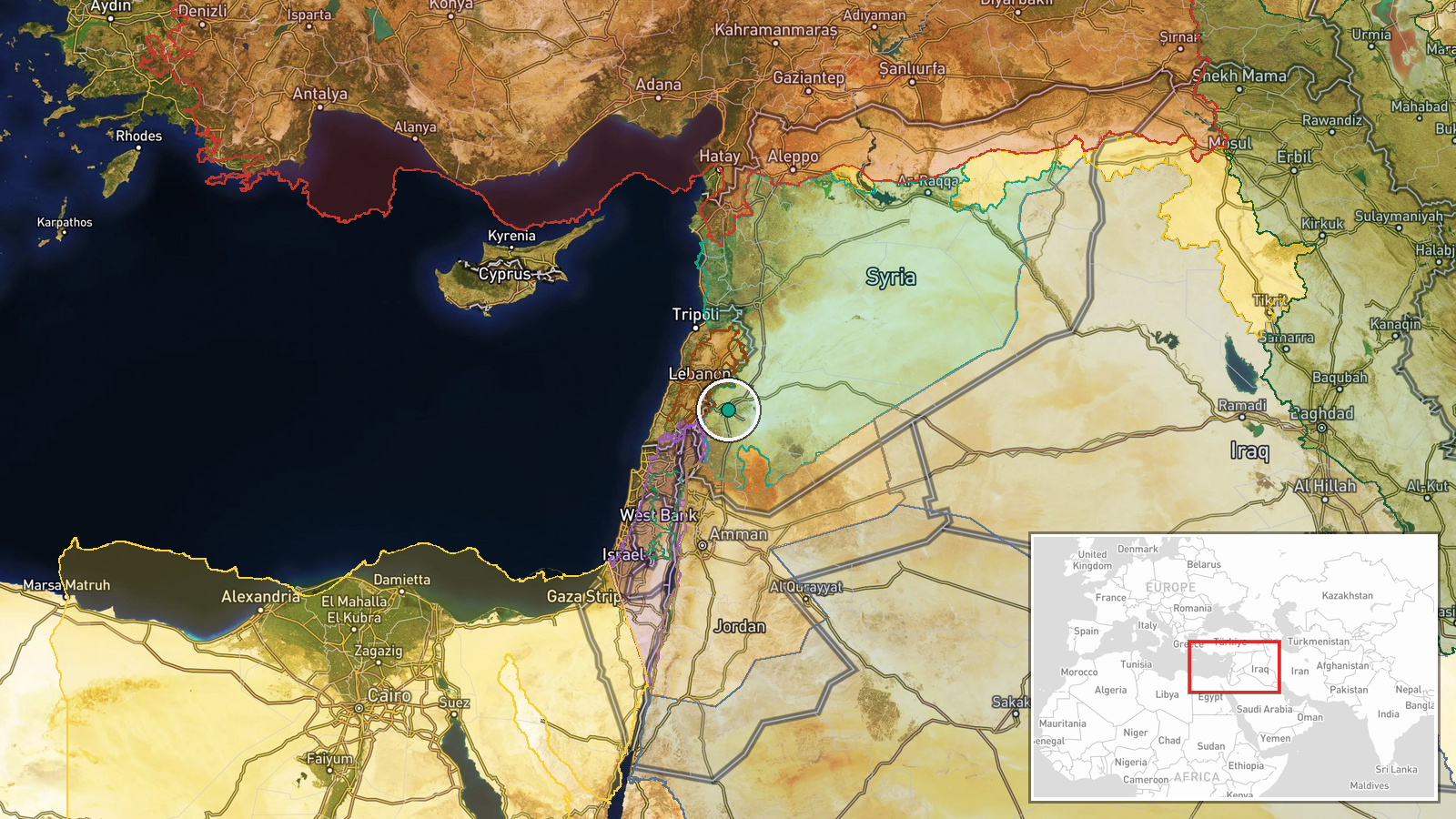
Rural Damascus region, coordinates approximate to northern Damascus countryside near Lebanese border region. Geo-precision limited to regional level due to 'rural' designation without specific settlement naming. Proximity to Lebanon reflects typical smuggling corridor geography where narcotics transit from Lebanese supply areas into Syrian territory via established but contested cross-border routes.
Related events nearby
- Residents of Al-Mataras village in Tartous countryside commemorate victims of a 2013 massacre. Community gathe2026-10-06 10:32 UTC · Statement · Damascus, Syria
- Syrian President Ahmad al-Shara arrives in Riyadh for official visit with Saudi Crown Prince Mohammed bin Salm2026-10-06 11:09 UTC · Diplomacy · Damascus, Syria
- Over two days, Israeli forces conducted multiple incursions, gunfire exchanges, and military movements in Qune2026-10-05 15:54 UTC · Combat · Tel Abu Qubis, Quneitra Countryside, Syria
- Arab Parliament President Al-Yamahi condemns continued Israeli violations in Syria, specifically activities on2026-10-06 07:22 UTC · Statement · Quneitra Governorate, Syria
- Ongoing prison strike in Lebanese facilities for 24 days protesting suspension of general amnesty law. Local s2026-10-06 10:22 UTC · Security · Lebanon (Prison System)
▶ View this event on the live map
Intel Mapper aggregates open-source reports from monitored Telegram and X channels, geolocates them, cross-checks duplicates across sources and assigns a confidence score. Entries are updated as new confirmations arrive. Read how we verify events.