Syrian authorities report arrest of trafficker with 87,000 captagon pills
What happened
Syria's Anti-Narcotics Administration reported the arrest of an individual it described as a trafficker and dealer of narcotics, with 87,000 captagon pills in his possession that were reportedly intended for sale. The report was posted on Telegram by the channel @AJSyriaNow, which relayed the administration's statement in Arabic. As quoted, the statement gives no location for the arrest, no name for the suspect, and no detail on how the seizure was made. The event is listed as nationwide in scope rather than tied to a specific city or province. Because the wording comes from an official announcement passed on by a single channel, the account reflects the government's own description rather than independent verification of the seizure.
Context and assessment
Captagon, an amphetamine-type stimulant, has been one of the most lucrative illicit products in the Syrian and wider regional economy for more than a decade, and seizures of large batches have repeatedly been reported along smuggling routes toward Jordan, Iraq, and the Gulf. Large stockpiles and production networks were widely associated with the former Assad government and its affiliated security structures, so the post-Assad authorities have framed anti-narcotics work as part of a broader effort to dismantle those networks. This report appears in a day that also featured several security announcements concerning Mihraç Ural, a suspect in the 2013 Banias and 2015 Sweida killings, whose arrest was covered by multiple related entries. Those entries concern war-crimes accountability rather than drugs, so they should not be read as linked to this seizure. Their shared timing does suggest that Syrian security bodies were publicizing several operations at once. Operationally, a seizure of 87,000 pills described as intended for trade points to ongoing distribution activity at the local or regional level, though the report offers no evidence on whether the arrest disrupted a wider supply chain. Analysts usually treat such announcements as indicators of enforcement priorities rather than as measures of the total trade.
Sources and confidence
The event rests on one source: a Telegram post from @AJSyriaNow relaying the Anti-Narcotics Administration's statement. No second outlet, official channel, or independent observer in the data has confirmed the arrest or the seizure count. The confidence score of 7.6 reflects a credible, specific official claim that is internally consistent, but it is held below the level for multiply confirmed events because of the single-channel origin and the absence of location or imagery. Confidence would rise with corroboration from the administration's own website or social accounts, from Syrian state or regional media with on-the-ground detail, or from photographs of the seized pills. It would fall if the statement were revised, if the figures were disputed, or if the arrest were tied to a previously reported case.
Location
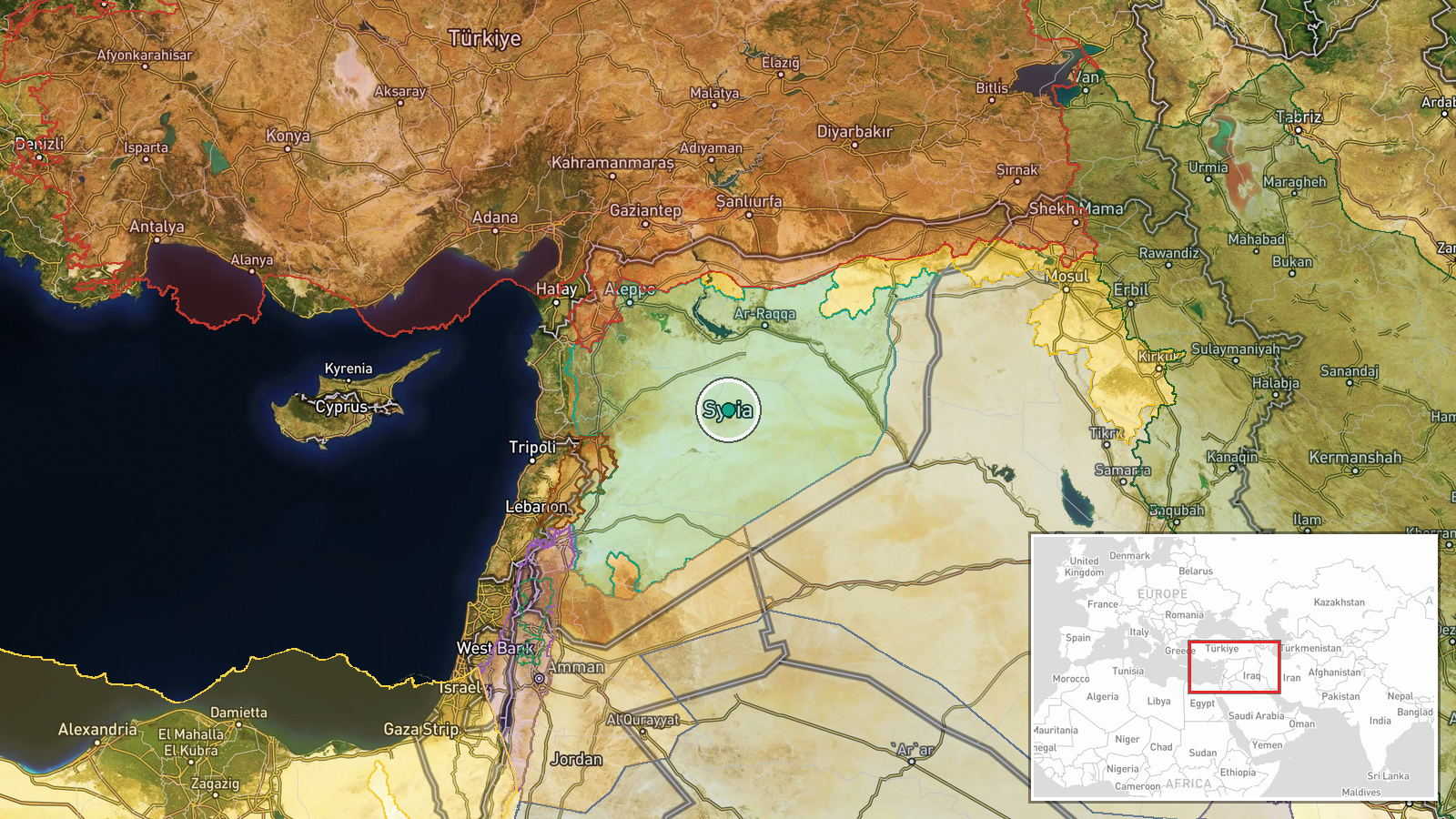
The location is recorded only as Syria nationwide, with region-level precision and low location confidence. The coordinates fall inside Syrian territory but do not correspond to any named settlement, facility, or checkpoint, and they should be read as a placeholder for the country rather than a precise site. The report gives no city, province, or border crossing. Syria's geography, with its central plains, western highlands, and eastern desert, shapes captagon routes, but none of those features can be linked to this specific arrest on the available information.
Related events nearby
- Syrian General Intelligence arrested Ali Kayali (alias Mihrac Ural), suspected leader of pro-Assad militia Syr2026-10-15 09:15 UTC · Security · Syria (location not reported)
▶ View this event on the live map

Intel Mapper aggregates open-source reports from monitored Telegram and X channels, geolocates them, cross-checks duplicates across sources and assigns a confidence score. Entries are updated as new confirmations arrive. Read how we verify events.