Eight suspects arrested in Tartus countryside after armed clash; hashish and captagon seized
What happened
Syria's anti-narcotics branch in Tartus governorate reportedly arrested eight people described as members of a drug-trafficking cell active in al-Muntar village, in the Tartus countryside. According to a post on the Telegram channel @AJSyriaNow, the arrests followed an armed clash during a pursuit. The seizure reportedly included 15.8 kilograms of hashish, 14,000 captagon pills, two pistols and ammunition. The original Arabic statement, attributed to the Narcotics Control Administration, describes the hashish as 86 kaff, a local slab-based unit, and gives the pill count as 14 thousand. The report does not say when the clash occurred, whether anyone was injured, or whether any security personnel were hurt. The post is timestamped 19 October 2026, 18:56 UTC.
Context and assessment
Tartus matters as a coastal governorate that hosts major ports, including Baniyas, and sits on routes linking the Syrian interior with the Mediterranean. Captagon, an amphetamine-type stimulant produced largely in Syria, has been a long-running regional concern, and past Syrian and neighbouring-state seizures have frequently involved both pills and hashish moving through similar corridors. Within the same day's reporting, a cargo-related item notes increased tanker arrivals at Baniyas port, though the link to this operation is not established by the data. Several related events concern Lebanon, including a tunnel discovery in a Hezbollah-influenced Beirut suburb and official statements about weapons control and regional warnings tied to a possible Israel-Iran confrontation. These do not directly involve Tartus, and they should be treated as parallel news rather than evidence of a connected network. Operationally, the combination of a pursuit, an armed clash and firearms among the seized items may suggest that the group was prepared to resist interdiction, which is relevant to how security forces approach similar raids. Whether the seizure reflects a broader trafficking route or an isolated local cell cannot be determined from this single report.
Sources and confidence
The event rests on one channel, Telegram @AJSyriaNow, which relays an Arabic-language statement from the anti-narcotics authority. No independent outlet, official Syrian wire or photographic record was found in the supplied data to confirm the arrests or the seized quantities. The confidence score of 7.6 reflects a credible-looking official attribution and specific, internally consistent figures, but it is capped by single-source status and the absence of independent verification. Confidence would rise with corroboration from the Syrian interior ministry, state news agency SANA, or local outlets in Tartus that publish seizure photos or charge details. It would fall if the statement were later withdrawn, if the quantities were contradicted, or if the clash itself could not be confirmed.
Location
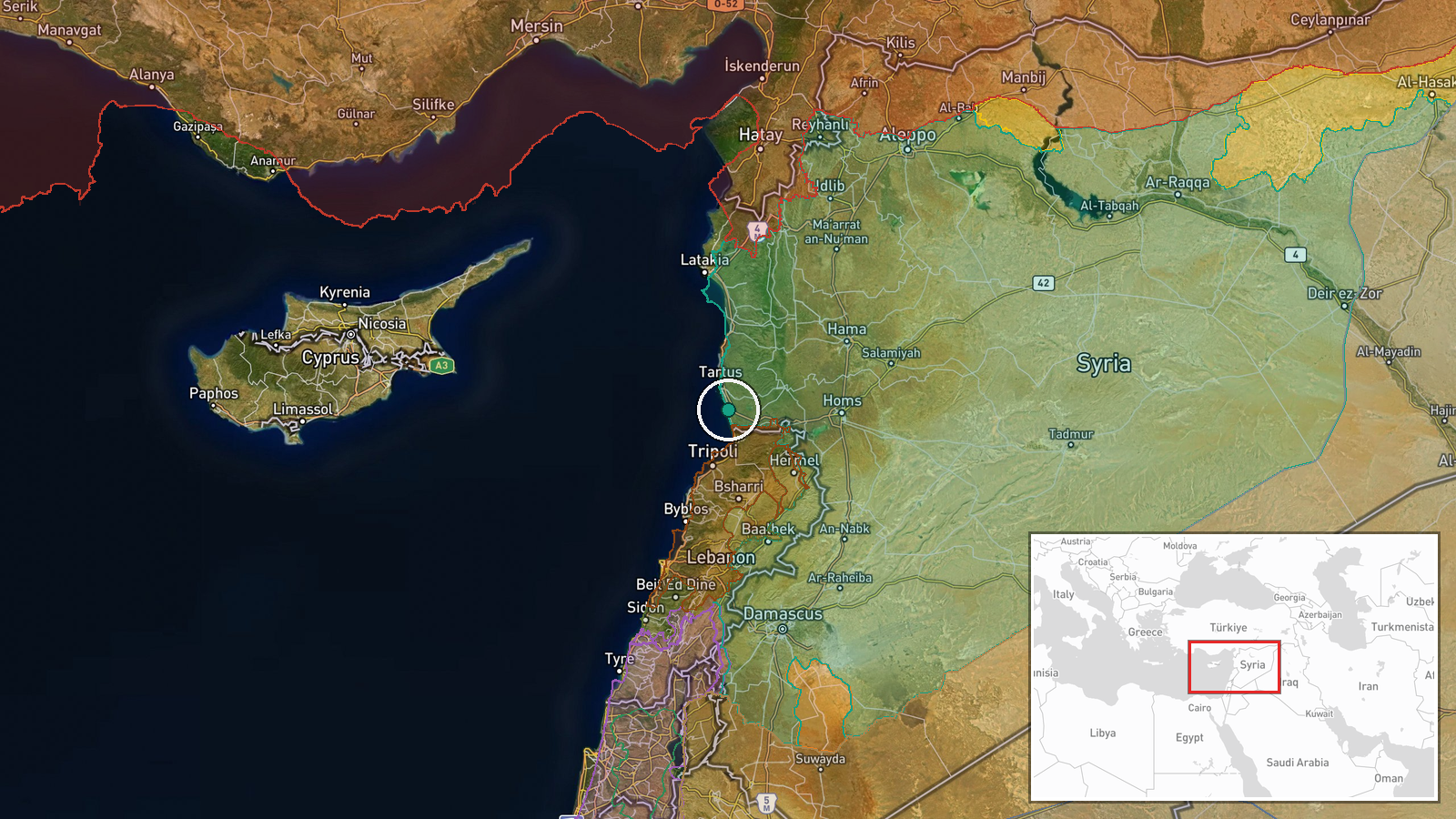
The location is recorded at settlement level for al-Muntar village in the Tartus countryside, with coordinates placing the point at the village rather than a specific building or checkpoint. Tartus governorate lies on Syria's Mediterranean coast, where lowland plains give way to the Coastal Mountain range running inland. Its rural areas are typically hilly and wooded, with villages linked by secondary roads, which can complicate pursuits and security operations.
Related events nearby
- Increased arrivals of oil and gas tankers at Baniyas port; open-source analysts reportedly reveal details of t2026-10-19 15:45 UTC · Cargo Ship · Baniyas Port, Tartus Governorate, Syria
- Lebanese military intelligence is investigating a tunnel found in Ruisat al-Jadida, northeast of Beirut, in a 2026-10-19 10:26 UTC · Police Operation · Al Rawisat al Jadida, Northeast Beirut, Lebanon
- Lebanese MP Razi Al-Hajj demands the Hezbollah explosives case be referred to the Judicial Council and calls f2026-10-19 14:39 UTC · Statement · Beirut, Lebanon
- Senior Lebanese official says Lebanon received US and Western/Arab warnings against involvement in any Israel-2026-10-19 06:07 UTC · Statement · Beirut, Lebanon
- Arab League Secretary-General pledges full support for Lebanon's negotiations with Israel and financial and po2026-10-19 08:33 UTC · Statement · Arab League Headquarters, Cairo, Egypt
▶ View this event on the live map

Intel Mapper aggregates open-source reports from monitored Telegram and X channels, geolocates them, cross-checks duplicates across sources and assigns a confidence score. Entries are updated as new confirmations arrive. Read how we verify events.