Syrian anti-narcotics directorate dismantles Damascus drug network, seizes 36 kg hashish
What happened
On 26 October 2026, at 11:22 UTC, a Telegram channel, @AJSyriaNow, relayed a statement from the Anti-Narcotics Directorate of the Syrian government. The statement says security forces dismantled a network engaged in smuggling and distributing narcotics during an operation in Damascus. Officials reportedly seized 36 kilograms of hashish and 600 grams of crystal methamphetamine, and arrested four people described as members of the network. The original Arabic post is brief. It does not name the suspects, give the date or neighborhood of the operation, or explain how the network was identified. Because the report comes from a single channel repeating an official announcement, it reflects the authorities' own framing and has not been independently verified.
Context and assessment
Damascus is the Syrian capital and the seat of the government, so a publicized narcotics case there carries political weight beyond its size. Syria was for years a major production and transit hub for captagon and other synthetic drugs, and trafficking routes have run through the country toward Jordan, Iraq and Gulf markets. Authorities have a clear interest in showing that counter-narcotics work is active, and announcements of this kind often serve that purpose. The related reporting on the same day points to a strained security environment in and around the capital. A Damascus countryside directorate attributed a loud blast in the city to unexploded war remnants, and Internal Security Forces in Sahnaya described a suspect's confession to a fatal shooting. In Daraa countryside, a road security member was reportedly killed by gunmen at a checkpoint. These events do not link directly to the drug seizure. They do suggest that the directorate's announcement is one of several security messages issued within a short window. The quantities are modest, and a single announcement does not show whether this is part of a sustained campaign or a one-off case.
Sources and confidence
All information comes from one Telegram channel, @AJSyriaNow, which relays an official statement. The event has a source count of one and no wire, ministry or state media confirmation is recorded in the data. The confidence score of 7.6 reflects a credible-looking official source that is unverified and appears in a single channel. Confidence would rise with a published statement from the Anti-Narcotics Directorate or Syrian state media, photographs of the seized goods, or details of the arrests. It would fall if the statement could not be located or if other outlets contradicted the quantities or location.
Location
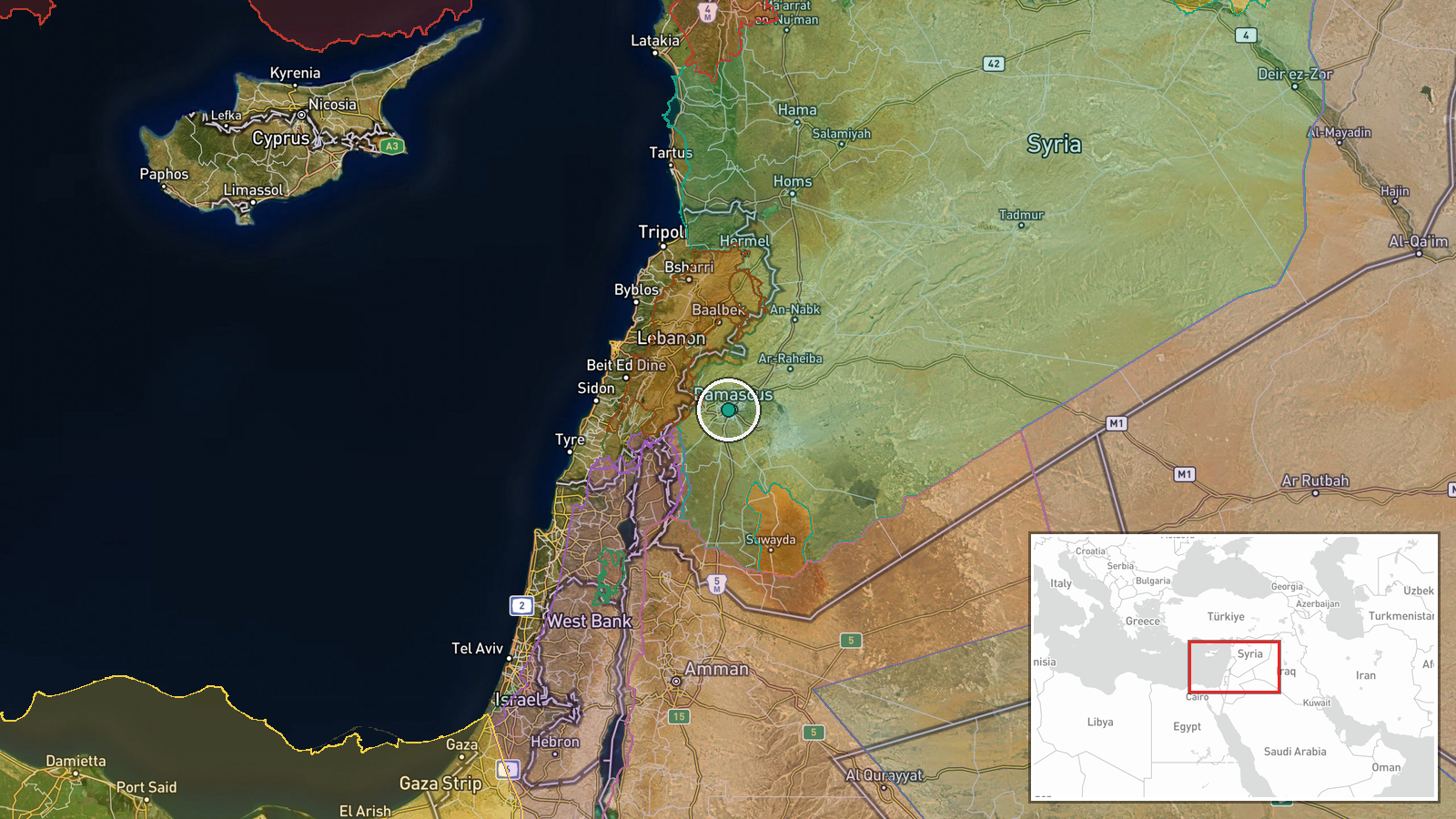
The location is recorded at settlement level for Damascus, Syria, using the city-centre coordinates. The statement does not name a neighborhood or facility, so the point should not be read as the site of the raid. Damascus lies in the far south-west of Syria, inland, in the Ghouta plain at the foot of Mount Qasioun, and the Barada River runs through the city. The surrounding Rif Dimashq countryside is dense with settlements, and many of the other events on this page are located there.
Related events nearby
- Footage circulated showing military vehicles reportedly produced in Syria; location and details unspecified.2026-10-25 17:41 UTC · Report · Damascus, Syria
- Damascus countryside media directorate says the loud sound heard in Damascus was caused by detonation of unexp2026-10-25 14:39 UTC · Explosion · Damascus, Syria
- Internal Security Forces say a suspect confessed to deliberately shooting a young man dead in Sahnaya five day2026-10-26 07:21 UTC · Police Operation · Sahnaya, Rif Dimashq, Syria
- Lebanese Army engineering unit neutralized an unexploded rocket in Al-Maslak neighborhood, Nabatieh.2026-10-25 15:08 UTC · Report · Al-Maslak neighborhood, Nabatieh, Lebanon
- Road security member Mohammed Ahmed al-Miqdad was killed by gunmen at a checkpoint in Daraa countryside; funer2026-10-25 18:37 UTC · Security · Daraa Countryside, Daraa Governorate, Syria
▶ View this event on the live map

Intel Mapper aggregates open-source reports from monitored Telegram and X channels, geolocates them, cross-checks duplicates across sources and assigns a confidence score. Entries are updated as new confirmations arrive. Read how we verify events.