Houthi drone strikes stationary Airbus A310 at Riyadh International Airport
What happened
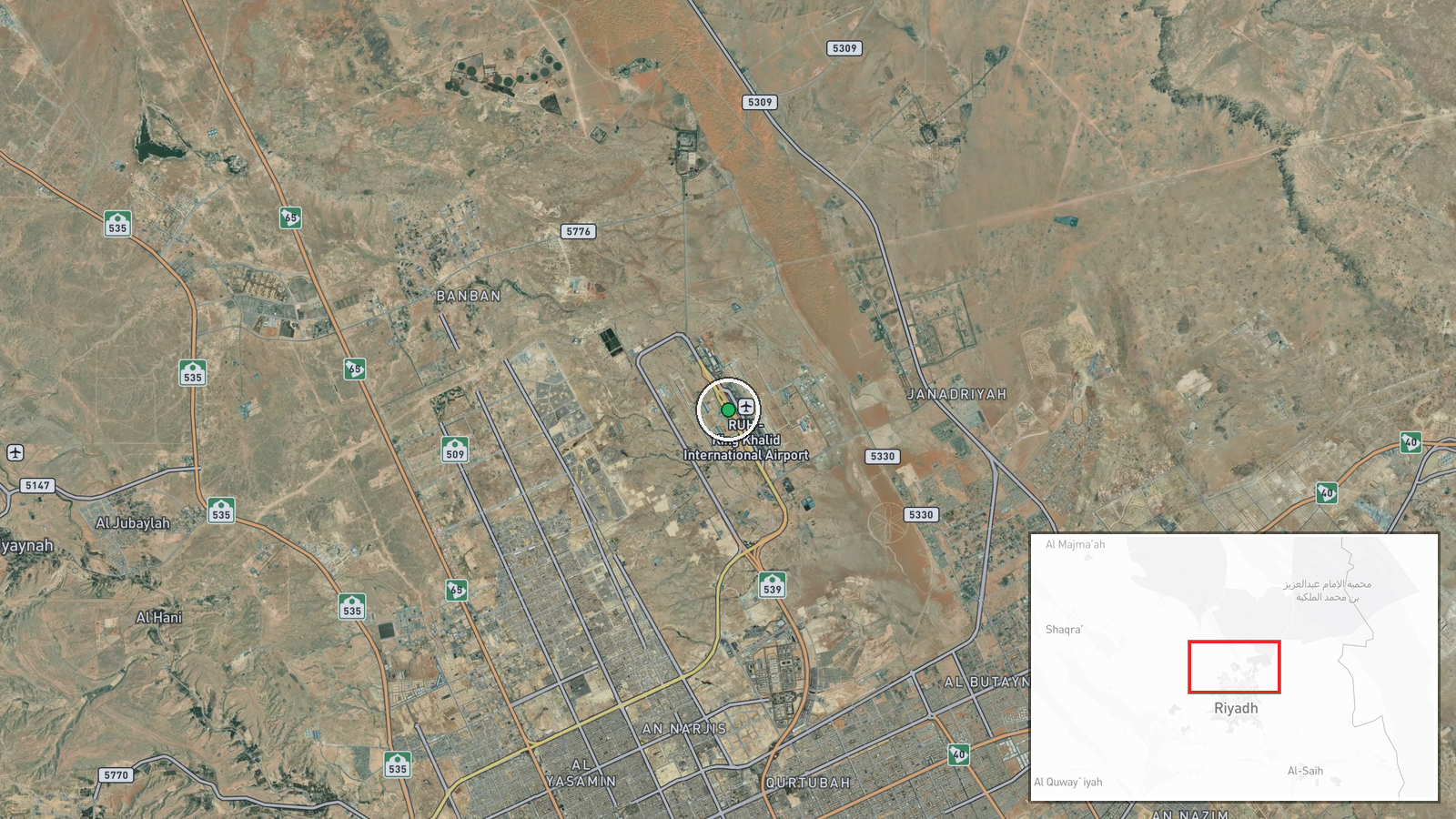
Houthi forces reportedly conducted an unmanned aerial system (UAS) strike against a stationary Airbus A310 aircraft at Riyadh International Airport on October 8, 2026. Video footage circulated by conflict monitoring channels confirms direct impact on the aircraft. Saudi authorities have not released official statements regarding the incident or casualty figures. The aircraft was believed to be unoccupied at the time of impact.
Context and assessment
The strike marks an escalation in Houthi aerial attacks on Saudi infrastructure within a 24-hour period. On October 7, Houthi forces conducted ballistic missile attacks on both Riyadh and Abha airports. On October 8 alone, the group launched at least two additional ballistic missile attacks targeting Riyadh itself, prompting major international carriers including Lufthansa and Air India to suspend flights to the capital. The targeting of civilian aircraft at a major hub airport, even when stationary, represents a significant operational shift and suggests expanded targeting criteria. The pattern indicates sustained capability to penetrate Saudi air defenses and suggests potential coordination with recent diplomatic developments in the region.
Sources and confidence
Two independent Telegram and X accounts (@ClashReport and @ConflictTR) reported the incident with video confirmation. A prior report from October 8 at 12:54 UTC noted smoke from a stationary aircraft at the same location, corroborating the general incident. Confidence score of 7.0 reflects visual evidence and multi-source confirmation, though absence of official Saudi statements introduces minor uncertainty. Official Saudi civil aviation or military confirmation would significantly strengthen assessment.
Location
Riyadh International Airport (King Fahd International Airport), located approximately 30 kilometers northeast of central Riyadh. Coordinates place the strike at the airport's main terminal and runway complex. The facility serves as Saudi Arabia's primary civilian aviation hub and is surrounded by densely populated urban areas.
Related events nearby
- Smoke observed rising from a stationary aircraft at Riyadh airport. The aircraft was believed to be empty. Sau2026-10-08 12:54 UTC · Report · Riyadh International Airport, Riyadh, Saudi Arabia
- Houthi forces conducted missile attacks on Riyadh and Abha airports in Saudi Arabia. Attack type and casualtie2026-10-07 18:12 UTC · Ballistic Missile · Riyadh International Airport, Riyadh, Saudi Arabia
- Lufthansa and Air India suspended flights to Riyadh following Houthi missile attacks. Lufthansa flights halted2026-10-08 15:55 UTC · Airspace Closure · Riyadh, Saudi Arabia
- Houthi forces launched a ballistic missile attack on Riyadh, Saudi Arabia. The strike targeted the capital cit2026-10-08 14:01 UTC · Ballistic Missile · Riyadh, Saudi Arabia
- Syrian Presidential Media Advisor Ahmad Muwaffaq Zeidan officially denies reports of troop deployment to Yemen2026-10-07 19:48 UTC · Diplomacy · Riyadh, Saudi Arabia
▶ View this event on the live map

Intel Mapper aggregates open-source reports from monitored Telegram and X channels, geolocates them, cross-checks duplicates across sources and assigns a confidence score. Entries are updated as new confirmations arrive. Read how we verify events.