Saudi Arabia halted public attack warnings days before deadly Riyadh airport strikes
What happened
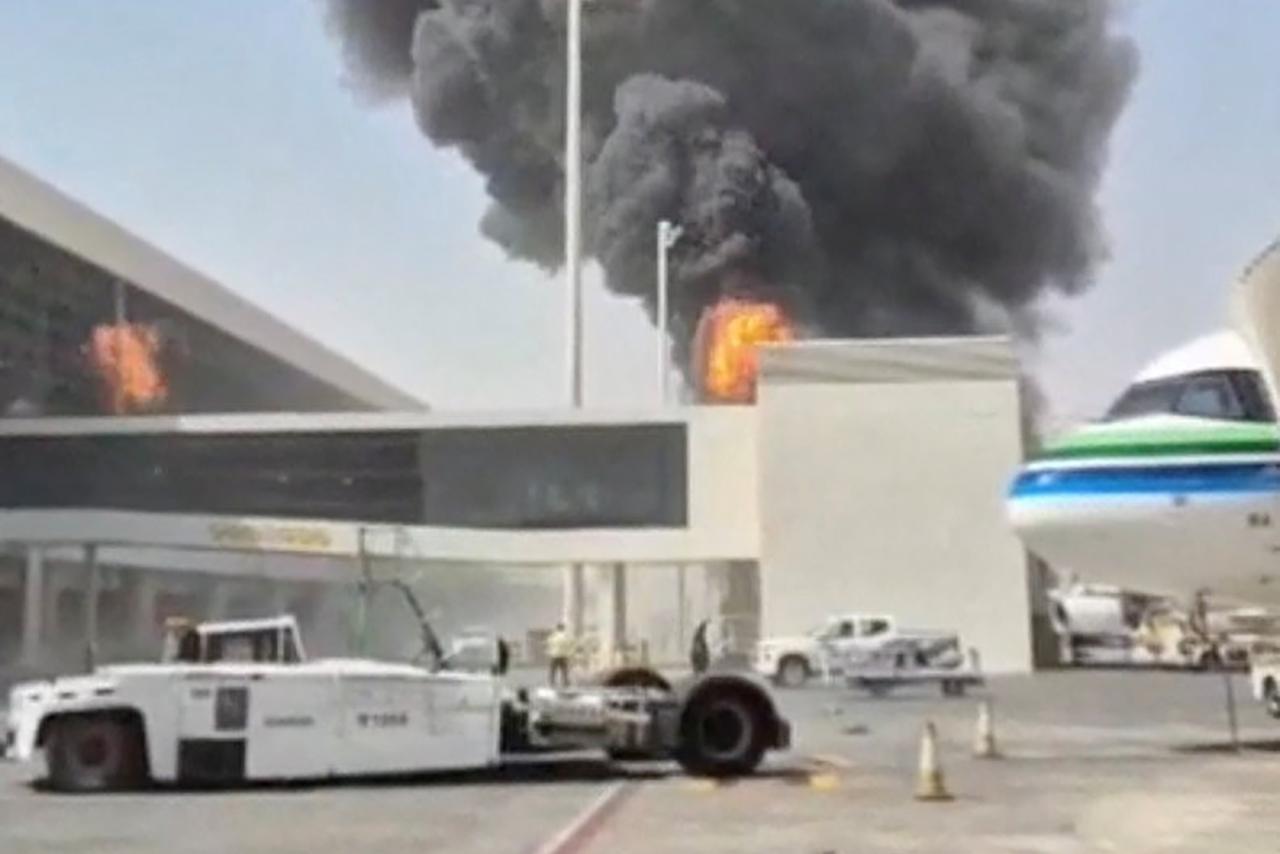
According to a Telegram report, Saudi Arabia stopped issuing public warnings of imminent incoming attacks in the days preceding four strikes on Riyadh airport on October 13, 2026. The attacks reportedly killed at least 18 people and injured over 300. The report indicates a breakdown in civil defense alert protocols during this period, suggesting the suspension of public warning systems occurred prior to the strikes that struck the airport.
Context and assessment
Riyadh airport has been a recurring target in recent operations. On the same day as these strikes, Saudi air defense reportedly intercepted three drones north of Riyadh earlier in the morning, suggesting sustained pressure on the capital's defenses. A Saudi official acknowledged on October 12 that air defense systems have inherent limitations. The suspension of public warnings appears to coincide with a pattern of attacks on critical infrastructure in Riyadh, including airports and facilities in Mecca and Medina. The reported lapse in civil defense protocols may reflect either operational constraints or policy decisions regarding public communication during active threat periods.
Sources and confidence
Single source from Telegram channel (@ClashReport) on October 13. Related official Saudi statements on October 12–13 reference air defense investigations and acknowledge system limitations, but do not independently confirm the warning suspension claim. Confidence of 7.1 reflects single-channel reporting of a significant operational detail. Cross-confirmation from Saudi government statements or independent reporting would substantially strengthen confidence.
Location
Riyadh, the capital of Saudi Arabia, located at approximately 24.63°N, 46.72°E in the central Nejd region. The airport serves as a major commercial and strategic aviation hub for the kingdom. Reports reference both King Khalid International Airport and King Fahd International Airport in Riyadh, major facilities in the metropolitan area.
Related events nearby
- Saudi Cabinet Council warns Houthis will face consequences for attacks on airports, Mecca, Medina, and shippin2026-10-13 15:38 UTC · Statement · Riyadh, Saudi Arabia
- Saudi-led coalition air defense successfully intercepted and destroyed three drones north of Riyadh. No detail2026-10-13 11:52 UTC · Air Defense · North of Riyadh, Saudi Arabia
- Saudi Arabia ceased issuing public air raid warnings before four Houthi strikes on Riyadh airport that killed 2026-10-13 11:01 UTC · Report · King Khalid International Airport, Riyadh, Saudi A
- Houthi (Ansar Allah) issues evacuation warnings for King Khalid International Airport in Riyadh and Saudi Aram2026-10-13 14:24 UTC · Statement · King Khalid International Airport (evacuation warn
▶ View this event on the live map

Intel Mapper aggregates open-source reports from monitored Telegram and X channels, geolocates them, cross-checks duplicates across sources and assigns a confidence score. Entries are updated as new confirmations arrive. Read how we verify events.