Egypt's National Defense Council approves 'all necessary forms of support' for Saudi Arabia amid Houthi attacks
What happened
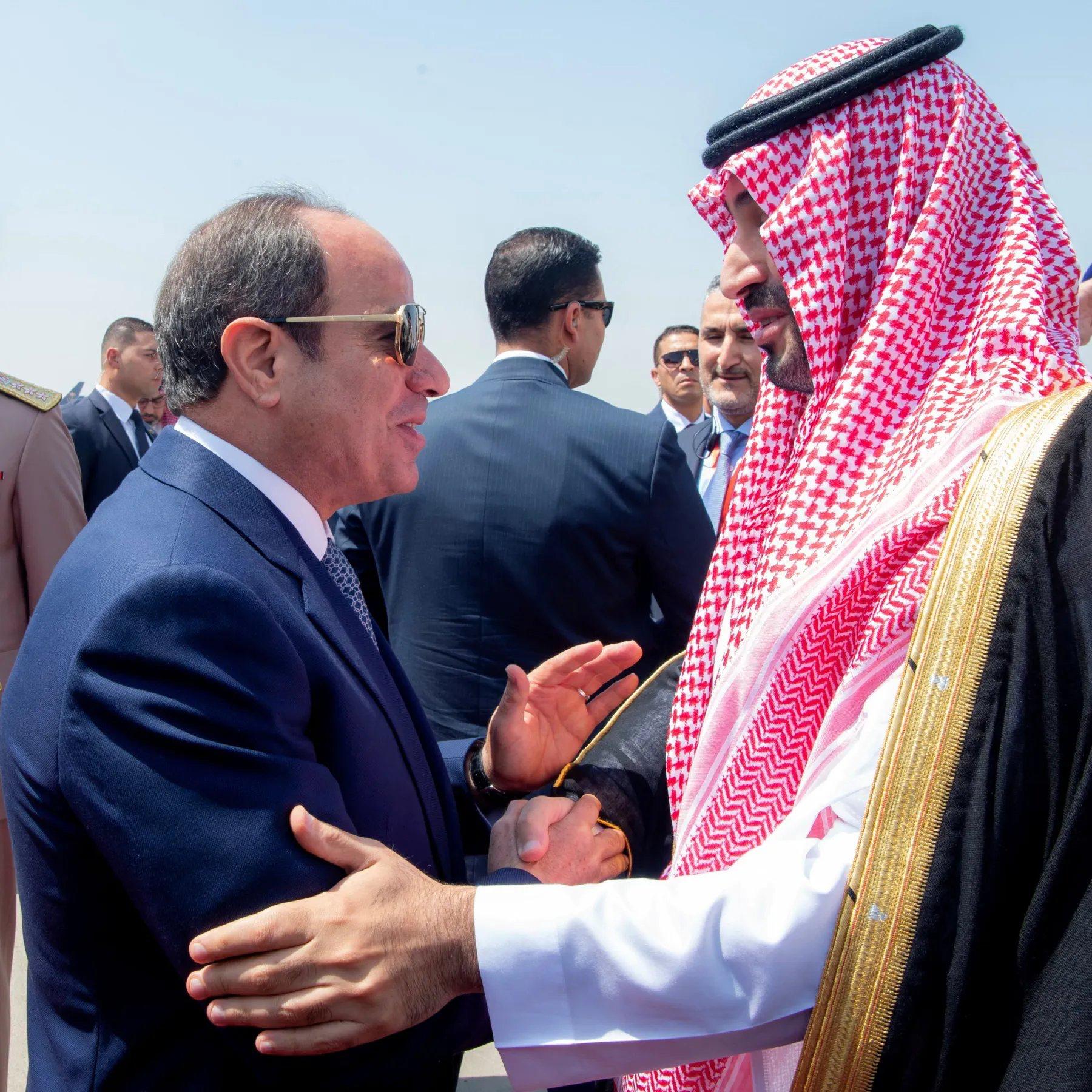
Egypt's National Defense Council, chaired by President Abdel Fattah al-Sisi, has approved providing what a Telegram channel reported as 'all necessary and possible forms of support' to defend Saudi Arabia, as Houthi attacks on the kingdom intensify. According to the report, the council declared full solidarity with Riyadh and called for diplomatic efforts to de-escalate the crisis. The decision follows Sisi's pledge on Saturday that Egypt would take any measure to defend Saudi Arabia if requested, with the role described as defensive only. The report adds that Egypt's parliament was scheduled to hold an emergency session on Sunday to consider authorizing a deployment. The item is a policy statement rather than a reported kinetic event, and its wording comes from a single channel's summary rather than an official Egyptian readout.
Context and assessment
The item sits at the centre of a Red Sea and Arabian Peninsula security problem that has drawn Houthi attacks on Saudi territory into a wider regional calculus. Cairo's posture is significant because Egypt has long been a major military power in the Arab world, and any authorised deployment to Saudi Arabia would mark a notable shift in its regional role. The related events show a clear sequence over roughly one day: on Friday Sisi pledged Egyptian measures to defend Saudi Arabia if Riyadh asked for help and said he would leave office when his term ends in 2030; later that day parliament was reported to be convening on his request for a mandate; and on Saturday evening he reiterated the pledge, stressing the defensive character of any role. Taken together, this pattern suggests a deliberate, staged effort to secure domestic legal cover before any commitment, rather than an immediate operational move. Operationally, the immediate indicator to watch is whether a formal request from Riyadh follows and whether any deployment is described in specific terms such as air defence, naval, or training support.
Sources and confidence
The item rests on one Telegram channel, @ClashReport, and no independent outlet or official Egyptian statement appears in the supplied data to confirm the wording. The related events are consistent with the core claim, since they describe Sisi's pledges and a parliamentary session, but they draw on the same reporting stream rather than separate confirmation. The confidence score of 7.1 reflects a plausible, internally consistent sequence of statements alongside the single-source limitation. Confidence would rise with confirmation from state media, the Egyptian presidency, parliament records, or Saudi officials, or with reporting on the outcome of the Sunday session. It would fall if the parliamentary vote is delayed or the council's wording is shown to differ from the reported text.
Location
The location is given at settlement level as Cairo, Egypt, which is where the National Defense Council and the presidency are based, so the point marks the decision-making centre rather than any military site. Coordinates correspond to the city centre. Cairo sits on the Nile in the north of Egypt, with the Nile Delta to its north and the Eastern Desert and Red Sea coast further east. The geography is relevant because Egypt's access to Saudi Arabia would run by sea through the Red Sea and the Gulf of Aqaba.
Related events nearby
- Egyptian President Sisi pledges 'any measure' to help defend Saudi Arabia if requested, seeking authorisation 2026-10-17 20:54 UTC · Statement · Cairo, Egypt
- Egyptian parliament to convene on Sisi's request for a mandate to back Saudi Arabia.2026-10-17 16:19 UTC · Statement · Cairo, Egypt
- Sisi pledges Egyptian measures to defend Saudi Arabia if Riyadh requests assistance, and says he will leave of2026-10-17 11:43 UTC · Statement · Cairo, Egypt
▶ View this event on the live map

Intel Mapper aggregates open-source reports from monitored Telegram and X channels, geolocates them, cross-checks duplicates across sources and assigns a confidence score. Entries are updated as new confirmations arrive. Read how we verify events.