Satellite imagery suggests Saudi Arabia is expanding its al-Duwadimi ballistic missile factory
What happened
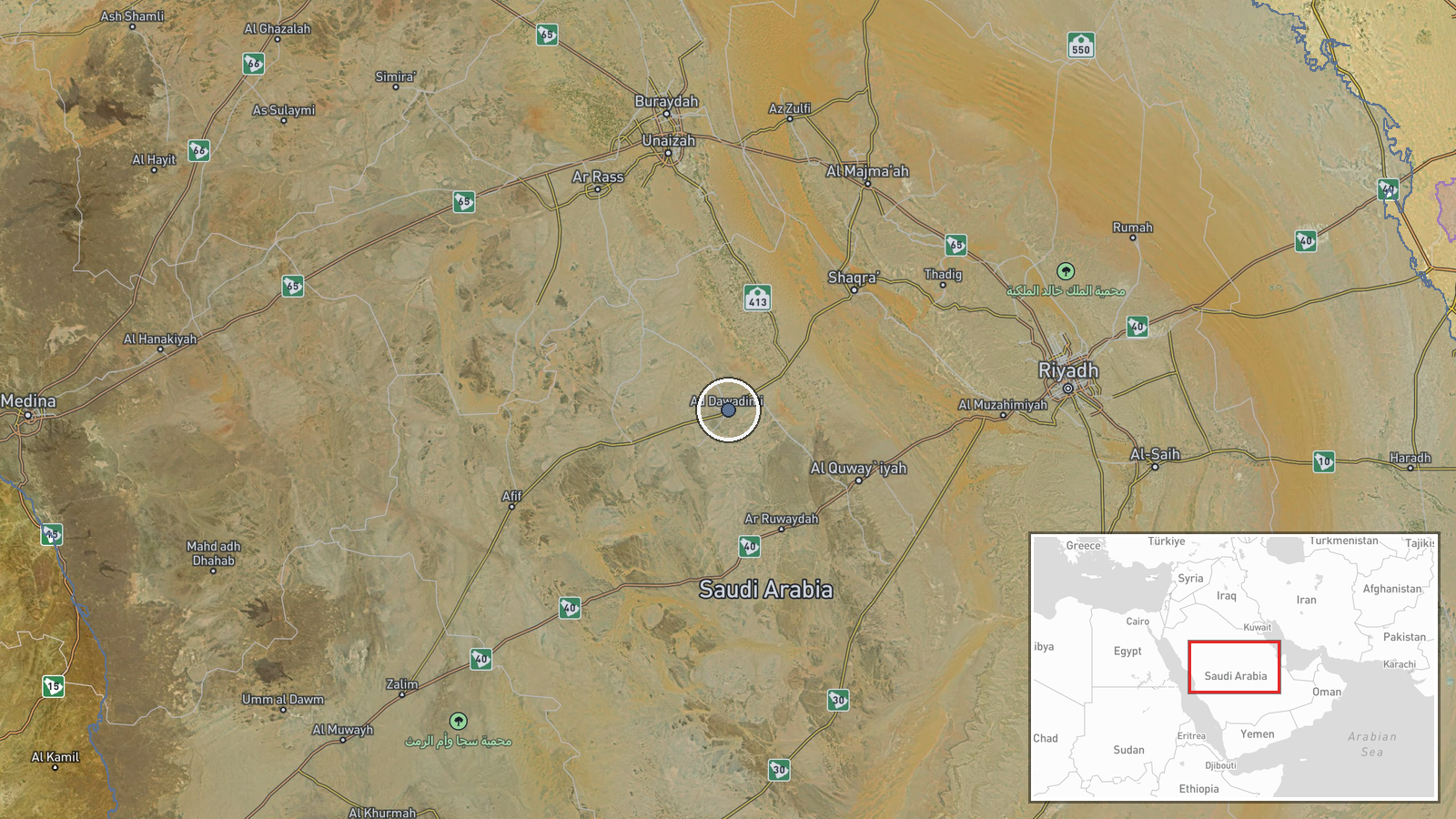
Researchers analysing commercial satellite imagery report that Saudi Arabia is expanding its ballistic missile factory at al-Duwadimi, about 200 km west of Riyadh. According to the original post, images taken between April 2025 and September 2026 show a new building at least twice the size of the existing facility, likely used for casting missile motors. A second new building may store fuel ingredients or finished components. The post attributes the analysis to Reuters and to Sam Lair and Michael Duitsman of the Foreign Policy Research Institute, who said the expansion could allow longer-range or heavier-payload missiles. The summary adds that production could begin by the end of 2026. The item is dated 23 October 2026 and was first circulated through a single Telegram channel, so its wording reflects that channel's relay of the underlying reporting rather than a primary document.
Context and assessment
Ballistic missile development is closely watched across the Middle East, and Saudi Arabia has long depended on foreign suppliers while seeking greater domestic production capacity. The al-Duwadimi complex sits inland in the Riyadh Region, away from the Gulf coast and the Yemen border, a location that may reflect dispersal and distance from maritime threats. Solid-fuel motors matter to analysts because solid propellant can be stored in a fuelled state, typically allows faster launch preparation, and needs less field support than liquid systems. That is why a casting building attracts attention. The second structure suggests storage of propellant ingredients or finished parts, which would be consistent with a production chain rather than a single test site. No related events are recorded for this item, so it cannot be placed against a sequence of earlier incidents on the map. Operationally, the imagery indicates industrial capacity and a possible timeline, not a deployed system or a decision to deploy one. Analysts would usually look for test activity, transport movements, and changes to launch infrastructure before drawing firmer conclusions. The reporting describes intent and capacity, and it should be read as an assessment rather than a confirmed capability.
Sources and confidence
The event is recorded as a single-channel report from Telegram (@ClashReport), with a source count of one and no independent cross-confirmation in the event data. The post names Reuters and the Foreign Policy Research Institute as underlying sources, but the Reuters text itself has not been checked here. The confidence score of 7.1 reflects satellite-based analysis attributed to named researchers and a major wire service, offset by single-channel relay and the absence of verified primary material. Confidence would rise with a located Reuters or FPRI publication, independent OSINT analysis of the same imagery, or an official Saudi response. It would fall if the imagery could not be matched to the stated dates, if the original reporting cannot be found, or if the item turns out to repackage earlier analysis.
Location
Location precision is at settlement level. The coordinates correspond to al-Duwadimi, a town in the Riyadh Region, consistent with the complex named in the report, and location confidence is recorded as high. The setting is the arid interior of central Saudi Arabia, roughly 200 km west of Riyadh according to the report and well away from the coastline. Beyond this general desert geography, the data does not describe specific nearby features, so none are assumed here.
▶ View this event on the live map

Intel Mapper aggregates open-source reports from monitored Telegram and X channels, geolocates them, cross-checks duplicates across sources and assigns a confidence score. Entries are updated as new confirmations arrive. Read how we verify events.