Oman rejects Iranian proposal to jointly toll Strait of Hormuz traffic
What happened
Oman has declined Iran's proposal to jointly charge vessels transiting the Strait of Hormuz, reportedly citing violations of international maritime law. The rejection undermines an Iranian Revolutionary Guard Corps claim made the previous week that the two nations had agreed to divide revenue from the waterway. According to the report, Oman is withdrawing from the arrangement under pressure from the United States and Gulf states. The move is significant as Iran had established a strait authority during ongoing conflict and charged tankers between $1 and $2 million each for passage, but lacked legal standing without Omani cooperation.
Context and assessment
The Strait of Hormuz remains one of the world's most strategically vital chokepoints, with roughly one-third of global maritime trade passing through its waters. Oman's rejection reflects the delicate geopolitical balance in the Persian Gulf, where the sultanate has historically maintained a cautious neutrality between Iran and Western-aligned Gulf states. The timing coincides with broader regional tensions, including recent airstrikes on Iranian territory that have prompted Iranian officials to seek new revenue mechanisms and demonstrate regional leverage. Iran's unilateral toll regime lacks international legal precedent and legitimacy without at least tacit consent from neighboring Oman, which controls the southern shore. The U.S. explicit threats against Oman underscore Washington's determination to prevent any arrangement that could be framed as Iranian control over global shipping lanes.
Sources and confidence
Reported by Telegram channel @ClashReport on 4 September 2026. Single-source reporting limits confidence to 7.0 out of 10. Cross-confirmation from regional news outlets or official Omani statements would strengthen assessment. U.S. or Iranian official commentary would clarify pressure dynamics and intent.
Location
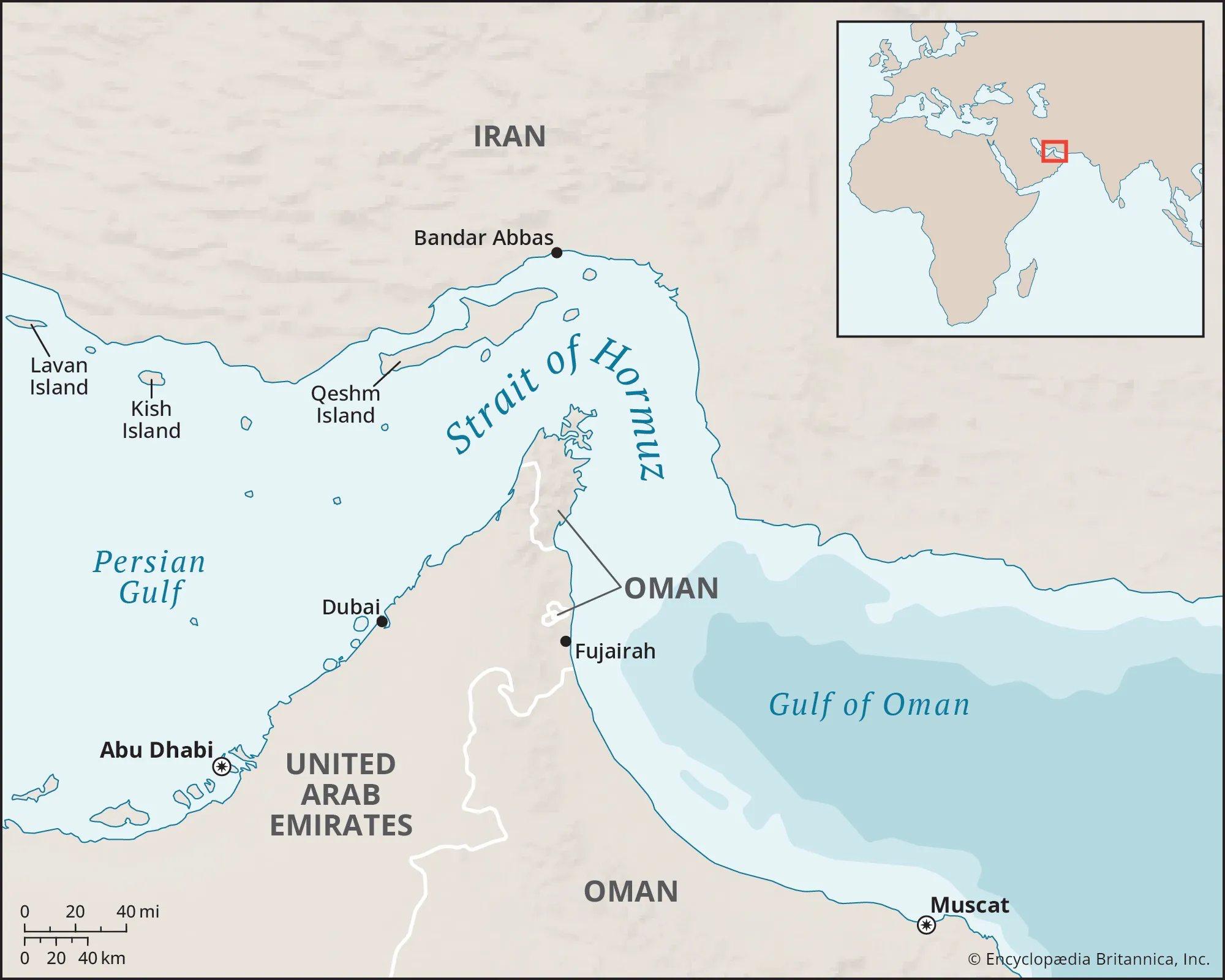
The Strait of Hormuz, a 33-nautical-mile-wide passage separating Oman to the south and Iran to the north, connecting the Persian Gulf to the Gulf of Oman and Arabian Sea. Coordinates place the report at the center of the strait. The waterway's narrowest point, the Hormuz Strait proper, is heavily trafficked and strategically critical.
Related events nearby
- U.S. intelligence assesses Iran has gained confidence in military capabilities and may escalate conflict using2026-09-05 10:16 UTC · Statement · Strait of Hormuz, Persian Gulf
- Iran fired multiple anti-ship ballistic missiles into the Strait of Hormuz. No confirmed impact details or tar2026-09-04 17:57 UTC · Ballistic Missile · Strait of Hormuz, Persian Gulf
- South Korea's Defense Ministry has informed the United States of its intention to deploy naval forces to the S2026-09-04 14:44 UTC · Deployment · Strait of Hormuz, Persian Gulf
▶ View this event on the live map
Intel Mapper aggregates open-source reports from monitored Telegram and X channels, geolocates them, cross-checks duplicates across sources and assigns a confidence score. Entries are updated as new confirmations arrive. Read how we verify events.