U.S. intelligence: China provided satellite data to Iran for targeting U.S. bases
What happened
According to U.S. intelligence assessments reported on September 25, Chinese satellite imagery and geospatial data have enhanced Iran's ability to target American military assets in the Middle East. Officials stated the intelligence support allegedly aided Iran's July strike on a U.S. base in Jordan that resulted in three American service member deaths. The Chinese-provided data has reportedly also improved Iran's capability to track vessels in the Strait of Hormuz and increase the effectiveness of Iranian drone and missile operations. U.S. officials noted uncertainty regarding whether Beijing directly ordered the assistance or permitted it to occur.
Context and assessment
The reported provision of targeting intelligence represents an escalation in the intelligence dimension of Middle East tensions. The July Jordan base strike, likely referring to the attack on Tower 22 in northeastern Jordan, marked a significant Iranian capability to strike U.S. facilities with precision. Enhanced geospatial access would amplify Iran's asymmetric advantage in maritime surveillance and force projection across the strategic Hormuz chokepoint, through which roughly one-third of global seaborne oil transits. The timing of this disclosure—amid continued U.S.-Iran tensions and broader great-power competition—suggests U.S. concern about expanding Sino-Iranian intelligence cooperation. Russia has reportedly also provided technical support to Iranian operations, indicating a potential pattern of U.S. adversary coordination in the region.
Sources and confidence
Single source: Telegram channel @ClashReport, attributed to U.S. intelligence officials. No independent cross-confirmation cited. Confidence score of 7.0 reflects reliance on official U.S. statements filtered through a single channel and the inherent difficulty in independently verifying classified intelligence assessments. Corroboration from additional U.S. government channels, allied intelligence services, or technical analysis would strengthen confidence. Iranian or Chinese denials would not substantially reduce score without contradictory evidence.
Location
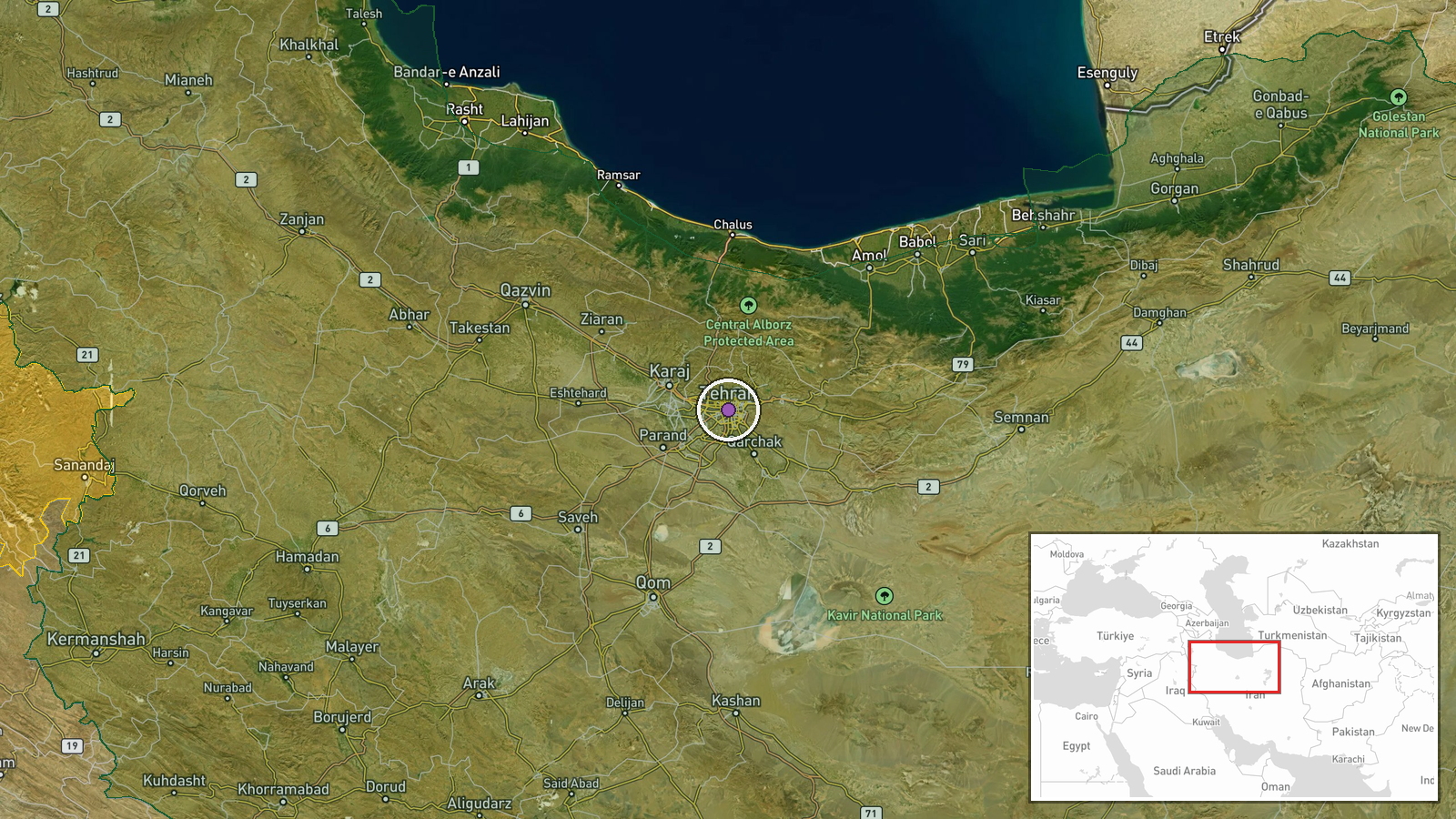
Tehran, Iran (region-level precision). Assessment concerns Iranian intelligence operations and decision-making centered on Tehran, the capital and primary locus of Iranian strategic command. The targeting effects described apply across the Middle East, including northeast Jordan, the Strait of Hormuz (between Iran and Oman), and broader maritime approaches to the Persian Gulf.
▶ View this event on the live map
Intel Mapper aggregates open-source reports from monitored Telegram and X channels, geolocates them, cross-checks duplicates across sources and assigns a confidence score. Entries are updated as new confirmations arrive. Read how we verify events.