U.S. Defense Secretary asserts American control of Strait of Hormuz
What happened
U.S. Defense Secretary Pete Hegseth stated on October 3 that the United States, not Iran, controls the Strait of Hormuz. In remarks reportedly made to media, Hegseth characterized Iranian actions regarding the strategic waterway as "games," asserting U.S. authority over the chokepoint. The statement underscores the Biden administration's stated commitment to maintaining freedom of navigation through one of the world's most critical energy transit routes.
Context and assessment
The Strait of Hormuz, located between Iran and Oman, carries roughly one-third of global seaborne oil trade. Control over transit through the narrow passage has been a longstanding point of tension between the United States and Iran. Iran has periodically threatened to restrict or close the strait in response to U.S. sanctions and military presence in the Persian Gulf. Hegseth's explicit statement of American control reflects the U.S. Navy's sustained operational posture in the region and signals resistance to any Iranian attempt to leverage the strait as leverage in broader geopolitical disputes. Such declarations typically accompany periods of heightened naval activity or Iranian provocations in Gulf waters.
Sources and confidence
The statement was reported via Telegram channel ClashReport. Single-source reporting limits independent verification of the exact phrasing and context. Confidence level reflects the reliance on one channel and absence of cross-confirmation from official U.S. Department of Defense statements, media outlets, or video documentation. Confirmation through multiple mainstream news sources or official DoD releases would strengthen confidence.
Location
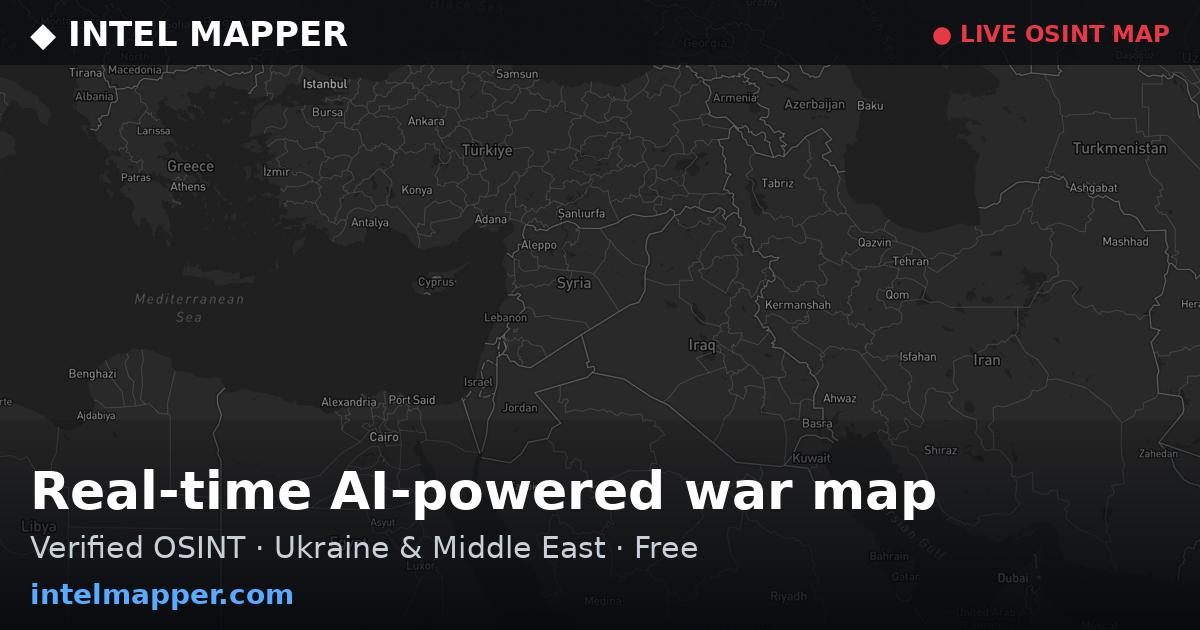
The Strait of Hormuz lies between Iran's southern coast and Oman's Musandam Peninsula, approximately 54 nautical miles wide at its narrowest point. The waterway connects the Persian Gulf to the Gulf of Oman and Arabian Sea. No specific incident location is indicated; the statement addresses the strategic waterway as a whole geographic entity rather than a discrete operational event.
▶ View this event on the live map
Intel Mapper aggregates open-source reports from monitored Telegram and X channels, geolocates them, cross-checks duplicates across sources and assigns a confidence score. Entries are updated as new confirmations arrive. Read how we verify events.