Erdogan opposes space militarization, warns against arms race in orbit
What happened
Turkish President Recep Tayyip Erdogan issued a statement opposing the weaponization of space and competitive arms races in orbit. Speaking in Ankara on October 5, Erdogan argued that space exploration should not be treated as a prize for the first nations to reach it, and that militarizing the space domain would be 'profoundly wrong.' The statement was reported via Telegram channel ClashReport.
Context and assessment
Erdogan's remarks reflect Turkey's broader diplomatic positioning on emerging military domains and great-power competition. The statement arrives amid intensifying global tension over space-based weapons systems, particularly as major powers develop anti-satellite capabilities and orbital defense platforms. Turkey's intervention in the debate signals Ankara's interest in shaping international norms around space before militarization becomes entrenched. The timing coincides with other Turkish defense announcements on October 5—including air defense contracts and unmanned combat aircraft development—suggesting Turkey views space policy as part of its strategic autonomy agenda. Turkey's emphasis on multilateralism and opposition to unilateral advantage echoes its positions on terrestrial conflicts, where it has mediated between regional powers.
Sources and confidence
Single source: Telegram channel @ClashReport, dated October 5, 2026. No cross-confirmation from Turkish official media or international press noted in available data. Confidence of 7.0 reflects reliance on one channel without secondary verification of the exact wording or full context of Erdogan's remarks. Confirmation through Turkish Foreign Ministry statements or official presidential office releases would raise confidence; absence of corroboration in mainstream reporting lowers it.
Location
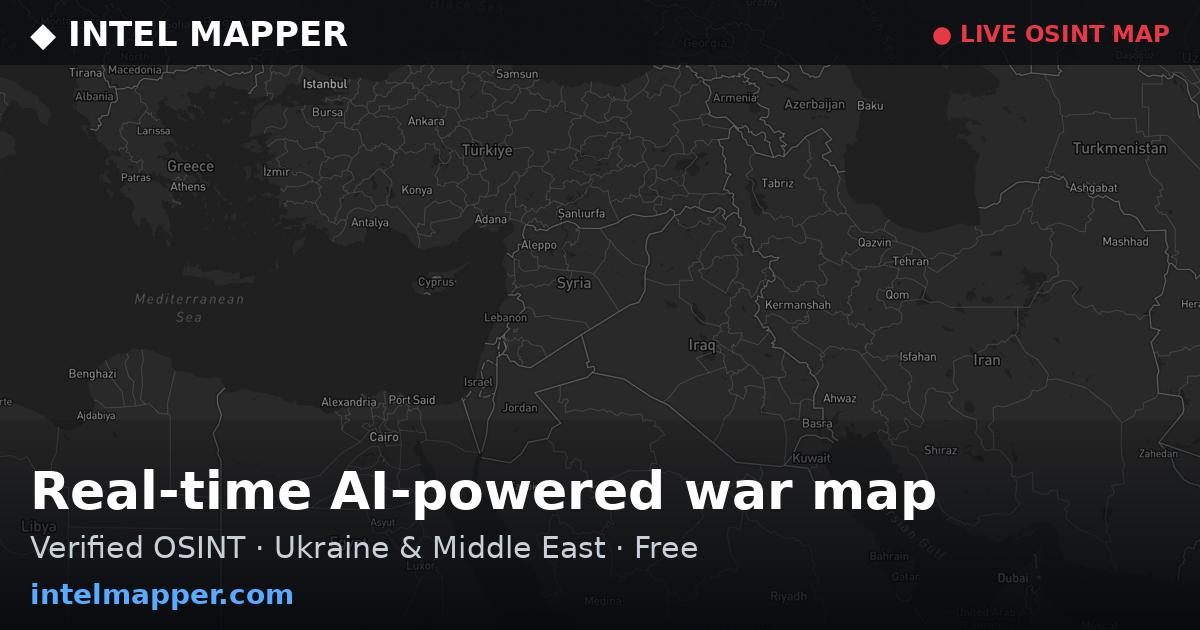
Ankara, Turkey (39.93°N, 32.86°E). Statement issued from Turkey's capital, the seat of the Turkish presidency and government. Ankara is the diplomatic center from which Turkish foreign policy is articulated.
Related events nearby
- Turkish Foreign Ministry condemns Israeli military activities on Line 53 in Quneitra Governorate, Syria. Turke2026-10-05 10:18 UTC · Statement · Ankara, Turkey
- Turkey and Defence Industry Presidency signed contracts totaling €2.46 billion for supply of hybrid air defens2026-10-05 06:30 UTC · Deployment · Ankara, Turkey
- Turkey announced plans to integrate its domestically developed TF6000 engine into the KIZILELMA unmanned comba2026-10-05 05:49 UTC · Statement · Ankara, Turkey
- Turkish Ambassador to Syria Dr. Nuh Yılmaz announces the resumption of classes at the Recep Tayyip Erdoğan Tur2026-10-04 21:21 UTC · Statement · Ankara, Turkey
▶ View this event on the live map
Intel Mapper aggregates open-source reports from monitored Telegram and X channels, geolocates them, cross-checks duplicates across sources and assigns a confidence score. Entries are updated as new confirmations arrive. Read how we verify events.