U.S. Army report faults commanders for placing troops at vulnerable Kuwait base before Iranian drone strike
What happened
A U.S. Army investigation completed in June into the March 1 Iranian drone attack on Port Shuaiba, Kuwait, reportedly found that commanders knowingly stationed troops at the facility despite acknowledged gaps in air defenses. The strike on the port's operations center killed six soldiers and wounded dozens. According to soldier accounts, commanders rejected safer alternatives and ordered troops out of bunkers shortly before the attack, despite warnings about low-flying drone threats. The investigation report remains unpublished.
Context and assessment
Port Shuaiba, a major Kuwaiti naval and commercial facility on the Persian Gulf, hosts U.S. military personnel and serves as a logistics hub for regional operations. The March 1 strike was part of Iran's direct attack on U.S. bases following the assassination of Islamic Revolutionary Guard Corps commander Qasem Soleimani. This investigation's findings suggest potential command-level failures in risk assessment and force protection doctrine. The delayed public release of the completed report raises questions about accountability mechanisms and how lessons from the incident have informed subsequent deployment and defense protocols in the region.
Sources and confidence
Single source: Telegram channel @ClashReport. No cross-confirmation from official U.S. military statements or secondary reporting noted. Low confidence reflects single-source reporting and absence of public Army disclosure. Confidence would increase with official statement, corroborating news reporting, or Congressional documentation of investigation findings.
Location
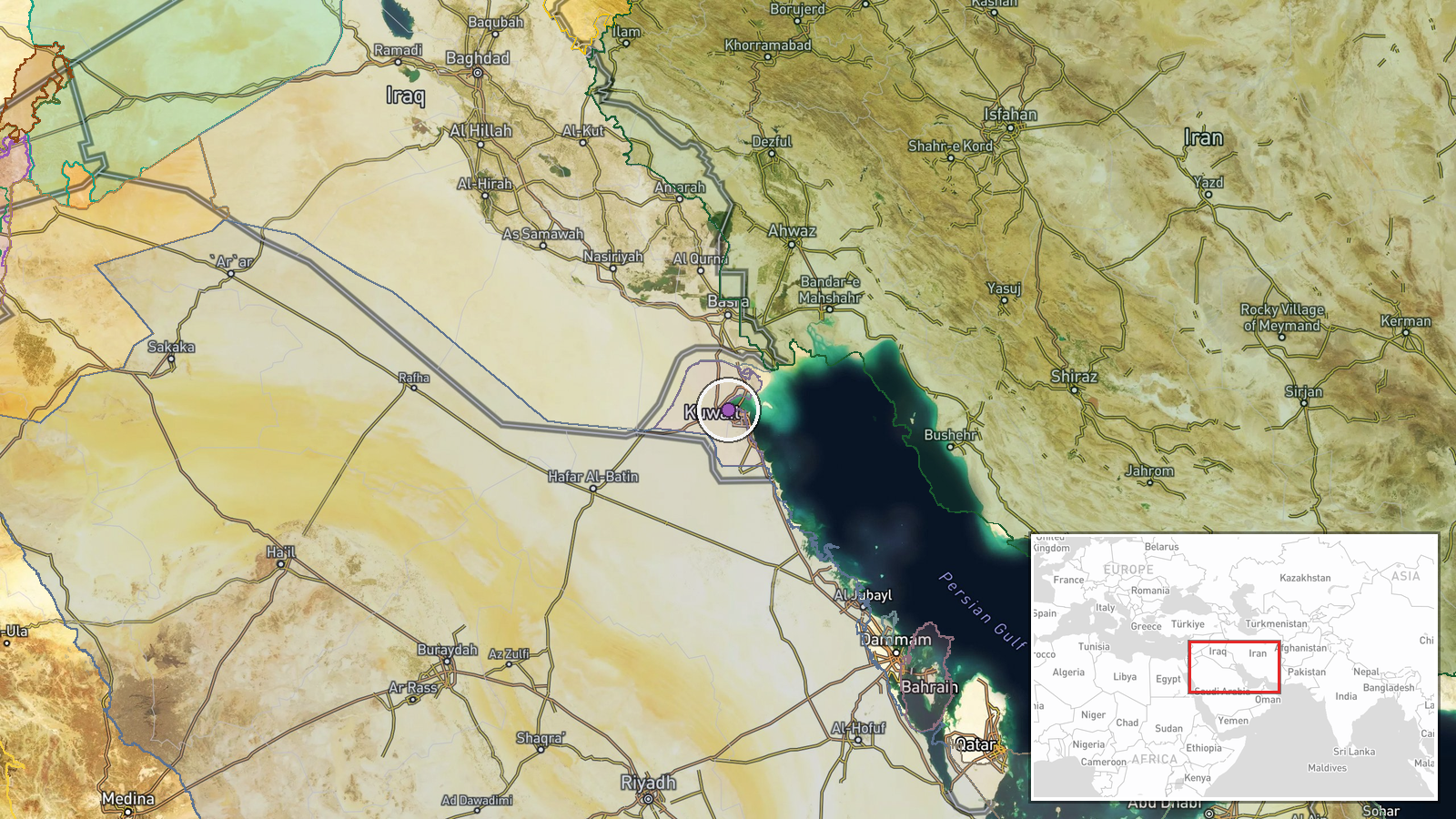
Port Shuaiba lies on Kuwait's southern coast along the Persian Gulf, approximately 50 kilometers south of Kuwait City. The port is a major commercial and naval facility. Precision limited to settlement level; the operations center location within the port is not specified. The facility is a known U.S. military logistics node in the region.
▶ View this event on the live map
Intel Mapper aggregates open-source reports from monitored Telegram and X channels, geolocates them, cross-checks duplicates across sources and assigns a confidence score. Entries are updated as new confirmations arrive. Read how we verify events.