Ukraine strikes drone relay stations in Russian-held Skadovsk, Kherson Oblast
What happened
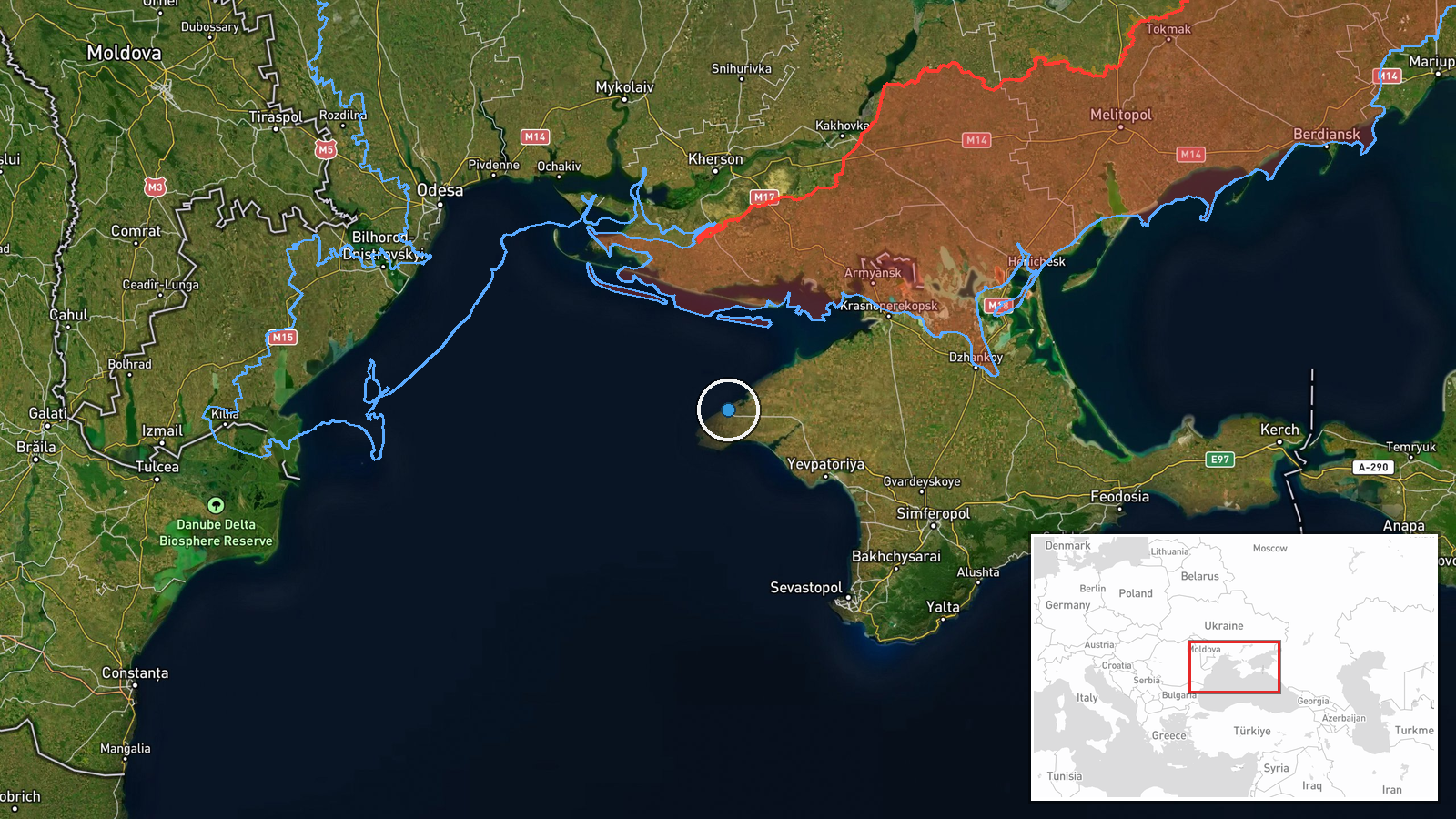
Ukrainian forces reportedly destroyed ground relay stations in Zaliznyi Port and Skadovsk in Kherson Oblast on September 13, according to the General Staff of the Armed Forces of Ukraine. The facilities targeted were communications relays used to control Shahed and Geran kamikaze drones, which Russia has employed extensively in strikes across Ukrainian territory. The strike was aimed at Russian drone command infrastructure in the region.
Context and assessment
Skadovsk and Zaliznyi Port lie on the northern coast of Crimea, in Russian-occupied territory. Control of communications infrastructure for unmanned systems represents a critical vulnerability in Russia's drone campaign, which has intensified in recent months. Destruction of relay stations could disrupt command and control of incoming drone swarms, potentially degrading attack coordination. The strike follows a Russian FPV drone attack on a bus in Kherson city earlier the same day and Russian aircraft repositioning over Crimea, suggesting sustained operational activity across the region. Targeting relay infrastructure indicates Ukrainian efforts to degrade rather than merely defend against drone threats.
Sources and confidence
Report sourced to Telegram channel of the General Staff of the Armed Forces of Ukraine on September 13. Single official source; no independent cross-confirmation available. Confidence score of 8.0 reflects official Ukrainian military attribution and specificity of claimed targets, though lack of alternative verification and absence of imagery limit certainty. Score would increase with independent confirmation or visual evidence.
Location
Zaliznyi Port and Skadovsk are settlements on the northwestern coast of Crimea in Kherson Oblast, approximately 100 kilometers southwest of the regional capital. The area lies near the Arabat Spit and northern approaches to the Sea of Azov. Coordinates place the strike in or near Skadovsk proper, a port town serving as a logistics hub for Russian operations.
Related events nearby
- Russian FPV-Kamikaze drone struck a bus in Kherson city, Ukraine. Attack details and casualty figures pending 2026-09-13 00:20 UTC · FPV Drone · Kherson, Kherson Oblast, Ukraine
- Russian tactical aviation aircraft deployed to forward firing positions over Crimea in preparation for potenti2026-09-13 06:54 UTC · Combat Aircraft · Crimea, Ukraine
▶ View this event on the live map
Intel Mapper aggregates open-source reports from monitored Telegram and X channels, geolocates them, cross-checks duplicates across sources and assigns a confidence score. Entries are updated as new confirmations arrive. Read how we verify events.