Ukraine downs 85 drones in overnight Russian assault; 108 launched from multiple fronts
What happened
Ukrainian air defenses reportedly intercepted or suppressed 85 attack drones during an overnight assault on September 13–14, according to Ukraine's General Staff. Russia launched 108 drones of Shahed, Geran, and decoy "Parodiya" types from staging areas in Oryol and Kursk regions, as well as occupied Donetsk and Crimea. Ukrainian air force, air defense, electronic warfare, and unmanned systems units engaged the attack. By 08:00 local time on September 14, Ukraine reported impacts on seven separate locations, with ongoing drone activity noted.
Context and assessment
This assault reflects the sustained tempo of Russian drone strikes against Ukrainian territory, part of a pattern of nightly attacks averaging over 100 unmanned systems per raid. The use of multiple launch zones across Russia's southern and western military districts indicates broad coordination. The previous night saw Ukraine's air defense claim 405 intercepted drones and missiles, suggesting Russian attrition rates remain high but production continues. Targeting dispersed locations rather than a single site may reflect either difficulty in concentrating forces or a shift toward area harassment rather than precision strikes on military infrastructure.
Sources and confidence
Reported by Ukraine's General Staff on Telegram. Single-channel source limits independent verification; no cross-confirmation from other Ukrainian or international sources noted. Confidence score of 8.0 reflects official status and consistency with recent patterns, but absence of corroborating reporting and lack of specificity on impact locations or damage prevents higher confidence. Independent satellite imagery or third-party confirmation would strengthen credibility.
Location
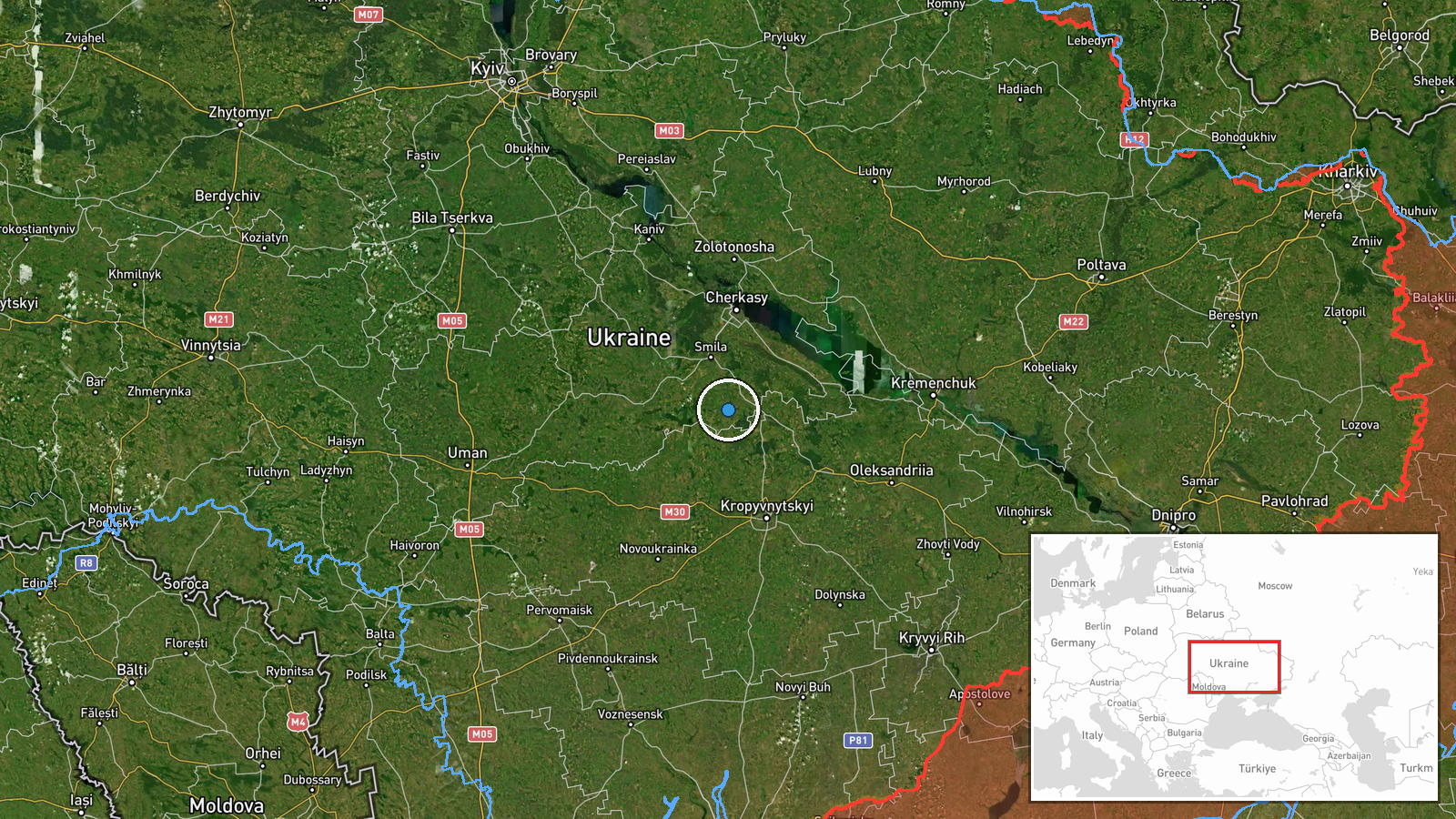
Ukraine-wide event. Launch locations span occupied and Russian territory: Oryol and Kursk regions in Russia, Gvardiyske in occupied Crimea, and occupied Donetsk. Impacts recorded across seven unspecified Ukrainian locations. Geographic precision limited to regional scale due to nationwide scope of defense operations.
Related events nearby
- Ukrainian General Staff daily operational update for September 14, 2026 (Day 1664). 208 combat clashes reporte2026-09-14 05:01 UTC · Statement · Ukraine (Nationwide)
▶ View this event on the live map
Intel Mapper aggregates open-source reports from monitored Telegram and X channels, geolocates them, cross-checks duplicates across sources and assigns a confidence score. Entries are updated as new confirmations arrive. Read how we verify events.