Ukraine strikes Russian Orion UAV control station at Crimean air base
What happened
Ukrainian forces reportedly struck a ground control station for Russian Orion reconnaissance-attack unmanned aerial vehicles at Saky Air Base near Novofedorivka in Crimea on the night of September 17–18, 2026, according to the General Staff of the Ukrainian Armed Forces. The Orion is a medium-altitude, long-endurance (MALE) system capable of remaining airborne for up to 24 hours and carrying guided munitions weighing 200–250 kilograms for precision strikes on ground targets.
Context and assessment
Saky Air Base has served as a key Russian air operations hub in Crimea throughout the conflict. The Orion system represents a significant Russian capability for sustained reconnaissance and strike operations across the operational sector. Degrading ground control infrastructure for these systems would substantially constrain Russian UAV employment, particularly for time-sensitive targeting and prolonged surveillance missions. The strike reflects continued Ukrainian efforts to target command-and-control nodes that enable Russian air operations. Success against such stations could force Russia to relocate critical infrastructure or accept increased operational delays in coordinating UAV missions.
Sources and confidence
Reported by the General Staff of the Ukrainian Armed Forces via Telegram (@GeneralStaffZSU). No independent cross-confirmation from other sources is currently noted. The confidence score of 8.0 reflects official Ukrainian attribution but reliance on a single reporting channel. Confirmation by satellite imagery, independent monitoring groups, or Russian acknowledgment would increase confidence; retraction by the source would lower it.
Location
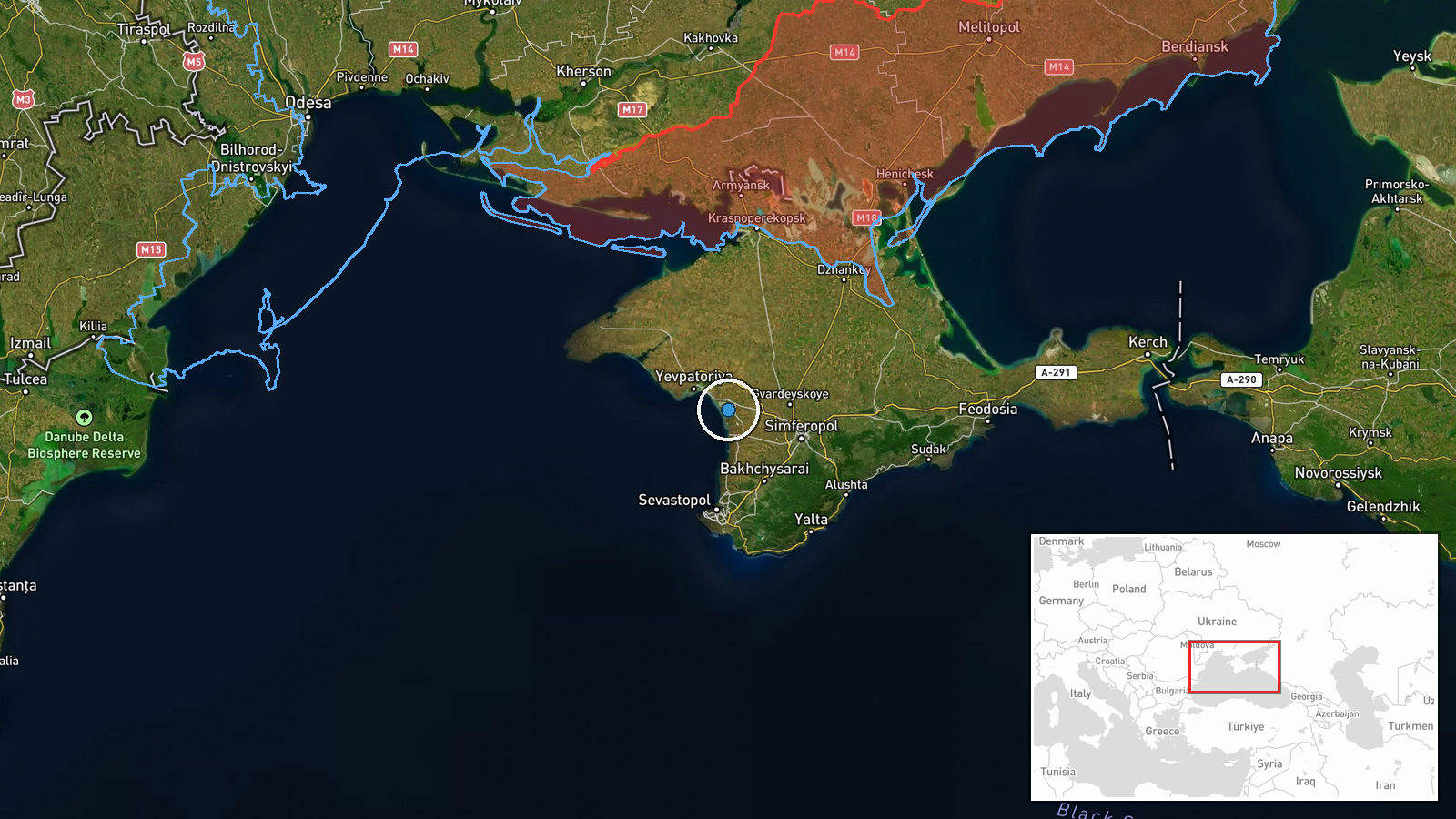
Novofedorivka settlement, Saky Air Base, central Crimea. The air base is located approximately 65 kilometers west of Simferopol. Saky is a known Russian military airfield hosting various aircraft and support facilities. The settlement of Novofedorivka lies adjacent to the base in the Saky district.
▶ View this event on the live map
Intel Mapper aggregates open-source reports from monitored Telegram and X channels, geolocates them, cross-checks duplicates across sources and assigns a confidence score. Entries are updated as new confirmations arrive. Read how we verify events.