Ukrainian forces strike drone storage facility near Horlivka, Donetsk
What happened
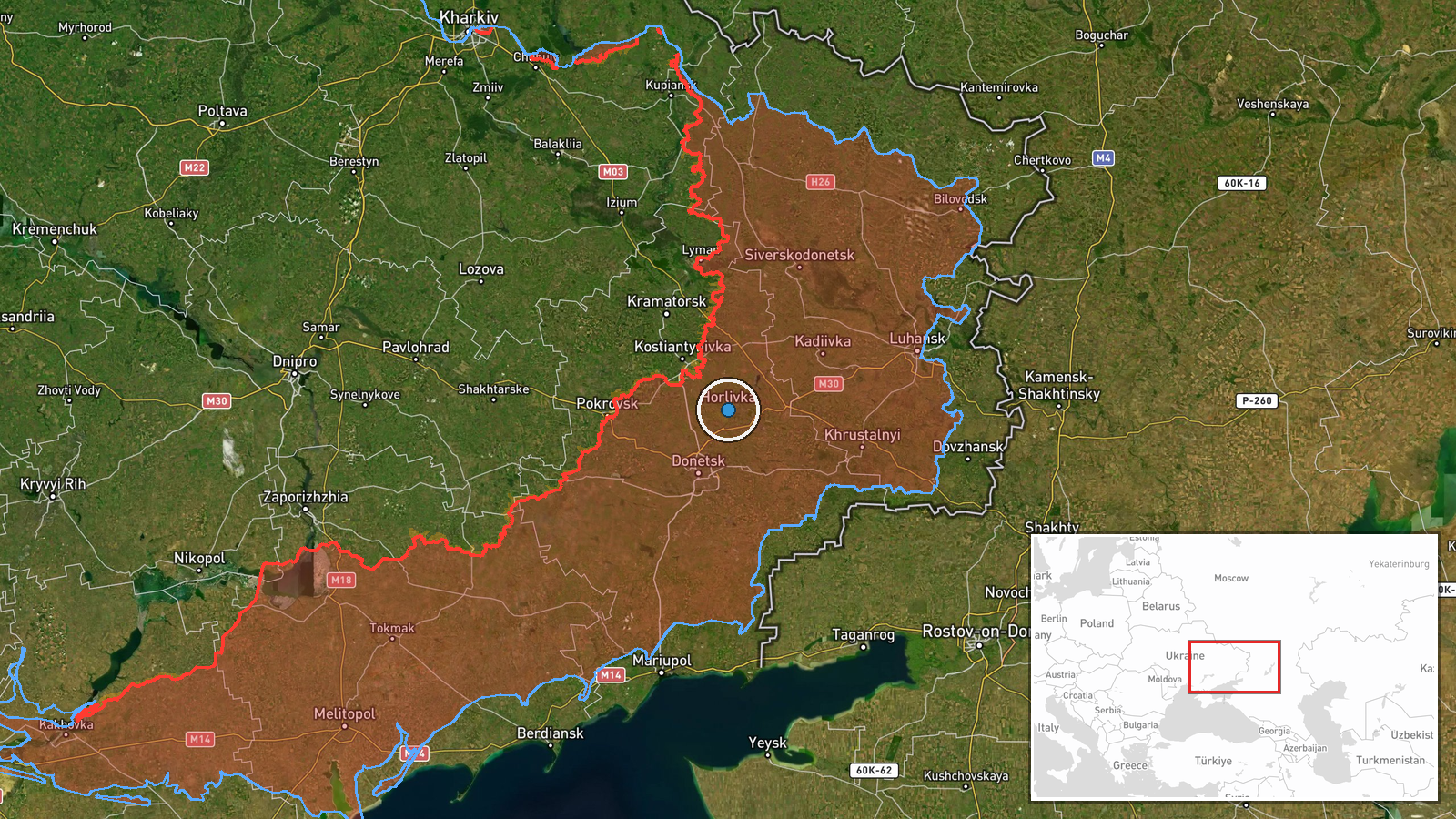
Ukrainian Defense Forces conducted a strike against a reported enemy unmanned aerial system storage depot in the Hrantine area near Horlivka, Donetsk Oblast on the night of 29–30 September 2026. The operation was announced by the General Staff of the Armed Forces of Ukraine via Telegram. The statement provides no detail on the scale of the strike, weapons used, or damage assessment, referring only to the targeting of an adversary drone storage facility.
Context and assessment
Horlivka lies in the heavily contested Donetsk region, approximately 90 kilometers east of the Ukrainian-held city of Pokrovsk. The targeting of drone storage and logistics sites represents a consistent Ukrainian strategy to disrupt Russian aerial operations, which have intensified significantly in recent weeks. On 29 September alone, the General Staff reported 46 Russian airstrikes across all fronts using 172 guided bombs. Strikes on rear-area logistics sites, including drone depots, aim to reduce the frequency and scale of such attacks. This operation follows a similar strike on a Russian command post near Lysychansk the same night, suggesting a coordinated campaign against Russian operational infrastructure.
Sources and confidence
Source: Ukrainian General Staff (@GeneralStaffZSU) via Telegram. Single-source report with no cross-confirmation from independent monitors or satellite imagery analysis. Confidence score of 8.0 reflects official Ukrainian military channel status and consistency with General Staff reporting patterns, though lack of corroborating evidence and absence of damage assessment limit certainty. Confirmation via open-source imagery or Russian statements would raise confidence.
Location
Hrantine (or Granite), a settlement in Donetsk Oblast near the city of Horlivka in eastern Ukraine. Coordinates place the location in the Russian-occupied region approximately 90 kilometers northeast of Pokrovsk. The area has been contested and Russian-controlled for an extended period. Geographic precision is regional rather than facility-specific.
Related events nearby
- Ukrainian General Staff reports 189 combat engagements across all fronts on 29 Sep 2026. Russia conducted 1 mi2026-09-29 19:06 UTC · Report · Ukraine (Multiple Fronts)
- Ukrainian forces struck a Russian command-observation post (КП) in Lysychansk, Luhansk Oblast on 29–30 Septemb2026-09-30 08:21 UTC · UAS Strike · Lysychansk, Luhansk Oblast, Ukraine
▶ View this event on the live map
Intel Mapper aggregates open-source reports from monitored Telegram and X channels, geolocates them, cross-checks duplicates across sources and assigns a confidence score. Entries are updated as new confirmations arrive. Read how we verify events.