Ukraine reports destruction of Russian drone facility in Donetsk Oblast
What happened
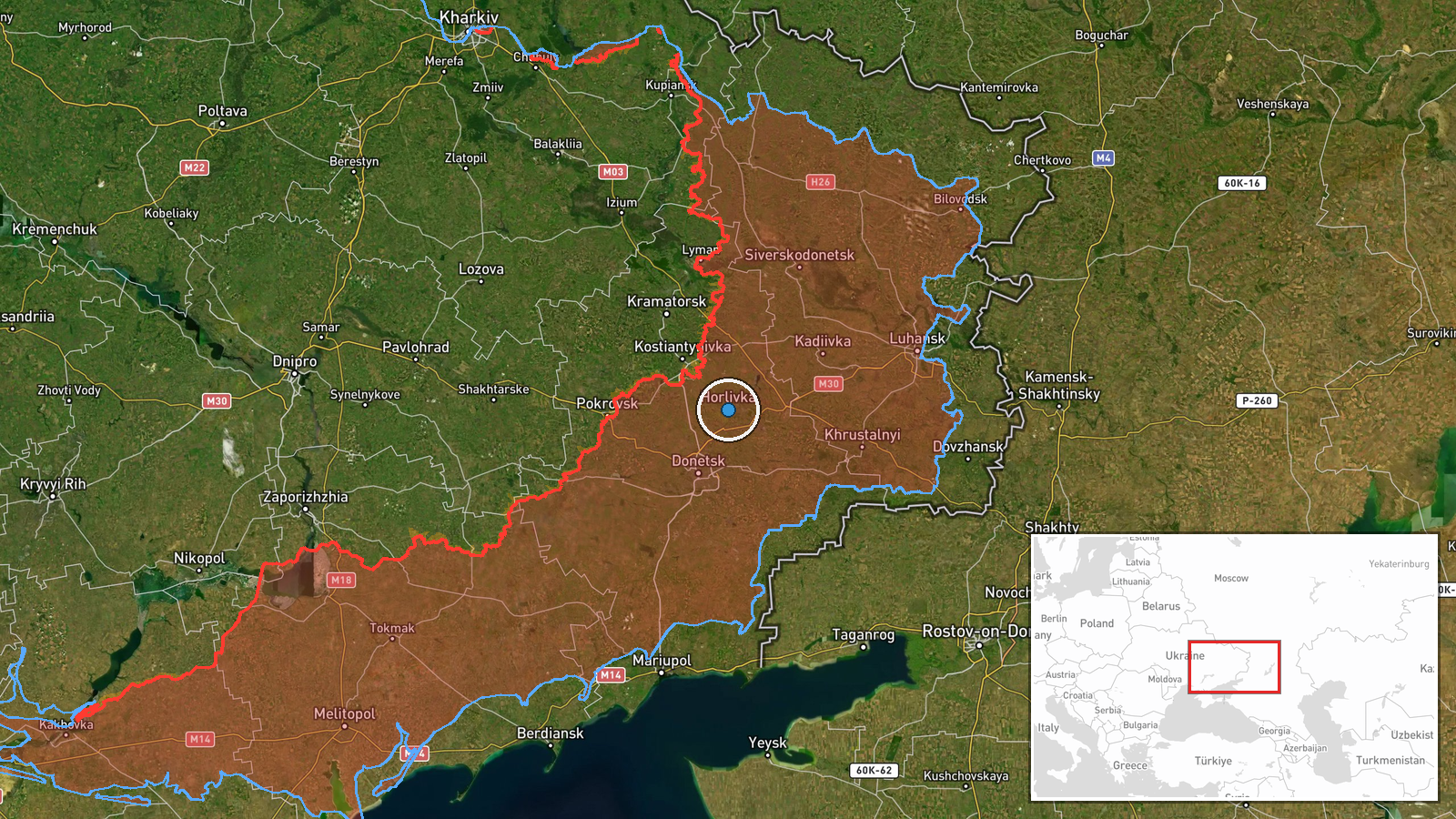
Ukraine's General Staff reported on October 3 that it struck a Russian facility in the Horlivka area of Donetsk Oblast used for storing, preparing, and launching attack drones. The General Staff stated the strike was part of a systematic campaign targeting such facilities to reduce Russian capability to conduct drone strikes against Ukrainian civilian infrastructure. The report was released via official Telegram channels and did not specify damage assessment or casualties.
Context and assessment
Drone storage and launch facilities have become priority targets for Ukrainian forces as Russia has sustained intensive unmanned aerial attacks on Ukrainian cities and energy infrastructure throughout the conflict. This strike occurs amid a broader pattern of Ukrainian counter-strikes into Russian-held territory in Donetsk, including the recent first combat deployment of domestically-produced FP-7 ballistic missiles on October 2 and destruction of a Russian pontoon crossing on the same day. The targeting pattern suggests Ukrainian efforts to degrade Russian logistics and capability networks in occupied territory, potentially ahead of larger operational movements.
Sources and confidence
The report originates solely from the Ukrainian General Staff's official Telegram channel (@GeneralStaffZSU). No independent cross-confirmation from other sources, geolocation imagery, or Russian statements is currently available. The confidence score of 8.0 reflects the official source and consistency with known Ukrainian operational messaging, though single-source reporting limits verification of specific targeting outcomes.
Location
Horlivka (also transliterated Horlivka or Horlivcka) is a major city in Donetsk Oblast held by Russian forces, located approximately 80 kilometers northeast of Donetsk city. The facility's precise location within the region is not specified. Horlivka sits in an industrial area of the Donbas with significant Soviet-era infrastructure, making it a plausible site for logistical operations.
Related events nearby
- Ukrainian forces deployed domestically-produced FP-7 ballistic missile in combat for the first time, striking 2026-10-02 13:57 UTC · Ballistic Missile · Luhansk, Ukraine or Donetsk, Ukraine
- Ukrainian forces destroyed a Russian pontoon crossing over the Mokri Yali river in Novoocharetuvate district, 2026-10-03 07:28 UTC · Artillery · Mokri Yali River, Novoocharetuvate district, Donet
▶ View this event on the live map
Intel Mapper aggregates open-source reports from monitored Telegram and X channels, geolocates them, cross-checks duplicates across sources and assigns a confidence score. Entries are updated as new confirmations arrive. Read how we verify events.