Karen residents demand action against two KNLA fighters accused of sexual offenses
What happened
A Burmese-language report published by BNI Online, a Myanmar news outlet distributed via its Telegram channel, says local residents in Karen State have called for effective action against two members of the Karen National Liberation Army (KNLA), the armed wing of the Karen National Union (KNU), accused of sexual offenses. The item was posted on 19 October 2026 at 13:50 UTC. The headline and body in the original text frame the matter as a demand from the community rather than a confirmed judicial outcome. The report does not, in the material provided, specify the victims, the exact incidents, the dates of alleged offenses, or any disciplinary decision by the KNU. The location is given only at region level, so the report should be read as a local accountability dispute concerning armed group conduct toward civilians.
Context and assessment
Karen State has a long history of armed conflict between the KNU and successive Myanmar governments, and civilians there have often borne the costs of fighting, displacement and checkpoint or patrol abuses. Allegations of sexual violence against civilians by any armed actor are sensitive because community trust in armed groups depends heavily on whether complaints are investigated and perceived as fairly handled. The same morning, related items in the dataset point to the KNU approving and enacting a military law framework for its multi-force armed structure at Mannerplaw, a location associated with the KNU, which may suggest an effort to formalise internal discipline and rules. Separately, the dataset includes reporting from Mon State about a youth assembly discussing military service law and reports that the Myanmar junta's newly trained conscripts are enabling expanded recruitment. Taken together, these items indicate that armed groups and the state are both tightening rules around service and mobilisation during the same period. This does not establish a causal link to the Karen case, but it suggests that the question of how armed groups discipline their own members may be receiving increased attention. Operationally, a visible accountability demand of this kind could lead to an internal KNU inquiry, to public statements, or to further pressure from civil society, though the available information does not confirm any of these responses.
Sources and confidence
The event rests on one source: a single Telegram channel, @bnionline, linking to a Burmese-language news article. No second outlet, local organisation, or KNU statement appears in the provided data to corroborate the allegations or the residents' demand. The confidence score of 6.6 reflects a single-channel origin, the absence of named victims or documented incidents, and the region-level location. Confidence would rise if independent Burmese or English-language outlets, human rights monitors, or KNU communications confirmed the complaint, or if the case was documented with dates and specific incidents. It would fall if the article were found to be recycled, if the accused were identified as members of another group, or if no follow-up reporting emerged.
Location
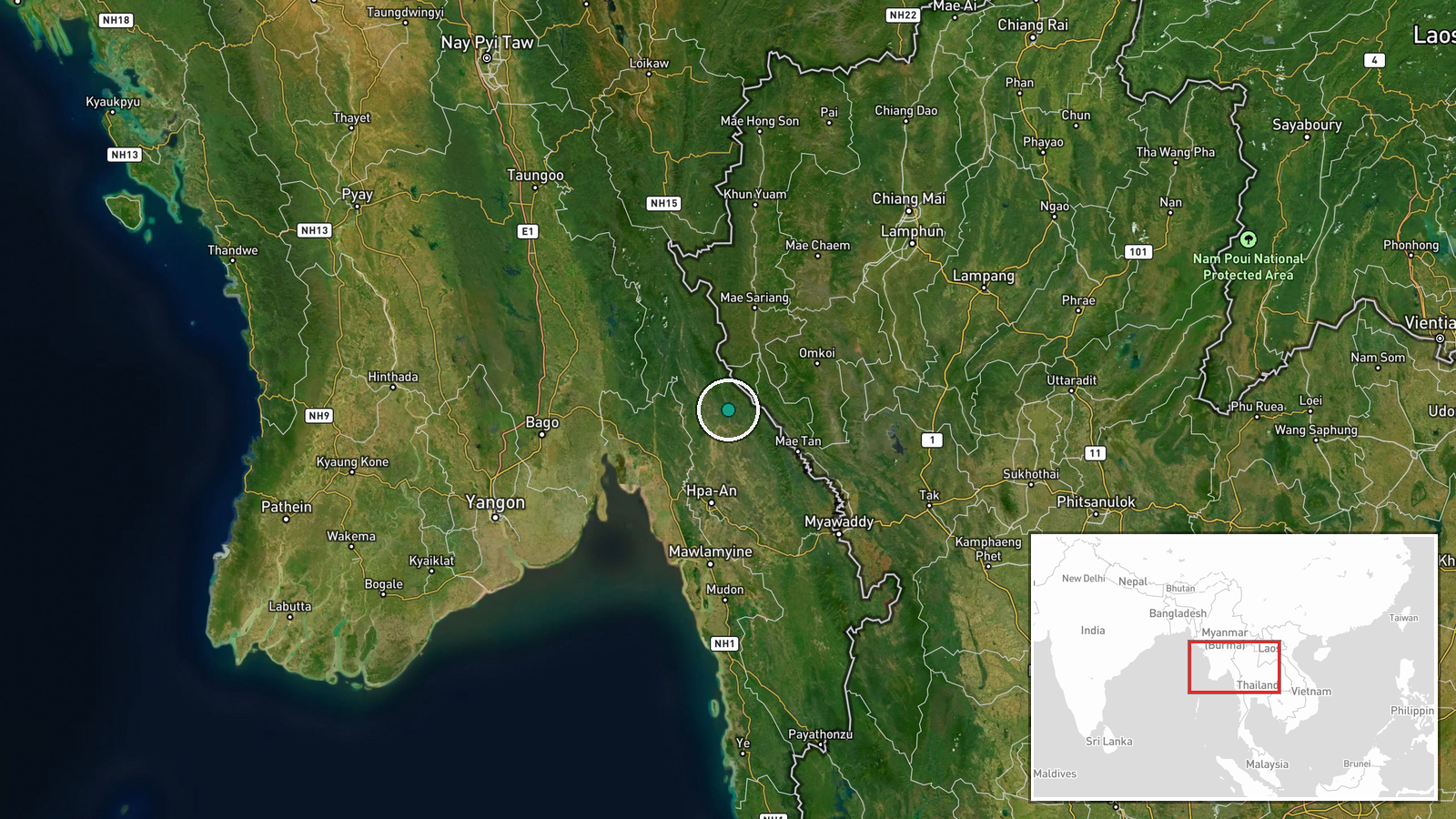
The location is recorded as Karen State, Myanmar, at region level with a coordinate of roughly 17.5 degrees north and 97.75 degrees east. This is an approximate centroid, not a settlement or facility, so the exact place of the alleged offenses is unknown. The coordinate falls within the broader Karen State area, which is mountainous and heavily forested in many parts, with river valleys and border zones that have historically shaped armed group movements. Users should treat the marker as indicating the state rather than a specific village.
Related events nearby
- Junta air raids have forced several schools in Mon State to close, per Burmese-language BNI report.2026-10-19 07:56 UTC · Report · Kyaikto, Mon State, Myanmar
- NRFF urges a Mon youth assembly to discuss military service law, a conscription-related mobilization issue.2026-10-19 08:00 UTC · Statement · Mawlamyine, Mon State, Myanmar
- Myanmar junta's newly trained conscripts reportedly enable expanded recruitment; Mon locals urged to warn youn2026-10-19 05:11 UTC · Report · Mawlamyine, Mon State, Myanmar
▶ View this event on the live map

Intel Mapper aggregates open-source reports from monitored Telegram and X channels, geolocates them, cross-checks duplicates across sources and assigns a confidence score. Entries are updated as new confirmations arrive. Read how we verify events.