Russian Geran-3 drone detected heading toward Vasylkiv in Kyiv Oblast
What happened
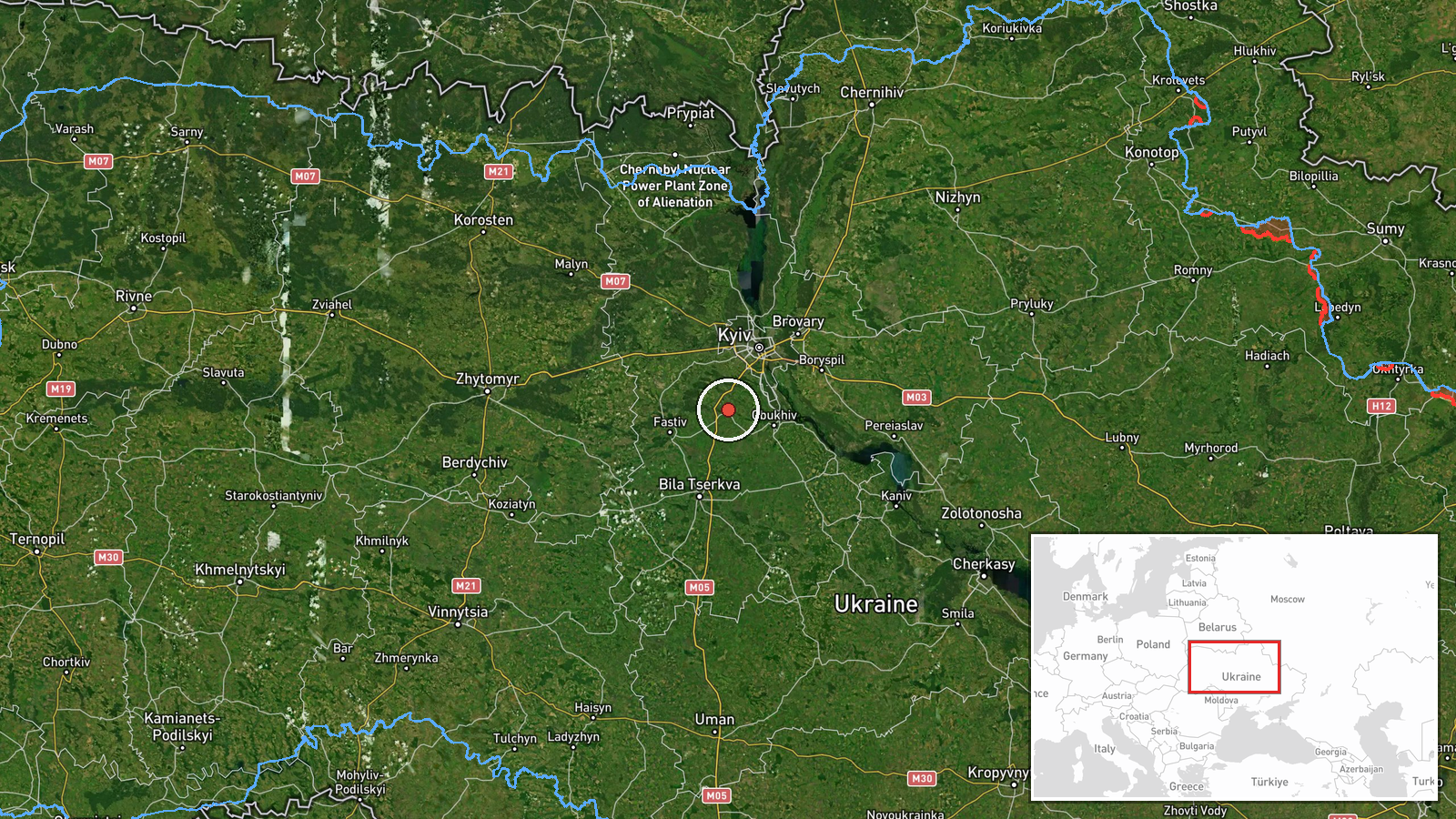
Ukraine's air monitoring service detected one Russian jet-powered Shahed (Geran-3) unmanned aerial vehicle heading toward Vasylkiv in Kyiv Oblast on October 13 at 13:51 UTC. The alert was issued via the official Telegram channel of Ukraine's air defence command. Vasylkiv lies approximately 40 kilometers south of Kyiv. The report classified the contact as a drone transit rather than a confirmed strike.
Context and assessment
Vasylkiv, an industrial town in southern Kyiv Oblast, hosts critical infrastructure including a major oil refinery and railway facilities—assets routinely targeted in Russian drone campaigns. This detection occurred within a broader coordinated attack window, with related reports indicating at least three other Russian drone transits across Kyiv Oblast during the same 21-minute period (13:29–13:51 UTC) and additional contacts near Obukhiv. Russia has intensified strikes on Kyiv region's logistics and energy infrastructure in recent months. The pattern suggests a multi-vector drone operation designed to saturate Ukrainian air defences or target multiple facilities simultaneously.
Sources and confidence
Report sourced solely to Ukraine's official air defence Telegram channel (@kpszsu), with no independent cross-confirmation cited. The confidence score of 8.0 reflects the authoritative nature of the Ukrainian air monitoring source but the single-channel reporting and absence of strike confirmation. Score would strengthen with secondary reports of interception or impact; it would lower if subsequent official statements contradicted the sighting.
Location
Vasylkiv is a settlement and industrial centre in Kyiv Oblast, located 40 kilometers south-southwest of central Kyiv at coordinates 50.18°N, 30.31°E. The town sits on the Stuhna River in a semi-rural area; its Kremenchuk oil refinery is one of Ukraine's largest. Precision is rated 'high' based on settlement-level identification by Ukrainian monitoring authorities.
Related events nearby
- Ukrainian air monitoring: 2+ Russian jet-powered Shahed (Geran-3) drones from Kyiv Oblast toward Vasylkiv.2026-10-13 14:03 UTC · Drone Transit · Vasylkiv, Ukraine
- Ukrainian air monitoring: 1 Russian jet-powered Shahed (Geran-3) drone from Kyiv Oblast toward Chabany.2026-10-13 14:04 UTC · Drone Transit · Chabany, Ukraine
- Ukrainian air monitoring: 1 Russian jet-powered Shahed (Geran-3) drone heading toward Obukhiv.2026-10-13 13:36 UTC · Drone Transit · Obukhiv, Ukraine
- Russian forces destroyed four Ukrainian locomotives. Equipment losses documented; specific location and timest2026-10-12 22:41 UTC · Report · Kyiv, Ukraine
- Ukrainian air monitoring: 1 Russian jet-powered Shahed (Geran-3) drone over Kyiv Oblast.2026-10-13 14:57 UTC · Drone Transit · Kyiv Oblast, Ukraine
▶ View this event on the live map

Intel Mapper aggregates open-source reports from monitored Telegram and X channels, geolocates them, cross-checks duplicates across sources and assigns a confidence score. Entries are updated as new confirmations arrive. Read how we verify events.