Russian Geran-3 drone reported transiting toward Kozyatyn in central Ukraine
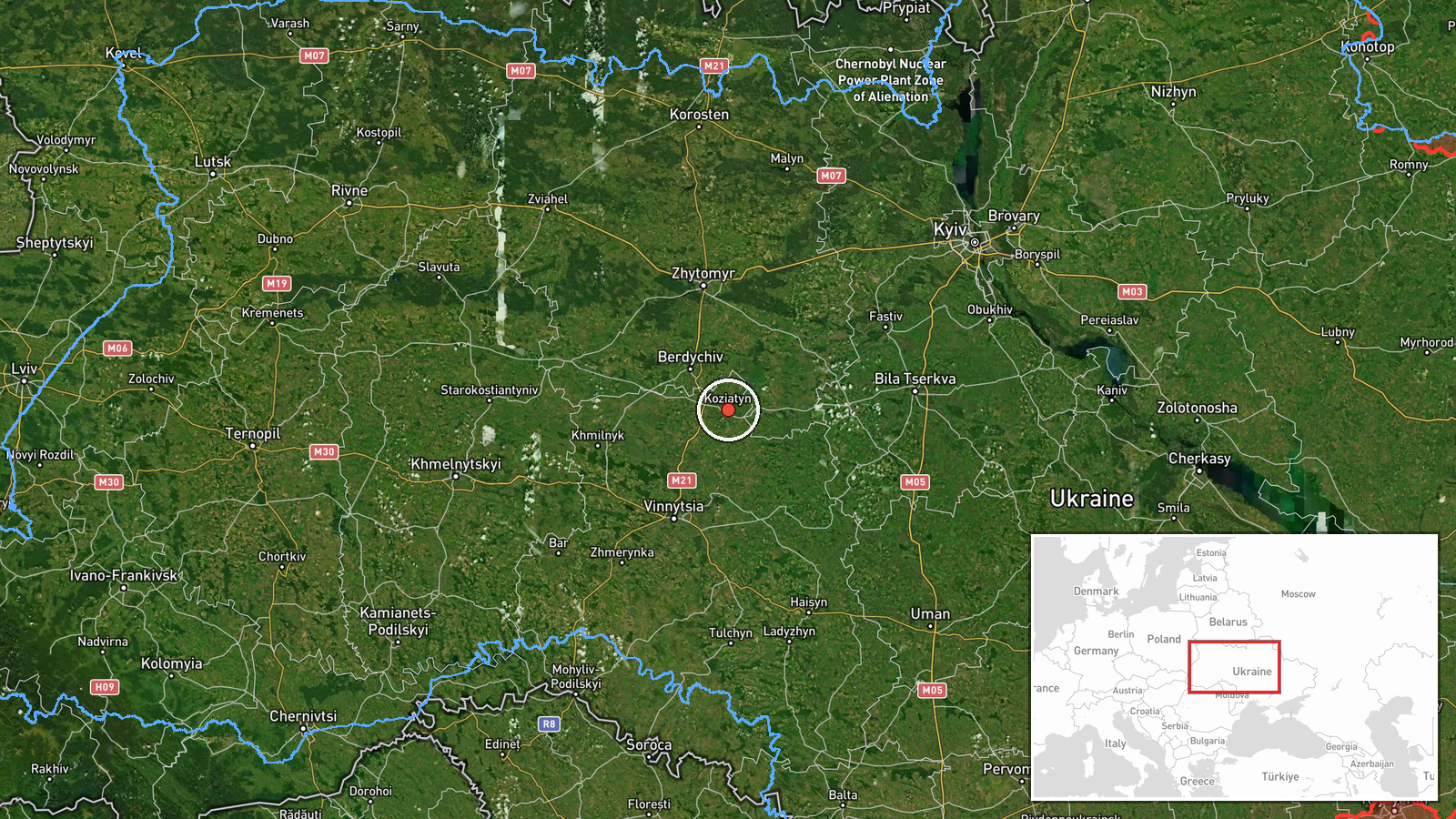
What happened
Ukrainian air monitoring reported a single Russian jet-powered Shahed (Geran-3) drone heading toward Kozyatyn in Vinnytsia Oblast on the evening of 13 October 2026 at 21:09 UTC. The report was issued by the Kyiv Post Civil-Military Administration Telegram channel. Kozyatyn is a rail and transport hub in central Ukraine located approximately 200 kilometres southwest of Kyiv. No impact or interception was reported in the available data.
Context and assessment
Kozyatyn serves as a significant rail junction and logistics node on routes connecting central and western Ukraine. The reported transit fits a pattern of multiple Geran-3 drone flights across Vinnytsia Oblast and adjacent regions throughout 13 October, with related observations near Berdychiv, Zhytomyr Oblast, and other central Ukrainian locations. These jet-powered Shahed variants are capable of penetrating defended airspace and typically employed against infrastructure targets. The frequency of transits across this corridor on a single day may suggest either a coordinated multi-target operation or routine reconnaissance activity. Such operations have become routine in the ongoing conflict.
Sources and confidence
Single source via Telegram channel @kpszsu (Kyiv Post Civil-Military Administration). No cross-confirmation from alternative Ukrainian monitoring channels or international sources is evident in available data. Confidence score of 8.0 reflects the official Ukrainian air monitoring origin and high location precision, but reliance on one reporting channel limits independent verification. Additional reports from independent monitors or confirmation of impact would strengthen confidence.
Location
Kozyatyn, a settlement and major rail hub in Vinnytsia Oblast, central Ukraine, at 49.72°N, 28.84°E. Located approximately 200 kilometres southwest of Kyiv on the M12 highway and major rail corridor. The town is a key transport junction linking routes to western and southwestern Ukraine.
Related events nearby
- Ukrainian air monitoring: 1 Russian jet-powered Shahed (Geran-3) drone from Zhytomyr Oblast toward Berdychiv.2026-10-13 18:56 UTC · Drone Transit · Berdychiv, Ukraine
- Ukrainian air monitoring: 1 Russian jet-powered Shahed (Geran-3) drone from Odesa Oblast toward Vinnytsia Obla2026-10-13 22:15 UTC · Drone Transit · Vinnytsia Oblast, Ukraine
- Ukrainian air monitoring: 1 Russian jet-powered Shahed (Geran-3) drone from Cherkasy Oblast toward Vinnytsia O2026-10-13 20:50 UTC · Drone Transit · Vinnytsia Oblast, Ukraine
- Ukrainian air monitoring: 1 Russian jet-powered Shahed (Geran-3) drone passing Vinnytsia Oblast, heading north2026-10-13 15:12 UTC · Drone Transit · Vinnytsia Oblast, Ukraine
- Ukrainian air monitoring: 1 Russian jet-powered Shahed (Geran-3) drone from Odesa Oblast toward Vinnytsia Obla2026-10-13 14:50 UTC · Drone Transit · Vinnytsia Oblast, Ukraine
▶ View this event on the live map

Intel Mapper aggregates open-source reports from monitored Telegram and X channels, geolocates them, cross-checks duplicates across sources and assigns a confidence score. Entries are updated as new confirmations arrive. Read how we verify events.