Russian jet-powered Geran-3 drone transits toward Kyiv via reservoir
What happened
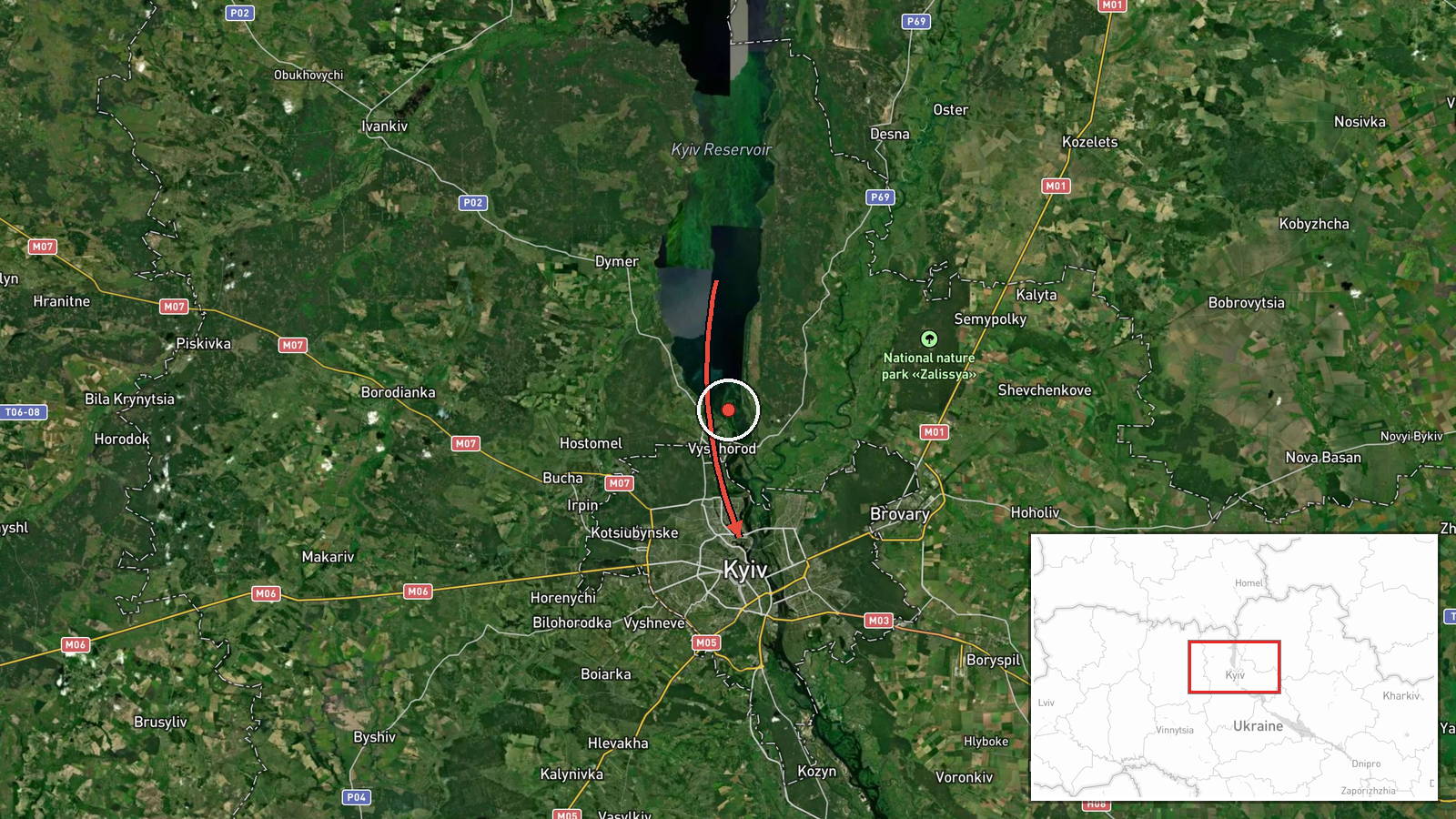
Ukrainian air monitoring reported a single Russian jet-powered Shahed-type drone (Geran-3) passing along the Kyiv Reservoir on the morning of October 15 at 03:38 UTC, traveling in the direction of Kyiv. The detection was posted by the Kyiv Air Defense Command on Telegram. The report indicates transit rather than confirmed impact or interception at the time of posting.
Context and assessment
The Kyiv Reservoir lies northwest of the capital and represents a common flight corridor for Russian unmanned aircraft targeting the city. Recent drone activity against Kyiv has continued despite international political developments, including reported U.S. warnings to Ukraine about intelligence restrictions related to strikes on Russian energy infrastructure. The transit occurs amid statements from Ukrainian leadership reaffirming operational independence and dismissing external pressure on military strategy. Geran-3 drones, powered variants of the Shahed platform, represent upgraded strike capability and suggest Russia maintains pressure on the capital through sustained aerospace operations.
Sources and confidence
Single source: Kyiv Air Defense Command official Telegram channel (@kpszsu). Confidence score of 8.0 reflects institutional credibility of the source and real-time monitoring role, though absence of cross-confirmation from other channels or follow-up reporting on outcome limits certainty. Score would increase with secondary confirmation from independent monitoring groups or air defense statements; would decrease if subsequent reports contradicted the transit or sighting.
Location
Kyiv Reservoir (Kyivske Vodoskhovyshche), approximately 50 km northwest of central Kyiv in northern Ukraine. The reservoir marks a key geographic waypoint on the approach to the capital from Russian-held territory. Settlement-level precision based on large-scale geographic reference; actual drone position approximate to corridor rather than pinpoint.
Related events nearby
- President Zelensky expresses disappointment that President Trump has not chosen Ukraine's side, criticizing th2026-10-14 19:49 UTC · Statement · Kyiv, Ukraine
- President Zelensky reiterates that only the Ukrainian people can elect Ukraine's president, rejecting any fore2026-10-14 18:56 UTC · Statement · Kyiv, Ukraine
- Ukrainian President Zelensky, in an interview with Piers Morgan, reaffirms Ukraine's determination to maintain2026-10-14 18:50 UTC · Statement · Kyiv, Ukraine
- Zelensky warns that the U.S. has cautioned Ukraine it may halt intelligence sharing if Ukraine continues attac2026-10-14 07:11 UTC · Statement · Kyiv, Ukraine
- SpaceX imposed speed cap on military-grade Starlink terminals (above 100 mph), disrupting Ukrainian drone and 2026-10-14 07:02 UTC · Report · Kyiv, Ukraine
▶ View this event on the live map

Intel Mapper aggregates open-source reports from monitored Telegram and X channels, geolocates them, cross-checks duplicates across sources and assigns a confidence score. Entries are updated as new confirmations arrive. Read how we verify events.