Russian Shahed drones tracked toward Kovel in northwestern Ukraine
What happened
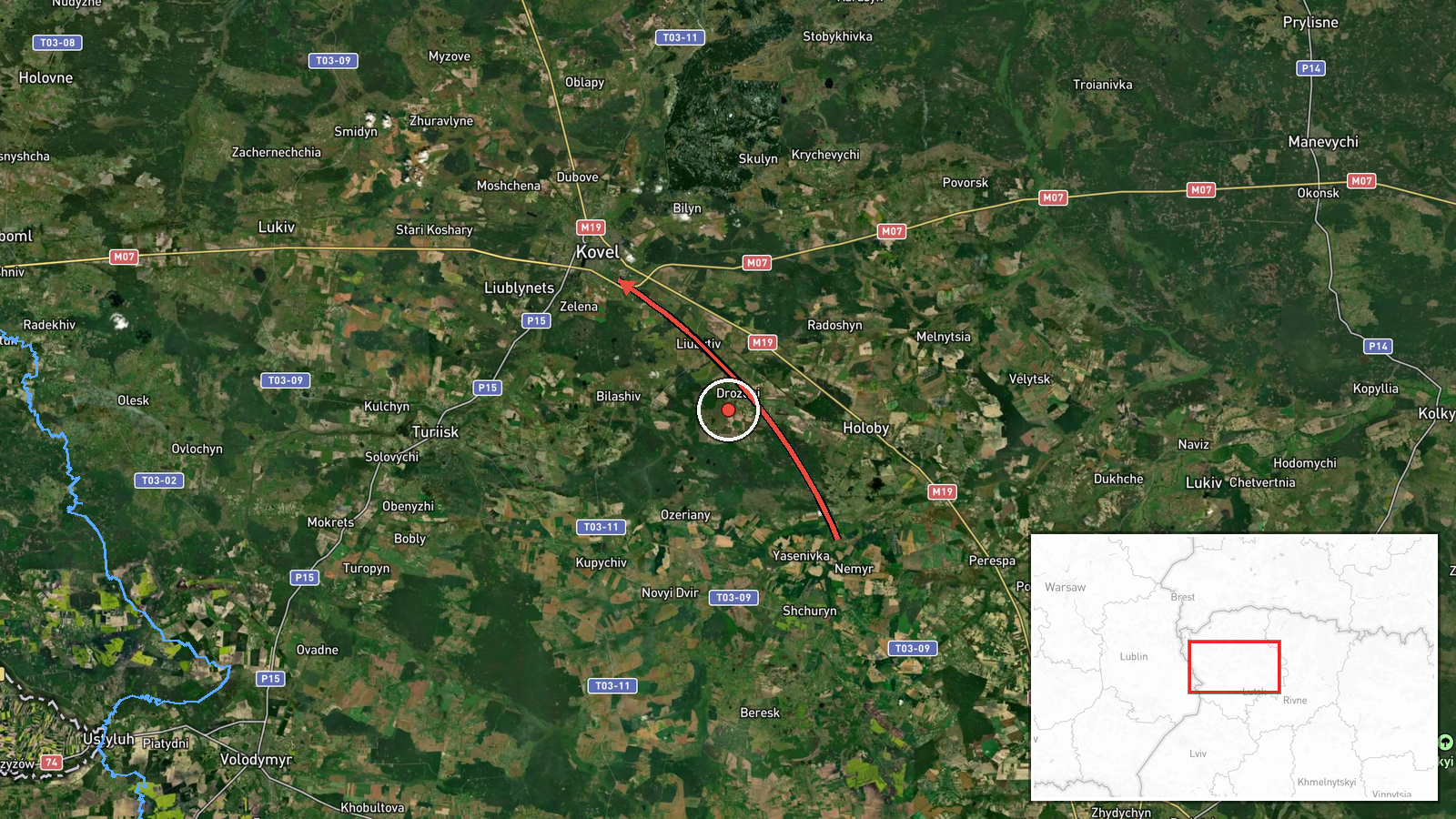
Ukrainian air monitoring reported at least two Russian jet-powered Shahed (Geran-3) drones transiting toward Kovel in Volyn Oblast on October 15 at 16:49 UTC. The alert was issued by Ukraine's air force monitoring channel. Multiple related drone tracks were simultaneously detected across the region, including separate drones heading toward Lutsk and Manevychi, suggesting a coordinated wave of drone activity across northwestern Ukraine.
Context and assessment
Kovel and nearby Lutsk are the principal urban centers of Volyn Oblast, located in northwestern Ukraine near the Polish border. The region has been subject to repeated Russian drone strikes throughout the conflict, typically targeting infrastructure and military positions. The October 15 activity represents part of a sustained campaign: at least five separate Shahed-type drones were tracked across Volyn Oblast within a six-hour window that day. Geran-3 (export designation Shahed-131/136) drones are jet-powered cruise missiles capable of striking targets at significant range. The convergent targeting of multiple towns in a single region may indicate an attempt to overwhelm air defenses or target dispersed infrastructure simultaneously.
Sources and confidence
Report sourced from Telegram channel @kpszsu (Ukrainian air force official monitoring account). Single-channel reporting with no cross-confirmation noted in available data. Confidence score of 8.0 reflects the official Ukrainian source and consistency with established air monitoring protocols, though lack of independent verification and absence of damage confirmation leave moderate uncertainty about drone guidance or impact.
Location
Kovel, a city of approximately 65,000 in northwestern Volyn Oblast, situated roughly 80 kilometers east of the Polish border and 50 kilometers south of the Belarusian border. The settlement is a significant regional transport hub. Coordinates indicate the city center; actual drone routing or targeting disposition unconfirmed.
Related events nearby
- Ukrainian air monitoring: 1 Russian Shahed-type drone from Volyn Oblast toward Manevychi.2026-10-15 16:47 UTC · Drone Transit · Manevychi, Ukraine
- Ukrainian air monitoring: 1 Russian jet-powered Shahed (Geran-3) drone heading toward Kivertsi.2026-10-15 04:15 UTC · Drone Transit · Kivertsi, Ukraine
- Ukrainian air monitoring: 1 Russian jet-powered Shahed (Geran-3) drone passing Pivnichnyi, heading toward Kive2026-10-15 01:55 UTC · Drone Transit · Kivertsi, Ukraine
- Ukrainian air monitoring: 1 Russian jet-powered Shahed (Geran-3) drone heading toward Lutsk.2026-10-15 17:23 UTC · Drone Transit · Lutsk, Ukraine
- Ukrainian air monitoring: 1 Russian jet-powered Shahed (Geran-3) drone heading toward Lutsk.2026-10-15 16:34 UTC · Drone Transit · Lutsk, Ukraine
▶ View this event on the live map

Intel Mapper aggregates open-source reports from monitored Telegram and X channels, geolocates them, cross-checks duplicates across sources and assigns a confidence score. Entries are updated as new confirmations arrive. Read how we verify events.