Ukrainian air monitoring reports one jet-powered Geran-3 drone heading toward Zhytomyr
What happened
Ukrainian air monitoring reported one Russian jet-powered Shahed, identified as a Geran-3, heading toward Zhytomyr at about 00:19 UTC on 20 October 2026. The original Ukrainian-language post describes a jet-type UAV approaching Zhytomyr from the northeast. The alert was published on the Telegram channel of the Ukrainian Air Force, which the data lists as the sole source. The report does not describe impact, damage, casualties or interception, and the data contains no follow-up update confirming the drone's final fate. The event is categorised as a drone transit, meaning the report concerns a drone moving through airspace rather than a confirmed strike. Attribution to Russia reflects the Geran family's known origin and the Ukrainian source's framing, and no independent confirmation accompanies it.
Context and assessment
Zhytomyr sits in northern Ukraine on the corridor between Kyiv and the western regions, so drones routed across the north frequently pass over or near it. The related events show a sustained pattern on 19 October 2026. At 06:59 a Geran-3 was logged passing Zon heading toward Zhytomyr Oblast, and at 14:39 and 15:51 drones were noted passing the oblast heading west. Later transits at 18:42 and 21:00 came from northern and general Kyiv Oblast and were directed toward Zhytomyr Oblast. The 00:19 UTC report on 20 October continues this sequence with the same drone type and heading. Taken together, the series suggests individual jet-powered drones moving through the region over roughly seventeen hours rather than a single large salvo. Operationally, this may indicate route probing, reconnaissance of air defence coverage, or drones travelling toward targets further west, and the repeated approach from Kyiv Oblast could point to a fixed corridor. The data shows no impact in Zhytomyr, so the pattern should be read as movement activity rather than confirmed targeting. Jet-powered Geran-3 variants are generally faster and harder to intercept than piston-engined models, which makes sustained transits a notable concern for air defence planners.
Sources and confidence
The alert appears on one channel, the Ukrainian Air Force's Telegram account, which is the official military air-warning feed and is typically the first public notice of drone movements. No second outlet, wire service or independent monitor in the dataset reports this specific drone, so cross-confirmation is absent. The confidence score of 8.0 is high because the source is official and the event is a routine air alert with a clear location, yet it stops short of maximum because it is single-sourced and lacks outcome reporting. Confidence would rise with corroboration from regional military administrations or subsequent alerts naming the same track, and would fall if the air command later revised or withdrew the warning.
Location
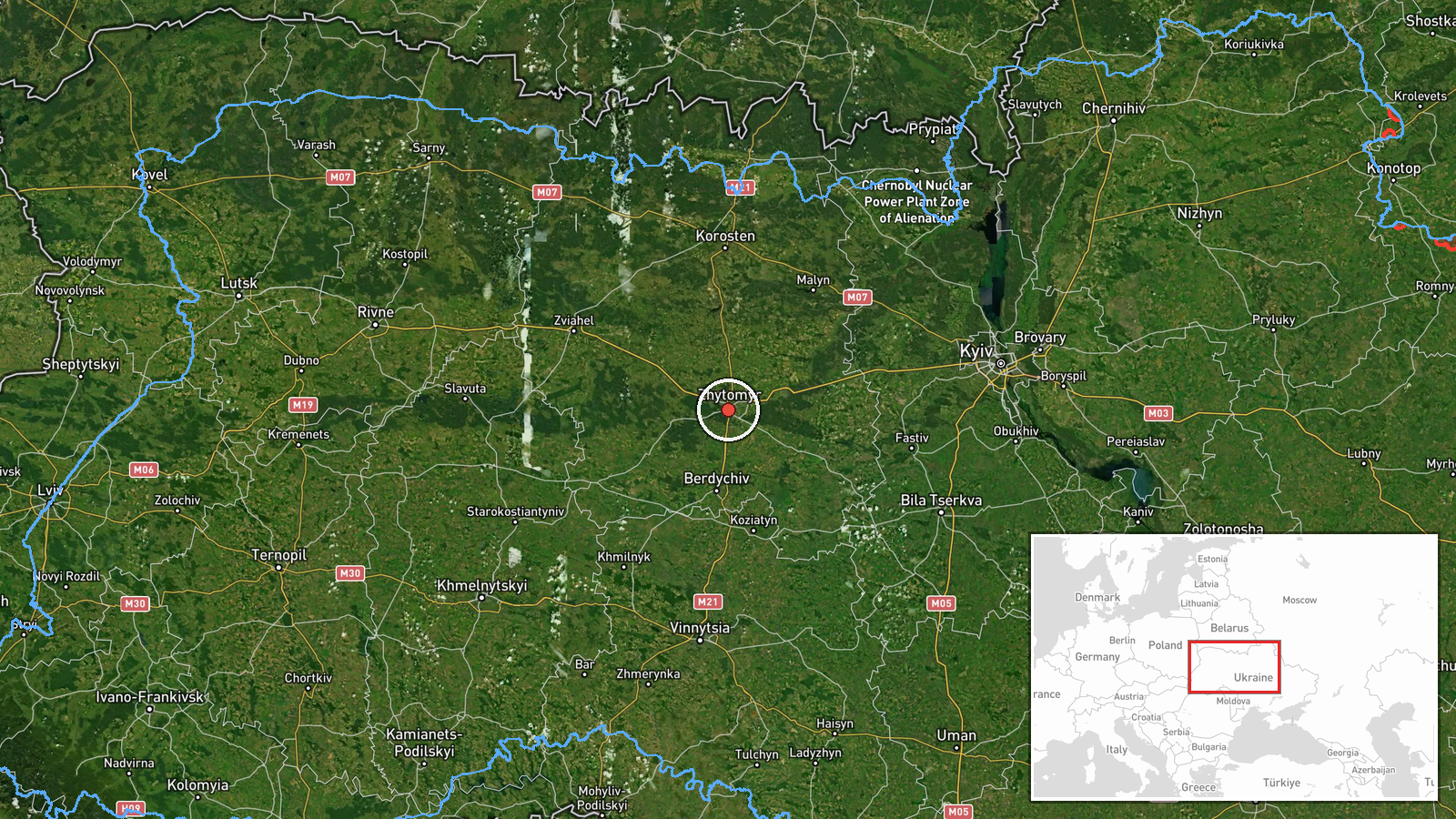
Coordinates place the event at the city of Zhytomyr itself, a settlement-level match with high location confidence, rather than a facility or a broader oblast centroid. Zhytomyr lies in northern-central Ukraine, roughly 130 to 140 kilometres west of Kyiv, on the Teteriv River, within the wider Polissia lowlands where forest and marsh extend to the north. The city sits along key road and rail corridors toward western Ukraine, which helps explain why drones heading west often cross this area.
Related events nearby
- Ukrainian air monitoring: 1 Russian Shahed-type drone passing Piskivka, heading toward Zhytomyr Oblast.2026-10-20 00:40 UTC · Drone Transit · Zhytomyr Oblast, Ukraine
- Ukrainian air monitoring: 1 Russian jet-powered Shahed (Geran-3) drone from Kyiv Oblast toward Zhytomyr Oblast2026-10-19 21:00 UTC · Drone Transit · Zhytomyr Oblast, Ukraine
- Ukrainian air monitoring: 1 Russian jet-powered Shahed (Geran-3) drone from northern Kyiv Oblast toward Zhytom2026-10-19 18:42 UTC · Drone Transit · Zhytomyr Oblast, Ukraine
- Ukrainian air monitoring: 1 Russian jet-powered Shahed (Geran-3) drone passing Zhytomyr Oblast, heading west.2026-10-19 15:51 UTC · Drone Transit · Zhytomyr Oblast, Ukraine
- Ukrainian air monitoring: 1 Russian jet-powered Shahed (Geran-3) drone passing Zhytomyr Oblast, heading west.2026-10-19 14:39 UTC · Drone Transit · Zhytomyr Oblast, Ukraine
▶ View this event on the live map

Intel Mapper aggregates open-source reports from monitored Telegram and X channels, geolocates them, cross-checks duplicates across sources and assigns a confidence score. Entries are updated as new confirmations arrive. Read how we verify events.