Ukraine reports jet-powered drones entering from Belarus toward Kyiv Oblast
What happened
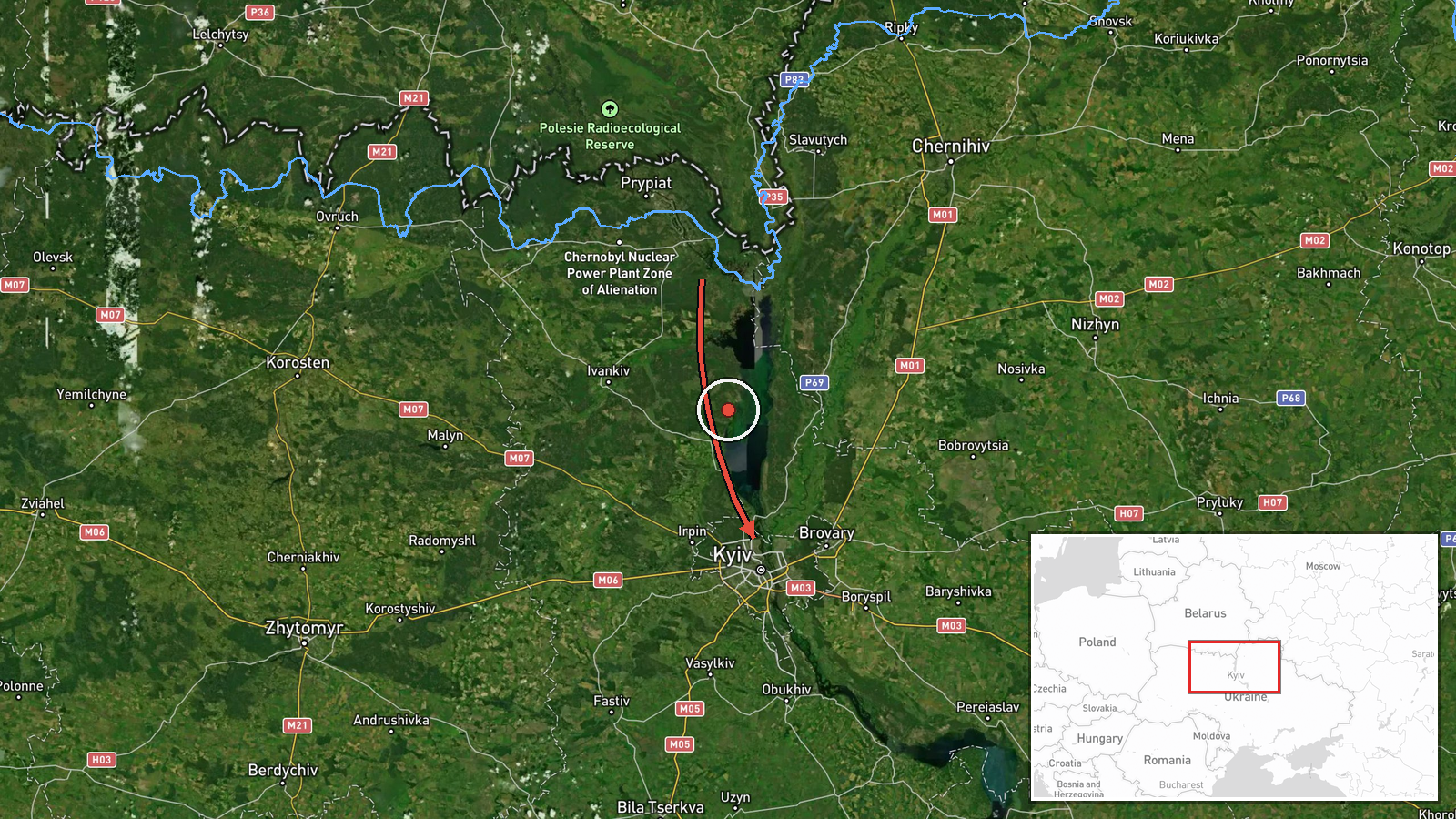
Ukraine's Air Force monitoring channel, @kpszsu on Telegram, reported at about 07:16 UTC on 22 October 2026 a large group of jet-powered unmanned aerial vehicles in northern Chernihiv region, moving along the border with Belarus toward Kyiv Oblast. The original Ukrainian wording describes a 'large group' (велика група), while the event summary identifies at least two Russian Shahed-type drones, specifically the Geran-3 jet variant, launched from Belarus. The post does not give a precise position, a count beyond the summary's 'two or more,' or any reported impact. Attribution to Russia rests on the channel's identification of the system type and the wider pattern of Russian long-range strikes.
Context and assessment
The drones appear within a sustained run of Russian cruise missile activity aimed at Kyiv. Between 19:13 UTC on 21 October and 00:33 UTC on 22 October, Ukrainian monitoring reported multiple Zircon or Oniks missiles passing Kipti, Luben', Baryshivka and Nizhyn, all on headings toward the capital. Those passages trace a northern approach that matches the axis now reported for the drones, suggesting a coordinated package in which different weapon types arrive along overlapping corridors. Jet-powered Geran-3 drones are faster and harder to intercept than older piston-engine Shaheds, so a mixed salvo can compress the warning window for air defenders. Operationally, a drone group crossing from Belarus could be intended to saturate defenses, to fix radar and interceptor positions, or to add a second wave after missiles have passed. Without further reporting, these purposes cannot be distinguished, and the transit may also be a deconfliction-driven flight path rather than a target-specific attack.
Sources and confidence
The report comes from a single Telegram channel, @kpszsu, which carries official Ukrainian Air Force alerts and has a long record for rapid air-threat notices. No second outlet or independent sensor report appeared in the data provided, so cross-confirmation is absent. The confidence score of 8.0 reflects the channel's institutional standing and the consistency of the warning with the related missile tracks, but it is held below the top of the scale because the post is a real-time air-monitoring estimate rather than a confirmed event. Confidence would rise with corroboration from Belarusian or Polish airspace reporting, radar-based flight tracks, or a subsequent Air Force statement confirming the drone count. It would fall if later updates revised the type, number, or direction.
Location
The location is recorded only at region level as Kyiv Oblast, with approximate coordinates near the city of Kyiv, so the point marks the general target area rather than any position on the drones' route. The original text places the drones in northern Chernihiv region, along the Belarusian border, which is a separate and more northerly zone. Kyiv Oblast surrounds the capital, and the Dnipro River runs through the metropolitan area. The northern corridor toward the capital passes through relatively open country and small settlements, and the precise track is not recorded in the post.
Related events nearby
- Ukrainian air monitoring: 2+ Russian jet-powered Shahed (Geran-3) drones from Belarus toward Kyiv Oblast.2026-10-22 07:48 UTC · Drone Transit · Kyiv Oblast, Ukraine
- Ukrainian air monitoring: 1 Russian Zircon/Oniks missile passing Nizhyn, heading toward Kyiv.2026-10-22 00:33 UTC · Cruise Missile · Kyiv, Ukraine
- Ukrainian air monitoring: 2 Russian Zircon/Oniks missiles passing Nizhyn, heading toward Kyiv.2026-10-22 00:05 UTC · Cruise Missile · Kyiv, Ukraine
- Ukrainian air monitoring: 2 Russian Zircon/Oniks missiles passing Baryshivka, heading toward Kyiv.2026-10-21 23:00 UTC · Cruise Missile · Kyiv, Ukraine
- Ukrainian air monitoring: 2 Russian Zircon/Oniks missiles passing Luben’, heading toward Kyiv.2026-10-21 23:00 UTC · Cruise Missile · Kyiv, Ukraine
▶ View this event on the live map

Intel Mapper aggregates open-source reports from monitored Telegram and X channels, geolocates them, cross-checks duplicates across sources and assigns a confidence score. Entries are updated as new confirmations arrive. Read how we verify events.