Ukrainian drone strike reported on industrial facility in Voronezh
What happened
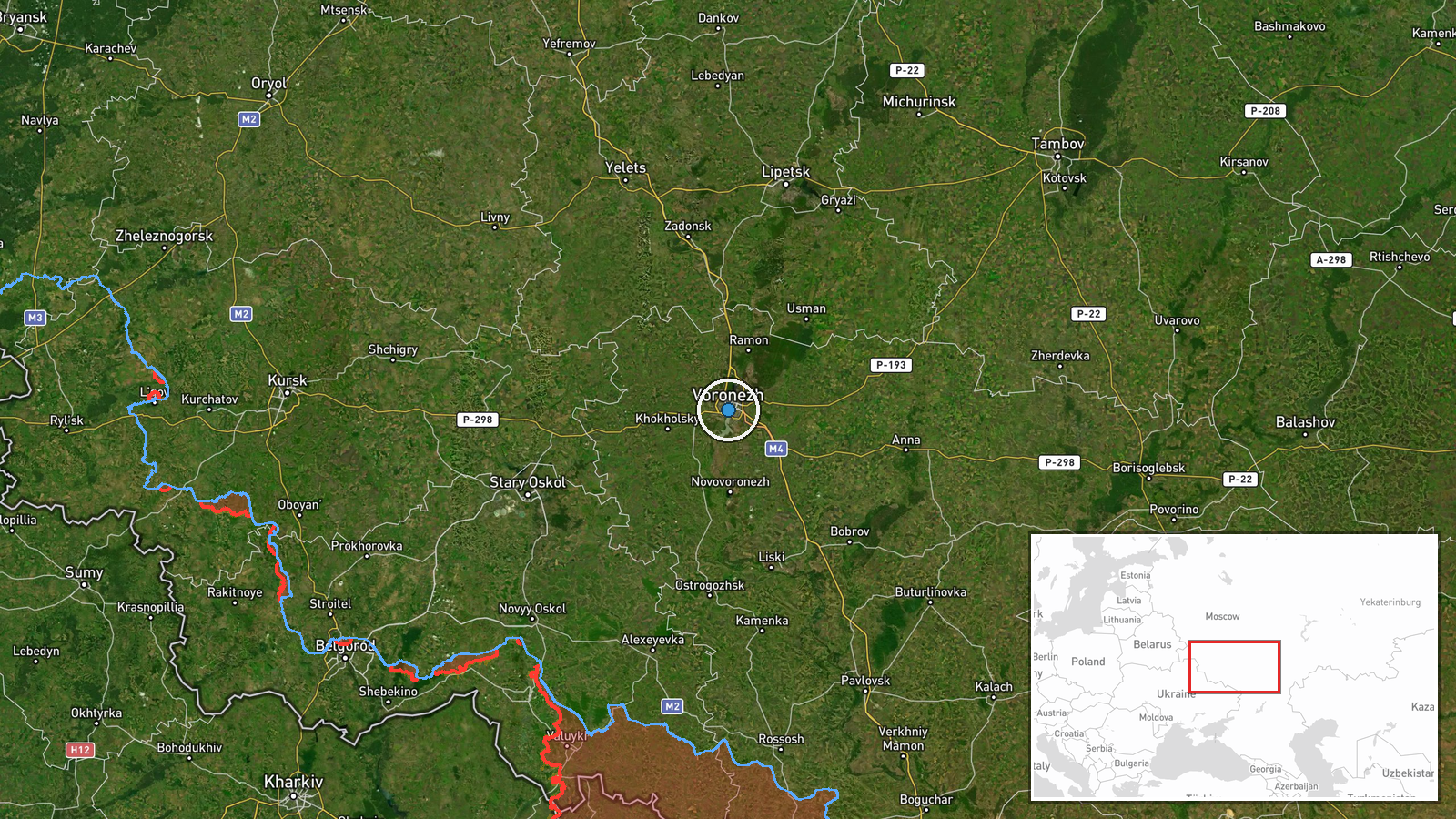
Ukrainian forces reportedly conducted a drone strike against an industrial facility in Voronezh, Russia, on 28 September at approximately 02:31 UTC. Local residents reported hearing multiple explosions in the city. The report originated from Russian Telegram channel Supernova Plus. Specific details regarding casualties, structural damage, or the facility's military or civilian function remain unclear pending further assessment.
Context and assessment
Voronezh, located roughly 500 kilometres southeast of Moscow, hosts significant Soviet-era manufacturing infrastructure and defence-related industries. Ukrainian strikes on Russian industrial and logistical targets have intensified as part of efforts to degrade rear-area war production and supply networks supporting operations in Ukraine. Strikes on this scale and distance reflect Ukraine's expanding capability to project power deeper into Russian territory using unmanned systems. The timing and targeting pattern suggest continued pressure on Russian manufacturing capacity, though the specific facility's designation and strategic importance cannot be confirmed from available reporting.
Sources and confidence
Single-source report from Russian Telegram channel Supernova Plus. No cross-confirmation from Ukrainian official channels or independent Russian media outlets at time of reporting. Confidence score reflects reliance on unverified single-channel intelligence. Confirmation by Ukrainian military sources or satellite imagery would substantially increase confidence; contradictory Russian official denials would require reassessment.
Location
Voronezh city centre region, Voronezh Oblast, Russia. Precision is regional rather than facility-specific. The city lies in the western Russian steppe approximately 480 kilometres south-southeast of Moscow on the Voronezh River, an eastern tributary of the Don. No specific industrial site or defence facility has been identified from available reporting.
▶ View this event on the live map
Intel Mapper aggregates open-source reports from monitored Telegram and X channels, geolocates them, cross-checks duplicates across sources and assigns a confidence score. Entries are updated as new confirmations arrive. Read how we verify events.