Ukrainian ballistic missile reportedly strikes Belgorod city in Russia
What happened
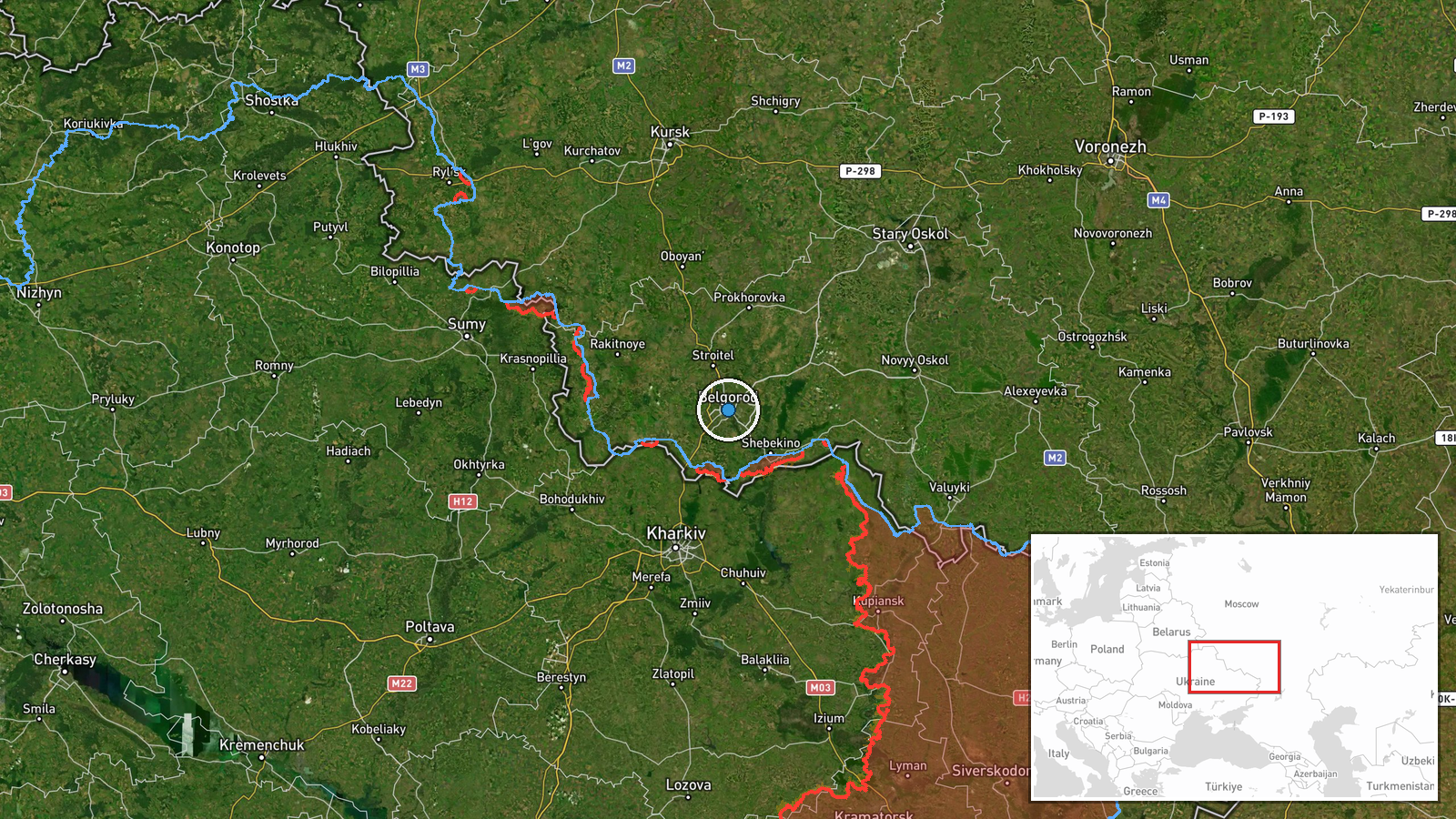
A Ukrainian long-range strike, reportedly involving an Oreshnik or similar ballistic missile system, was reported in Belgorod city, Belgorod Oblast, on 3 October 2026 at approximately 18:28 UTC. The report originated from Telegram channel @supernova_plus. The specific weapon type and damage assessment have not been independently confirmed. Belgorod city lies approximately 40 kilometers north of the Ukraine–Russia border.
Context and assessment
Belgorod Oblast has been a consistent target of Ukrainian long-range strikes throughout the conflict, serving as a staging area for Russian military logistics and command infrastructure. This reported strike follows a Ukrainian attack earlier the same day on a Russian supply depot in nearby Voznesenkivka district (Borisovka area), suggesting a sustained campaign against Russian rear-area military assets. The use of ballistic missiles, if confirmed, represents continued Ukrainian efforts to degrade Russian operational capacity at distance. Belgorod city itself hosts regional military administration and transport infrastructure, making it strategically relevant to Russian operations supporting the front.
Sources and confidence
Single-source reporting from Telegram channel @supernova_plus. No cross-confirmation from independent Ukrainian official sources, Russian acknowledgment, or satellite imagery available in the provided data. Confidence score of 6.0 reflects the unverified nature of the claim. Cross-confirmation from Ukrainian official channels, video evidence, or Russian damage acknowledgment would substantially raise confidence. Retraction or contradiction from reliable sources would lower it.
Location
Belgorod city center, Belgorod Oblast, Russia (50.60°N, 36.59°E), located in southwestern Russia approximately 40 km north of the Ukraine border. The city is the regional administrative and logistics hub, situated on the Voronezh River in relatively flat terrain typical of western Russian steppe.
Related events nearby
- Russian drone attempted to destroy Ukrainian ground robot. Robot deployed anti-drone net, disabled the drone. 2026-10-03 11:17 UTC · Combat · Ukraine frontline, eastern region
- Ukrainian forces struck a Russian military supply depot (materials and technical equipment storage) in Voznese2026-10-03 07:29 UTC · UAS Strike · Borisovka, Belgorod Oblast, Russia
- Ukrainian forces shot down a Russian jet-powered attack drone (likely Shahed/kamikaze variant) using MANPADS. 2026-10-03 14:57 UTC · Drone Shootdown · Ukraine frontline, eastern region
- Ukrainian FPV kamikaze drones struck Russian military positions, inflicting multiple casualties among Russian 2026-10-03 00:00 UTC · FPV Drone · Eastern Ukraine, Ukraine
- Ukrainian forces struck a Russian command post near Nova Tavolzhanka in Belgorod Oblast. The attack targeted e2026-10-03 07:28 UTC · Airstrike · Nova Tavolzhanka, Kharkiv Oblast, Ukraine
▶ View this event on the live map
Intel Mapper aggregates open-source reports from monitored Telegram and X channels, geolocates them, cross-checks duplicates across sources and assigns a confidence score. Entries are updated as new confirmations arrive. Read how we verify events.