Ukraine strikes Khanskaya Air Base in Russia, destroys two fighter jets
What happened
Ukraine's Security Service (SBU) conducted a drone strike on Khanskaya Air Base in Russia's Adygea Republic during the night of 3–4 October, according to a Telegram channel citing Russian aviation sources. The strike reportedly destroyed one Su-34 fighter-bomber and one Su-35S fighter jet. The attack was part of a broader Ukrainian operation targeting Russian airfields and military facilities that extended across multiple locations overnight.
Context and assessment
Khanskaya Air Base, located in the Caucasus region of southern Russia, hosts fighter squadrons critical to Russian air operations in the wider theatre. The Su-34 and Su-35S are among Russia's most modern combat aircraft, with the former specializing in ground attack and the latter in air superiority. The destruction of two such aircraft represents significant material loss. This strike fits within an intensifying Ukrainian campaign of long-range drone strikes against Russian air assets, with a related operation the same night hitting Maykop, also in Adygea, suggesting a coordinated effort to degrade Russian air power projection capabilities across the region.
Sources and confidence
Single Telegram channel (AviVector/supernova_plus) reported the strike. No independent cross-confirmation from Ukrainian military sources or open-source verification is noted in available data. Confidence of 6.0 reflects typical reliability of Russian aviation tracking channels but limited corroboration. Confirmation from Ukrainian officials or secondary Russian sources would strengthen confidence; absence of geolocated imagery or additional reporting would lower it.
Location
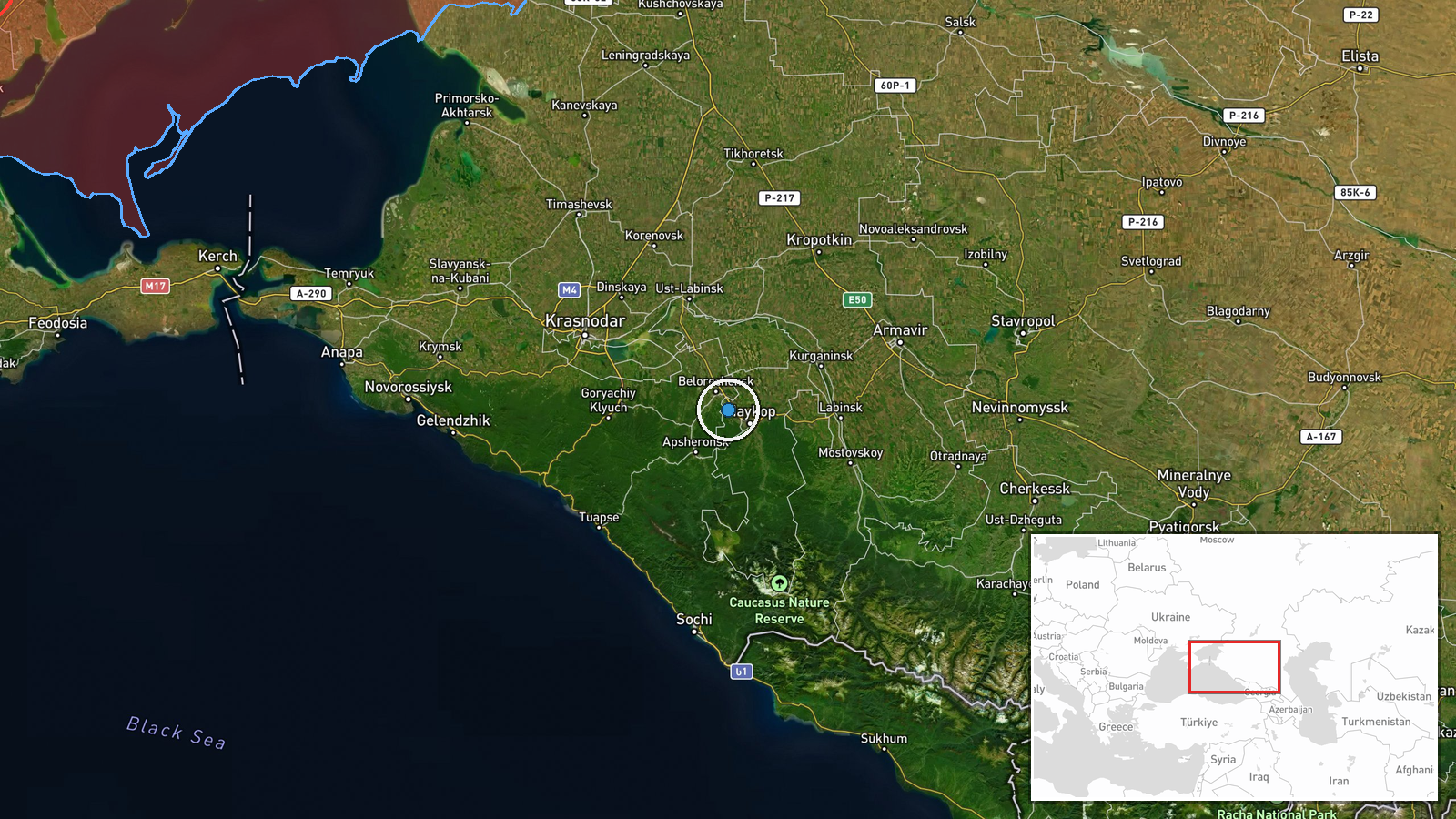
Khanskaya Air Base is situated in Adygea Republic in the North Caucasus, approximately 100 km southeast of Krasnodar. The base lies in the foothills of the Caucasus Mountains. Coordinates place the facility at the known airfield location. The settlement-level precision reflects the discrete military installation within the region.
Related events nearby
- Ukraine conducted a massed drone strike operation across multiple Russian airfields and military installations2026-10-04 05:43 UTC · UAS Strike · Maykop, Adygea, Russia
▶ View this event on the live map
Intel Mapper aggregates open-source reports from monitored Telegram and X channels, geolocates them, cross-checks duplicates across sources and assigns a confidence score. Entries are updated as new confirmations arrive. Read how we verify events.