Telegram channel reports renewed drone attack on Yandex facility in Vladimir, Russia
What happened
A Telegram channel, @supernova_plus, reported that a Yandex facility in Vladimir, Russia, had been attacked again by unmanned aerial systems, with the post timed at 22:34 UTC on 15 October 2026. The original wording, 'Яндекс Владимир .. снова атакован', is terse. It does not name the specific site within the city, describe any damage, or state casualties. The event is coded as a UAS strike attributed to Ukraine, but that attribution reflects the platform's classification of the claim rather than any independent statement of responsibility. Neither the attack method nor its impact has been confirmed by an official source or a second outlet. The word 'again' implies earlier incidents at the same site, but the available data does not describe them, so the repeat character of the event rests on the channel's claim.
Context and assessment
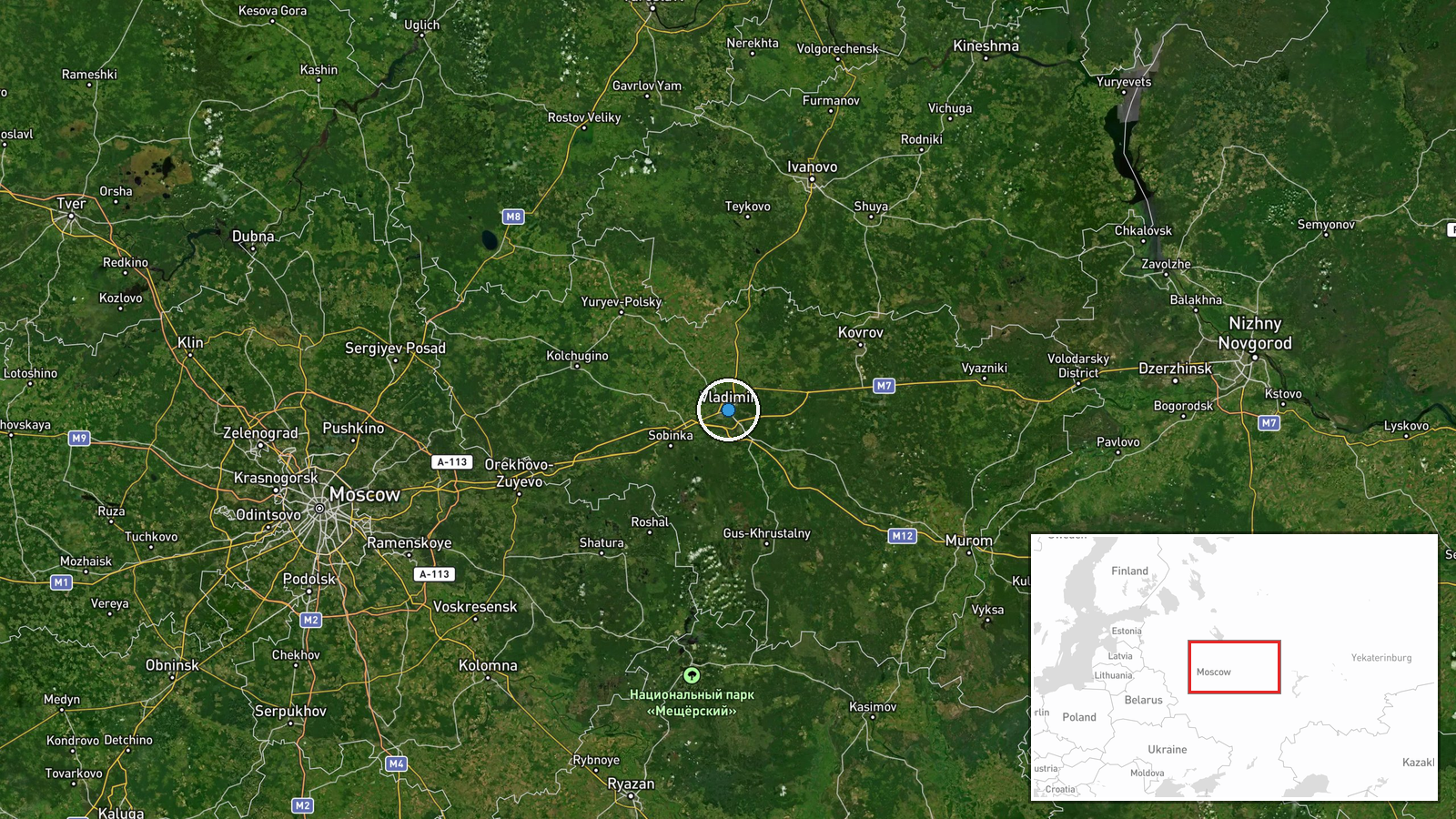
Vladimir lies roughly 180 kilometres east of Moscow, on the Klyazma River, and is the administrative centre of Vladimir Oblast. Yandex is widely known as one of Russia's largest technology companies, with interests in search, mapping, cloud services and data infrastructure, so a reported strike on one of its sites would carry significance beyond its local setting, whatever the actual target. The related events suggest a wider pattern on the same evening. At 21:48 UTC, a Telegram report described a large drone attack on Moscow Oblast, with air defence engaging over Elektrostal, a city east of Moscow. Roughly an hour later, at 22:46 UTC, another Telegram report described Russian air defence engaging drones over Vladimir during an ongoing attack. The sequence points to a multi-city drone wave across central Russia rather than an isolated incident. Operationally, reaching Vladimir implies long-range drones crossing considerable distance, and active air defence reports suggest the attack was contested. Whether the Yandex site was a deliberate target or an incidental one cannot be determined from the data. Striking commercial technology assets is sometimes read as targeting dual-use infrastructure, but that reading would require confirmation that the site had a relevant function.
Sources and confidence
The event rests on one Telegram channel, @supernova_plus, with no cross-confirmation in the supplied data. The two related events also come from Telegram reports without confirmed impact details, so they corroborate the general timing and pattern but not the specific claim. The confidence score of 6.3 reflects a single unverified source, the absence of imagery, the lack of an official statement, the unnamed site, and the missing impact information. Confidence would rise with independent satellite or geolocated imagery, a statement from Yandex or regional authorities, or reporting from a second established outlet. It would fall if the claim were retracted or if the site were shown not to be a Yandex facility.
Location
The location is coded at settlement precision, meaning the coordinates reflect the city of Vladimir as a whole rather than a specific building or address. Location confidence is not assigned in the data. Vladimir is a historic city on the Klyazma River in central European Russia, with a hilly riverside setting and a dense older urban core. The city's wider surroundings are largely forested and agricultural. Individual facilities within the city cannot be pinpointed from the coded point alone.
Related events nearby
- Telegram report of Russian air defense ('dome') engaging drones over Vladimir during an ongoing attack; no con2026-10-15 22:46 UTC · Air Defense · Vladimir, Vladimir Oblast, Russia
- Massive drone attack on Moscow Oblast; air defense engaged in Elektrostal, per Telegram report. No confirmed i2026-10-15 21:48 UTC · UAS Strike · Elektrostal, Russia
▶ View this event on the live map

Intel Mapper aggregates open-source reports from monitored Telegram and X channels, geolocates them, cross-checks duplicates across sources and assigns a confidence score. Entries are updated as new confirmations arrive. Read how we verify events.